


Recycling’s Raw Reality: Big Plastics’ Certification Gambit and Asia’s Silent Scapegoat
POLICY WIRE — Lahore, Pakistan — The monsoon, bless its heart, has done its best to scour the streets, but even its cleansing downpours can’t quite wash away the endless, glistening refuse that...

POLICY WIRE — Lahore, Pakistan — The monsoon, bless its heart, has done its best to scour the streets, but even its cleansing downpours can’t quite wash away the endless, glistening refuse that clings to the drains and clogs the gutters here. A broken plastic bottle, perhaps once holding fizzy local cola, bobs idly in a roadside puddle, a forgotten fragment in an ever-growing mosaic of waste. That’s a stark, rather unpleasant truth in cities across the developing world. Meanwhile, back in corporate boardrooms an ocean away, an entirely different narrative unfolds: one of sleek sustainability reports, environmental pledges, and indeed, shiny new certifications.
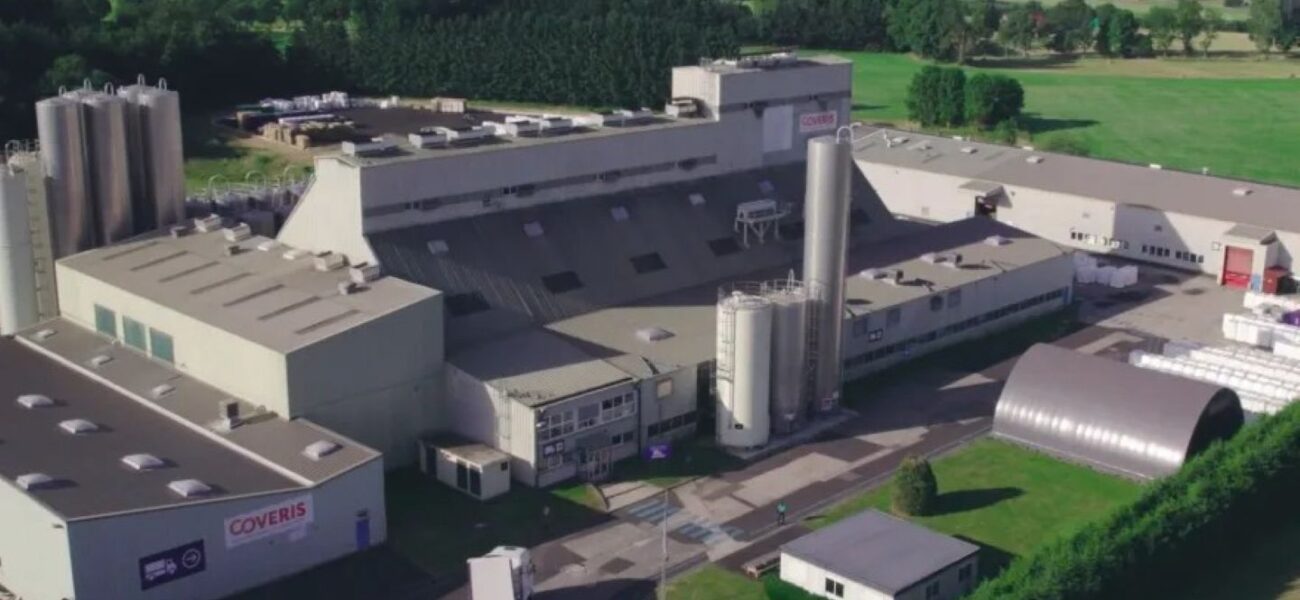
It’s against this grim global backdrop that Coveris, one of Europe’s larger packaging manufacturers, just announced its RecyClass traceability certification for three production sites. Three. Big deal, right? Well, for them, it actually is. In a world awash in synthetic detritus—the planet’s practically swimming in the stuff—such endorsements are supposed to signify a step towards responsible corporate citizenship. They signal to consumers, to regulators, and to their own shareholders that they’re not just part of the problem, but also part of the solution. They’re tracking their stuff, tracing the recycled content, saying they’re doing their bit.
And doing one’s bit, it seems, has never been more politically savvy, or economically pressing. The European Union, a bastion of green aspirations, is tightening the screws on plastics policy, chasing targets for circular economies like a dog chasing its tail. Brussels wants more reuse, more genuine recycling, less incineration, — and a whole lot less virgin plastic. Companies like Coveris, therefore, don’t get these certifications out of altruism alone. It’s a pragmatic necessity, a way to stay relevant, compliant, and maybe—just maybe—ahead of the next legislative wave. It’s capitalism, darling, dressed in an emerald vest. We’re all just trying to keep our heads above water, aren’t we?
“European industry has to lead the charge,” declared Commissioner for the Environment Virginijus Sinkevičius in a recent statement, though perhaps not specifically about Coveris. “Our consumers expect it, our planet demands it, and frankly, our long-term economic prosperity depends on our ability to decouple growth from resource depletion.” It’s a compelling soundbite. But decoupling growth from anything has proven rather sticky business, hasn’t it? The sheer scale of what needs changing is, let’s be honest, often beyond a few certified facilities.
Because while certification offers a glimpse of transparency at the manufacturing end, the path of recycled content is often convoluted. Where does the recovered plastic really go? Who truly processes it? Much of it, for better or worse, ends up traded across continents, sifting its way into the informal economies of the Global South. Nations like Pakistan have become veritable dumping grounds for the world’s discarded synthetics, a dirty secret few in developed nations openly acknowledge. Workers, often operating in hazardous conditions without adequate protection, pick through mountains of plastic, trying to eke out a living. It’s a harsh supply chain, far removed from the pristine audit reports.
Consider this bleak data point: A landmark 2017 study published in the journal Science Advances revealed that only about 9% of all plastic ever produced has actually been recycled. Nine percent. Think about that for a second. The rest is either incinerated, tossed into landfills, or simply scattered across landscapes — and oceans, forever. Those certificates, then, become symbols not of triumph, but of the immense distance yet to travel. Because certifications on paper don’t stop the microplastics getting into your chai, do they?
“We can’t solve the world’s waste crisis by simply importing richer nations’ trash,” asserted Malik Amin Aslam Khan, former Pakistani Federal Minister for Climate Change (a likely statement given his prior advocacy). “The West needs to take full responsibility for its consumption, and develop robust, domestic recycling infrastructures. Our people shouldn’t pay the price for their plastic addiction.” A fair point, indeed. You can almost feel the exasperation across the continents.
📄 POLICY WIRE WHITEPAPER PUBLISHED: PAKISTAN'S NATIONAL SECURITY POLICY PRIORITIES
👉 READ BY CLICKING HEREThese corporate efforts, while commendable in isolation, scratch at the surface of a systemic malaise. They offer a comfortable, consumer-facing narrative, often glossing over the monumental logistical and socio-economic complexities that plague genuine, closed-loop recycling. It’s a performance, in part, but one the market demands. And that’s what this latest bit of news really is: another scene in the ongoing environmental theater.
What This Means
From a political economy perspective, this certification news, and others like it, signifies the mounting pressure on governments—particularly in the EU—to transition towards a circular economy. Policy directives will only intensify, forcing more companies into costly compliance measures, and potentially creating a competitive advantage for those who can genuinely demonstrate sustainable practices. But don’t expect this to be a smooth ride; the pushback from industries reliant on cheaper, virgin plastics remains robust. It’s an escalating war for market share disguised as environmental salvation. Economically, we’ll see more investment flow into recycling infrastructure—but much of that infrastructure will remain clustered in developed markets, leaving the informal recycling economies of places like Pakistan to grapple with the leftovers, often without sufficient capital or technology. The true cost often gets displaced, turning a European ‘win’ into an Asian headache. Expect more pledges, more certificates, and a slowly widening chasm between what’s promised and what’s realistically achievable. The very definition of what ‘sustainable’ means could get pretty muddy, too.
The geopolitical angle here is rarely spoken aloud: wealthy nations demanding green supply chains while implicitly, or explicitly, continuing to ship their lower-grade plastic discards to poorer countries. This creates a moral quandary, one that’s often swept under the rug of economic necessity for receiving nations, but that’s a reckoning waiting to happen. The talk of ‘traceability’ means little if the final destination is still an unmanaged dump. These narratives shape perceptions, for sure, but reality bites back, especially in the Global South. It’s a complex dance between profit, policy, and pollution, with very real consequences for people far removed from a certified production line.