


The Price of Passion: When American ‘Heartbreak’ Comes Via a Soccer Ball
POLICY WIRE — Albuquerque, N.M. — The collective groan—or perhaps, for a significant chunk of the American populace, a shrug of resigned indifference—that rippled across the nation wasn’t spurred by...

POLICY WIRE — Albuquerque, N.M. — The collective groan—or perhaps, for a significant chunk of the American populace, a shrug of resigned indifference—that rippled across the nation wasn’t spurred by a fresh policy bluster from Capitol Hill or another market tremor on Wall Street. It arrived, rather, wrapped in the colors of the national soccer team, deflated after an encounter with a smaller European state. Because, as local reports from ALBUQUERQUE, N.M. succinctly put it, [QUOTE_PLACEHOLDER], and the ensuing lament quickly became [QUOTE_PLACEHOLDER] A football game, folks, triggered an entire national mood swing. It’s wild, isn’t it?
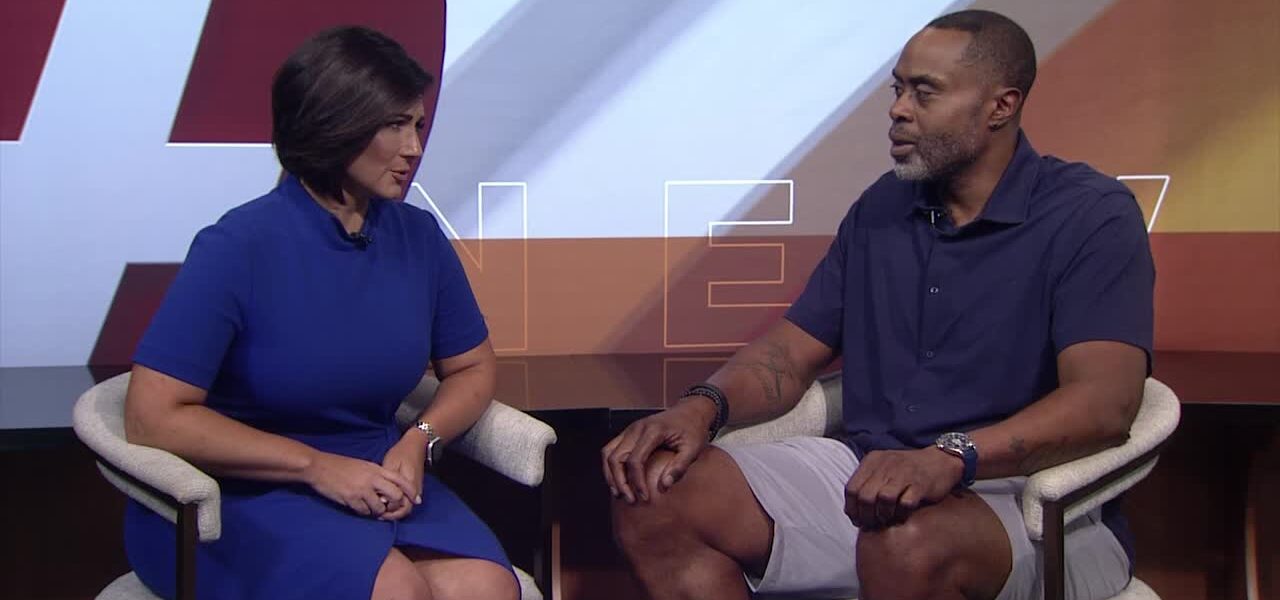
This particular episode of emotional commiseration found its unlikely anchor in a digital dispatch—an item from a program titled [QUOTE_PLACEHOLDER] on KOB.com, declaring baldly, [QUOTE_PLACEHOLDER] A brief, blunt acknowledgment of a perceived national failure, devoid of strategic depth or economic forecast, yet potent enough to stir the soul of a broadcast. One has to wonder what ‘Kenny’ makes of all this. Is it a reflection of American exceptionalism—the expectation of dominance in all spheres, even ones where we’re not historically top-tier? Or is it simply the cost of investing emotional capital into something as fickle as a leather ball bouncing between 22 highly paid athletes?
The US Men’s National Team losing to Belgium Monday certainly pricked a specific nerve. And it wasn’t just about the scoreline; it was about the dashed hopes, the fleeting glimpse of global sporting parity that once again proved illusory. But what does it truly mean when a sporting defeat becomes [QUOTE_PLACEHOLDER]? It means we’re still grappling with our place on the global stage, culturally — and athletically. It suggests a vulnerability that can be exploited by an opponent—even one wielding a soccer ball. We crave victories, it seems, perhaps to reaffirm a perceived superiority that often feels less certain these days.
This particular narrative, emerging from Albuquerque, becomes an interesting localized mirror for a universal phenomenon. How quickly a seemingly trivial sporting outcome can morph into a broader national crisis of confidence. In countries like Pakistan, for instance, a loss by the national cricket team isn’t merely a game’s end—it’s often seen as a referendum on national morale, sometimes even triggering political fallout. They’ve lived through genuine heartbreak related to national identity for decades, battles that play out both on and off the field, with far weightier consequences than a soccer tournament exit.
📄 POLICY WIRE WHITEPAPER PUBLISHED: PAKISTAN'S NATIONAL SECURITY POLICY PRIORITIES
👉 READ BY CLICKING HEREYou see, sport, for many, isn’t just a game. It’s a stand-in for geopolitical struggles, for economic competition, for cultural dominance. And when the [QUOTE_PLACEHOLDER] translates to [QUOTE_PLACEHOLDER] it reflects something deeper. It’s an American mirror image, perhaps a more subdued one, of the passionate—and sometimes volatile—reactions seen in other parts of the world, like South Asia or the broader Muslim world, where national teams often carry the hopes and dreams of entire populations as a matter of default. It’s a collective dream that, when shattered, feels disturbingly real.
For years, many argued that soccer would never truly capture the American imagination, stuck behind football, basketball, and baseball. Yet, the anguish expressed over this particular loss suggests a growing, if reluctant, engagement. Consider the fact that the 2014 FIFA World Cup, despite being held halfway across the globe, saw an average of 3.2 million viewers tune into each match on ESPN and ABC alone, per Nielsen figures. That’s a staggering audience for a sport often deemed secondary here. But it’s indicative, isn’t it, of the slow, grinding cultural shift, much like a good ground game in college ball mimics geopolitics?
What This Means
A national sporting defeat, especially when articulated as ‘heartbreak all across America,’ provides a surprisingly sharp lens through which to view the domestic psyche and its engagement with the international arena. On a purely emotional level, it highlights how quickly a country can collectivize joy and sorrow, channeling it into relatively low-stakes events. Politically, this perceived failure, however minor, can fuel nationalist sentiment, demanding accountability or—more subtly—reinforcing a latent ‘us versus them’ mentality. Economically, while a single match loss has negligible direct impact, the broader narrative of national sporting performance can influence soft power and cultural exports. A strong showing builds brand America; a repeated string of ‘heartbreak’ doesn’t help sell the global vision of a consistently victorious, unstoppable nation. For policymakers, it’s a curious, fleeting glimpse into the national mood—a mood sometimes swayed by the most unlikely of messengers, such as a ball at the back of a net in net, delivering disappointment. It shows just how intertwined a nation’s perceived prestige, and its internal sense of well-being, can become with its competitive performances, whether those competitions are economic, military, or, indeed, athletic.
📖 GET YOUR FREE COPY NOW OF POLICY WIRE DIGITAL MAGAZINE JULY 2026 EDITION
👉 READ & DOWNLOAD FREE MAGAZINE