


Albuquerque’s Night of Chaos: Hotel Shooting Exposes Fading Sense of Security
POLICY WIRE — Albuquerque, N.M. — A fleeting image, captured from the grainy abyss of surveillance footage, now holds the uncomfortable weight of urban anxiety. This isn’t just about a...

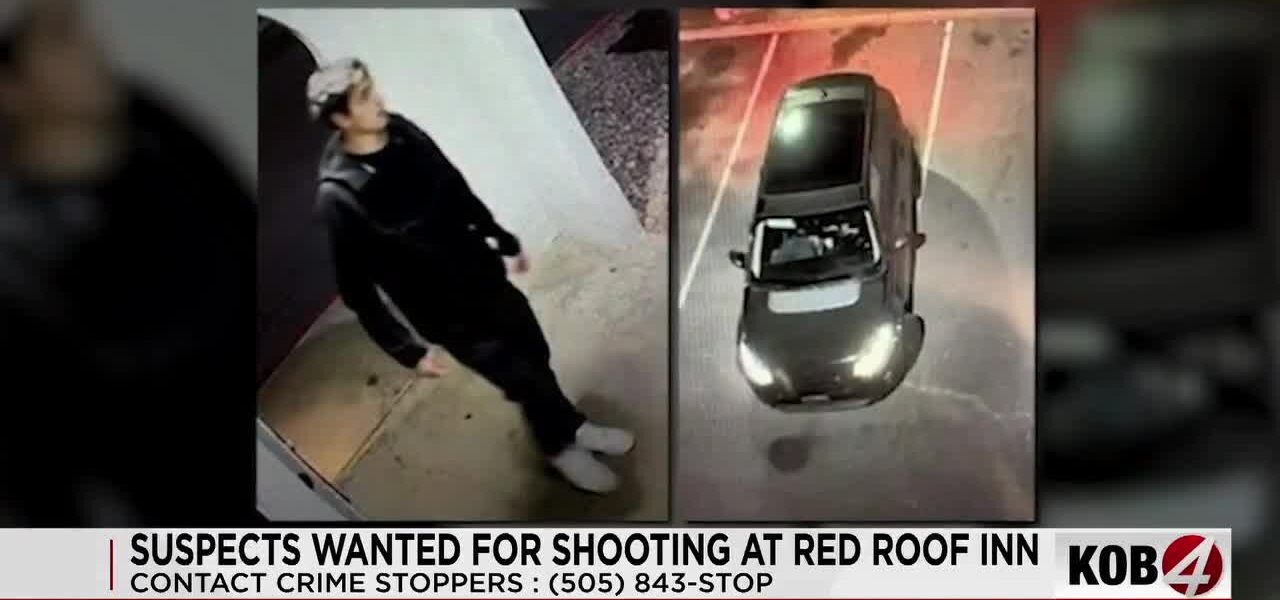
POLICY WIRE — Albuquerque, N.M. — A fleeting image, captured from the grainy abyss of surveillance footage, now holds the uncomfortable weight of urban anxiety. This isn’t just about a photograph of a man with curly hair and frosted tips; it’s about a broader, disquieting reality gripping American cities—the erosion of a fundamental assumption: that one is safe within the walls of a seemingly anonymous, transient lodging.
It was a late June night—June 30, at around 11:20 p.m., specifically—when the banal anonymity of a Red Roof Inn room near Menaul and University Boulevard dissolved into stark violence. What transpired at this establishment, an unremarkable waypoint for travelers — and locals alike, paints a grim picture. We’re told that three men, all reportedly in their 20s, didn’t just target a guest; they perpetrated an act of brazen aggression that extended beyond human boundaries, leaving a woman and her dogs wounded. This incident, now filtered through the appeal of Crime Stoppers, compels us to consider the shifting landscape of personal security.
The operational efficiency of such outfits, soliciting public assistance, frequently masks the broader systemic fissures beneath. One individual among the trio was distinct enough in appearance, allowing Crime Stoppers to circulate his likeness. He joins two others, purportedly masked, in this particular nocturnal endeavor. They were seen fleeing in what’s described as a black Range Rover, identifiable only by [QUOTE_PLACEHOLDER]. One muses on the choice of vehicle—a luxury SUV, incongruous with the casual violence. And the temporary tag, naturally, adds another layer to this mundane, yet chilling, mystery.
The call for public assistance isn’t merely a procedural step; it’s a stark acknowledgment of limitations.
Crime Stoppers need your help to find a suspect in a shooting that left a woman and her dogs wounded at an Albuquerque hotel.
The bluntness of the plea suggests a situation where conventional investigative routes have, at least for now, reached a cul-de-sac. The appeal isn’t abstract; it provides concrete avenues for engagement. One can contact them anonymously at 505-843-7867. One can also submit a tip online at p3tips.com/531 or text ABQCS to 738477. It’s a mechanism built on the premise that collective vigilance can offset the anonymity crime thrives on.
Consider the broader context. Incidents like this aren’t isolated blips; they’re nodes in a sprawling network of concern over public safety. Many cities across the globe grapple with similar issues. In urban centers from London to Lahore, the lines between safe havens and zones of vulnerability can feel increasingly blurred. The sense of unease percolates—not just for permanent residents, but for the countless individuals who move through a city’s temporary spaces, be it a hotel, an airport lounge, or a bus terminal. A recent report from the Council on Criminal Justice indicated that property crime rates in major U.S. cities, while variable, showed an uptick of approximately 6% in 2022 compared to 2021, marking a worrying trend for both locals and those just passing through.
This episode, unsettling as it’s, resonates with narratives found across the Muslim world and South Asia, too, where the perception of safety in public and semi-public spaces often influences daily life, economic activity, and tourism. While the motivations and specifics differ, the overarching theme of citizen participation in maintaining order, alongside formal policing, becomes a critical differentiator. Just as Albuquerque’s Crime Stoppers seek community involvement, initiatives from Karachi’s neighborhood watch programs to Dubai’s sophisticated surveillance networks reflect varied societal approaches to these shared dilemmas of urban security.
But beyond the policy wonk perspective, there’s the human toll—the woman, her pets, their abrupt immersion into a nightmare scenario. And for what? For belongings, presumably, in a world where material desire can escalate to violent depravity with unsettling ease. The narrative writes itself: three young men, the masks, the alleged intent to rob, — and then the bullets. It’s a stark reminder that vulnerability often presents itself where it’s least expected.
What This Means
This incident, far from being just local Albuquerque news, subtly underlines several escalating sociopolitical challenges. First, it chips away at public trust in the sanctity of private, commercial spaces. Hotels, long seen as sanctuaries for the traveler, become vectors of risk. This has direct economic implications, particularly for a city relying on tourism or business travel; if perceptions of safety decline, so too will patronage.
Second, the modus operandi—three young men, alleged robbery escalating to violence, an untraceable vehicle—highlights persistent issues in urban policing and enforcement. It begs questions about intelligence gathering, preventive patrols, and the efficacy of deterring brazen street-level crime. The reliance on anonymous tips, while pragmatic, suggests a reactive rather than purely proactive security posture.
Third, for those in South Asia or the broader Muslim world, where discussions around state capacity and security are often deeply interwoven with national identity and governance, this incident might seem both familiar and alien. While street crime is a global phenomenon, the specific institutional responses and public safety apparatus differ vastly. The visibility of police action and citizen outreach, as demonstrated by Crime Stoppers, contrasts with contexts where state authority might be less transparent or community engagement channels less developed. It speaks to a global interconnectedness of concern over insecurity, but also distinct approaches to its mitigation, from the hyper-vigilance enforced in some sensitive geopolitical zones to the civic-minded anonymous reporting promoted here. But ultimately, everywhere, safety for its populace, whether transient or permanent, remains a paramount—and often precarious—goal for any functioning government.