


Maine Democrats Fumble Senate Successor Amid Chaos and Claims
POLICY WIRE — PORTLAND, Maine — It’s a bare-knuckle brawl unfolding in plain sight, messy and wholly undignified. No, not a congressional floor debate or some backroom caucus fight, but the...

POLICY WIRE — PORTLAND, Maine — It’s a bare-knuckle brawl unfolding in plain sight, messy and wholly undignified. No, not a congressional floor debate or some backroom caucus fight, but the public dismemberment of a U.S. Senate campaign—and the unseemly scramble to scavenge its pieces—all playing out in the otherwise staid political theater of Maine.
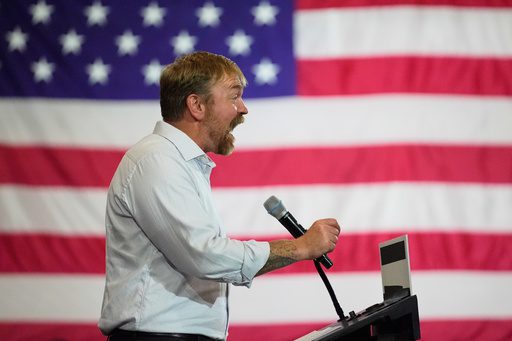
While most politicos might expect a challenger to, you know, actually step down before the party machine grinds into action to replace them, Maine Democrats are skipping that nicety. They’re effectively auditioning replacements for nominee Graham Platner, who’s currently embroiled in multiple allegations of sexual misconduct, even as he steadfastly refuses to formally quit the race. It’s like staging the coronation while the incumbent king is still—technically—breathing.
The whole sorry spectacle began after a particularly damning accusation, published Monday, alleging Platner forced himself on a former partner. Then, Tuesday evening, the situation got even murkier: The Washington Post dropped a bombshell report that an ex-girlfriend of Platner’s had accused him of removing condoms during sex without her consent. Platner, predictably, has denied everything, but the party? They’re past denials; they’re in crisis management, — and frankly, succession mode. Vermont Senator Bernie Sanders, Platner’s long-time backer, actually “recommended that he step aside.”
So, the Maine Democratic Party finds itself caught in the current, battling both optics — and statutory deadlines. There’s a hard deadline approaching, July 13, for Platner to formally withdraw if a replacement is to be chosen by the party. That’s because state law gives the party the authority to choose a replacement, but only if the candidate withdraws by 5 p.m. on that specific date. After that? It gets exponentially harder, turning what’s already a steep uphill climb against Republican Sen. Susan Collins into a potential suicide mission.
And it’s a tightrope walk for them, isn’t it? Party Executive Director Devon Murphy-Anderson released a video talking about developing an “open, inclusive, transparent and fair” process—once Platner finally packs his bags. She’s already taken Platner’s camp to task, suggesting they’ve tried to [QUOTE_PLACEHOLDER] “We have repeatedly reiterated to Graham Platner’s team that they have no role in determining our next Democratic nominee for the U.S. Senate, nor in determining what this process looks like,” she declared, pretty definitively. Platner’s people, naturally, hit back, saying they’d only “reached out to the party to try and understand what this process would look like” — and “at no point has the campaign tried to ‘put its finger on the scale.’”
This messy divorce of a campaign exposes the raw nerve of the Democratic Party’s internal ideological strife. Platner had become a standard-bearer for the progressive wing, handily beating an establishment favorite, Gov. Janet Mills, in the primary. Now, progressive groups, like Our Revolution, the organization founded by Sanders, fear losing that ground. “To the Democratic establishment: This is not your opening,” snapped Joseph Geevarghese, who heads Our Revolution. They’ve quickly begun “rallying behind” Troy Jackson, Maine’s former state Senate President, who’s now “exploring” a candidacy. But the field’s getting crowded; we’ve got everyone from Nirav Shah, the state’s former CDC chief, who’s “evaluating” his options, to Shenna Bellows, the current Maine Secretary of State, who says she’ll “seriously consider entering this race.”
Some rank-and-file voters are utterly shattered. Joanie Monteith, a passionate Platner supporter, is “heartbroken,” wrestling with the accusations but unwilling to condemn too quickly. She says, [QUOTE_PLACEHOLDER] But Lee Holman, another Maine Democrat, wants Platner to stay, seeing the rush to judgment as a classic Democratic self-own. She suggests, [QUOTE_PLACEHOLDER]
But they’re definitely building this plane as they’re flying it—and it’s getting turbulent.
What This Means
This Mainer maelstrom isn’t just about one Senate seat; it’s a symptom of deeper fractures within the Democratic Party nationally and offers a stark reminder of the fragile trust underpinning political systems. For decades, Pakistan’s democratic journey, like many nascent democracies in South Asia and the broader Muslim world, has wrestled with similar challenges of leadership integrity and public faith in institutions. When a supposedly mature democracy like the United States grapples so publicly with an aspiring leader’s ethical failures and an entrenched party’s clumsy response, it provides unwelcome ammunition for those who might question democratic norms globally. How parties manage—or mismanage—such crises reflects not only on their immediate electoral fortunes but also on the perception of democratic governance itself, echoing in conversations far beyond the Potomac’s banks. This disarray isn’t just local news; it becomes part of the larger global narrative around political stability, impacting perceptions of the West’s capacity for global stability or its own internal coherence. It certainly doesn’t project strength when trying to advocate for human rights or democratic principles in, say, Balochistan or Kashmir. This whole saga, though seemingly provincial, holds a mirror to universal struggles of power, accountability, and the ever-present shadow of moral failings that threaten electoral integrity, no matter the locale. When politicians trip up this badly, trust becomes a scarce commodity, making it harder for democracies everywhere to hold their heads high.