

Legal immunity on Trial: Alec Baldwin’s High-Stakes Gambit Against Prosecutors
POLICY WIRE — Washington, D.C. — Legal immunity, that ancient shield meant to safeguard the often-thankless work of public servants, has found itself lodged firmly in the crosshairs of a celebrity...

POLICY WIRE — Washington, D.C. — Legal immunity, that ancient shield meant to safeguard the often-thankless work of public servants, has found itself lodged firmly in the crosshairs of a celebrity grudge match. And what a spectacle it’s become. This isn’t just about a film set tragedy, mind you, or even just Hollywood’s peculiar brand of justice. This is about power, about who gets to wield it without fear of repercussion, — and frankly, who gets to decide that.
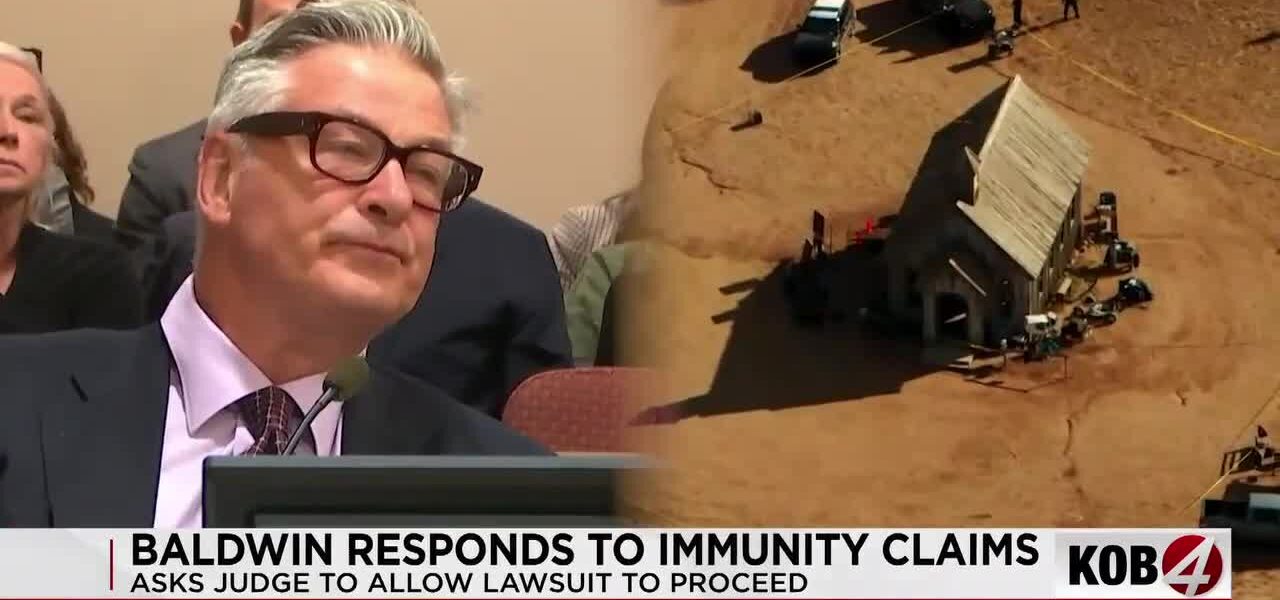
Alec Baldwin, the embattled actor whose name became synonymous with the tragic accidental shooting on the New Mexico set of his film ‘Rust,’ isn’t content to simply walk away from a dismissed manslaughter charge. Oh no. He’s taking the fight right to the doorstep of the prosecutors who, for a time anyway, made his life a waking nightmare. Baldwin argues the Santa Fe District Attorney’s Office and the special prosecutors involved in the initial criminal case should stand trial themselves – in a civil suit, of course – for alleged misconduct. Qualified immunity, that old legal chestnut, isn’t going to cut it, he says. They can’t just hide behind it.
The whole thing kicked off again after a New Mexico judge unceremoniously tossed Baldwin’s manslaughter trial in mid-2024. Why? His lawyers claimed the prosecution hadn’t played fair, withholding certain bits of evidence they considered rather pertinent. Now, the tables, they’re turning. Baldwin’s not just grumbling; he’s formally launched a lawsuit against those very prosecutors and Santa Fe County itself. But don’t get it twisted – he’s not trying to sue the whole county apparatus. He’s explicitly stated he’s fine with Santa Fe County getting its immunity. It’s the individual prosecutors, the specific actors in this legal drama, he wants to face the music. He’s accusing them of some rather serious stuff, a straight-up conspiracy, if you ask his legal team, to hang him out to dry. And because of all this, he’s pressing the courts to let his lawsuit against them proceed.
“Justice demands accountability, even when it’s uncomfortable,” said Luke Maxwell, a legal ethicist at the Georgetown Law Center, during a recent panel discussion. “The public’s trust in our legal institutions erodes precisely when we perceive prosecutors are above the very laws they enforce.” It’s a sentiment many seem to share, especially in an era rife with skepticism toward authority. But some district attorneys, they see it differently. One couldn’t reach the Santa Fe DA’s office for comment on Baldwin’s recent filing, naturally, given the ongoing legal back-and-forth. But a veteran prosecutor in a neighboring district, who asked not to be named due to the sensitivity of commenting on another jurisdiction’s case, bristled at the suggestion. “Look, we make tough calls. Every day. It’s a messy job, and if every charging decision or strategic move becomes fodder for a civil lawsuit, who’s going to do it? It’d paralyze the system, wouldn’t it?” They’ve got a point. But so does Baldwin, if his allegations hold water.
The debate over prosecutorial immunity isn’t confined to Hollywood headlines. It’s a global conversation. For example, in many South Asian nations, calls for greater governmental and judicial transparency are loud and growing. Just look at the persistent demands in Pakistan for civilian oversight of powerful state institutions. Or consider the international outcry over situations where digital technologies are allegedly used to silence dissent, a concern echoed by groups monitoring issues like the digital targeting of Muslim women in India. Accountability for state actors, regardless of their uniform or title, resonates deeply there. It’s about ensuring those in power operate within ethical bounds. Because the perception of unfairness, whether in a New Mexico courtroom or halfway across the world, truly undermines the legitimacy of justice.
📄 POLICY WIRE WHITEPAPER PUBLISHED: PAKISTAN'S NATIONAL SECURITY POLICY PRIORITIES
👉 READ BY CLICKING HEREHere’s a startling figure for you: A study by the National Registry of Exonerations revealed that since 1989, prosecutorial misconduct has been a contributing factor in 46% of documented exonerations for wrongful convictions in the United States. That’s nearly half, sourced directly from their comprehensive data. Those numbers aren’t just statistics; they’re lives shattered, reputations destroyed, all while those responsible often skate by under the umbrella of immunity. It brings home the weight of what Baldwin is arguing here, albeit with his considerable platform.
What This Means
This lawsuit, if it’s allowed to move forward without the prosecutors ducking behind immunity, signals a rather seismic shift. Politically, it puts immense pressure on state — and federal lawmakers. They’ll have to revisit the extent of qualified immunity, a concept increasingly under scrutiny from both sides of the aisle. Conservatives often champion accountability, while liberals rail against systemic injustice. This particular legal wrangle creates strange bedfellows, demanding a re-evaluation of just how much protection public officials—including those tasked with upholding justice—really need. Economically, well, it could get expensive. A precedent reducing prosecutorial immunity might lead to a significant increase in civil lawsuits against legal departments. This could mean higher insurance premiums for municipalities, more litigation costs, and potentially even difficulty recruiting top legal talent to public service roles if the risk of personal liability becomes too great. Or, it could force prosecutors to operate with a far greater degree of scrutiny and integrity, preventing costly misconduct in the first place. Either way, it’s not going to be business as usual. Baldwin, whether you like him or not, just fired a legal shot that reverberates far beyond the Land of Enchantment. He isn’t just fighting for his name; he’s chipping away at a doctrine that, for better or worse, defines modern American legal practice. The outcome, whatever it may be, will ripple.