


Policy Tinderbox: Fireworks Hazard Ignites Deeper Questions of Enforcement, Public Risk
POLICY WIRE — Albuquerque, New Mexico — It took mere seconds for patriotic fervor to morph into pure peril. Not with a bang, but with a crackle and a plume of smoke, a swath of Albuquerque’s...

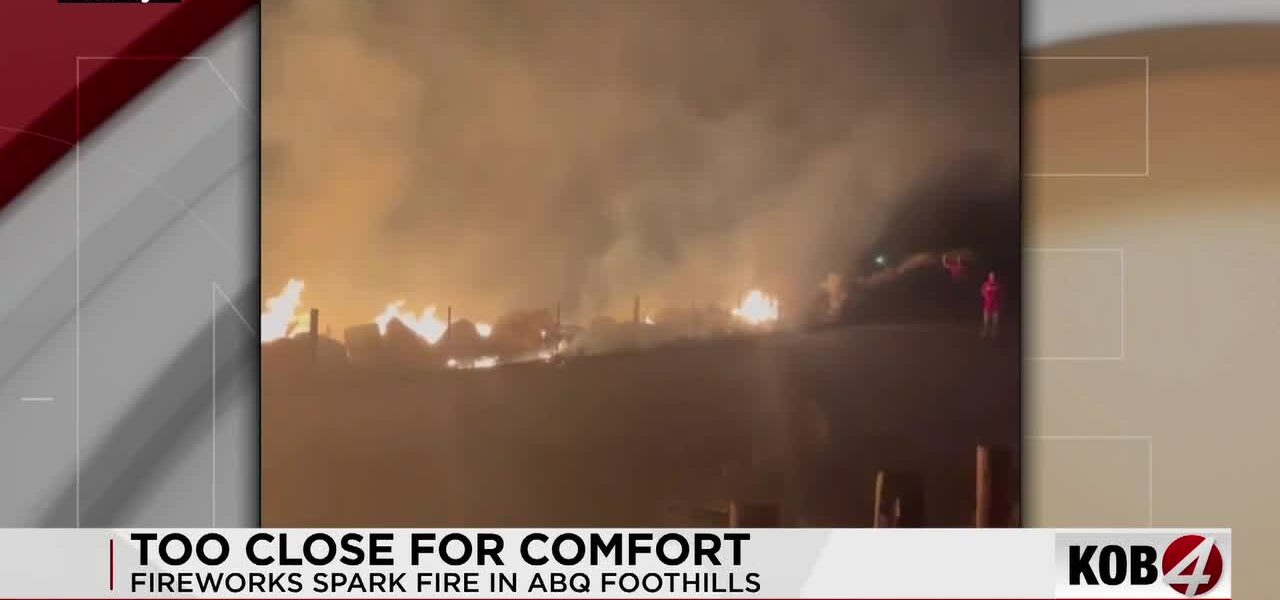
POLICY WIRE — Albuquerque, New Mexico — It took mere seconds for patriotic fervor to morph into pure peril. Not with a bang, but with a crackle and a plume of smoke, a swath of Albuquerque’s foothills transformed into an accidental, flaming indictment of communal indifference. For residents near the Menaul Trailhead, the Fourth of July wasn’t just about national celebration; it became an anxious vigil, a reminder that the line between merriment and misfortune is thinner than you’d think, especially when fireworks enter the equation. And boy, did they.
“It was dangerous, it was high-level flames,” recounted Karen Haskell, one local resident whose festive evening quickly pivoted to crisis management. For her, sleep was a luxury postponed until the ember glow faded. That night, she didn’t just witness a fire; she stood watch over her home. Because frankly, on any holiday with a potential for pyrotechnics, her balcony, which offers a bird’s eye view of the open space parking lot, becomes a critical observation deck. And that vigilance proved to be for good reason. A brief moment of skyward spectacle, one of those high shower-type fireworks, and a bush near her gate was instantly ablaze. She’s quick. Her son, even quicker, hosed it down for an hour. Meanwhile, she was calling 911, the old-fashioned way, while flames apparently reached 10 feet into the New Mexico night. Imagine the chaos, the split-second decisions.
It’s a situation that throws into sharp relief the perennial challenges of balancing individual freedoms—like, say, lighting a celebratory rocket—with collective safety, especially in increasingly arid environments. These isn’t an isolated incident; it’s a recurrent problem across the U.S. West, — and indeed, around the globe in regions grappling with prolonged dry spells. The Albuquerque Fire Rescue (AFR) later confirmed the obvious culprit: fireworks. Luckily, no one was hurt, no houses were scorched. But, honestly, it was close enough to smell the fear, to hear the communal intake of breath. [QUOTE_PLACEHOLDER] Lt. Fejer from AFR sagely observed. You see, the desert doesn’t forgive, — and luck isn’t a strategy.
But the aftermath is where the true policy entanglement unfurls. Even if the fireworks themselves met local legal definitions, their deployment in an open space like the foothills is strictly forbidden. It’s a classic Catch-22: permissible to purchase, perilous to use where folks often want to. The AFR Fire Marshal’s Office issued 62 cease-and-desist orders across the city on July Fourth, contributing to a year-to-date tally of 109. That’s a lot of warnings. And yet, Lt. Fejer acknowledges the blunt reality: few of these translate into actual citations. Enforcement agencies, it seems, have to actually see the violation happen to slap someone with a ticket. And that, dear reader, is like finding a specific spark in a bonfire. 311 records show the public called in a staggering 877 fireworks-related reports on that single day alone. A ‘heat map’ of complaints, that’s what those calls become, a reactive tool for future patrols, educational perhaps, but hardly preventative.
There’s a frustration building among residents, a sense that basic preventative measures aren’t always taken. Haskell for one, was quite explicit. “I was mad that they didn’t do it, because it’s the safety of all the people that live up here,” she declared, referring to the trailhead gate, which neighbors say usually shuts by 9 p.m. in the summer. But Fejer quickly punctured that balloon of hope, pointing out that access points are too numerous. Shutting one gate wouldn’t staunch the flow of casual disregard. It wouldn’t change a whole lot. Just a gesture, maybe.
📄 POLICY WIRE WHITEPAPER PUBLISHED: PAKISTAN'S NATIONAL SECURITY POLICY PRIORITIES
👉 READ BY CLICKING HEREWhat This Means
This incident, small in its immediate physical damage but massive in its implications, highlights a broader governance challenge that resonates far beyond New Mexico’s sun-baked landscapes. It’s a policy dance between individual liberties — and public safety in an era of heightened environmental vulnerability. The struggle to enforce minor ordinances that carry major potential consequences—especially when public officials can’t personally witness every infraction—shows how resource allocation and public compliance mechanisms often fall short.
From a global perspective, the issue of controlling pyrotechnic displays and preventing wildland fires in drought-stricken regions isn’t unique to the American Southwest. Consider nations like Pakistan, where extensive, informal use of fireworks is common during religious festivals like Eid, and uncontrolled brush fires in the country’s diverse landscapes are a recurrent problem, especially as climate change deepens periods of intense heat and aridity. Managing dense urban populations and surrounding wildland interfaces, especially with limited policing resources and informal cultural practices, poses complex policy questions about community engagement, public awareness campaigns, and innovative enforcement strategies. In both Albuquerque and, say, a sprawling South Asian metropolis, the underlying problem isn’t always the ‘bad actor’ as much as it’s the systemic challenge of enforcing policies where personal enjoyment butts up against collective, often existential, risk. The ‘heat map’ approach, while better than nothing, is hardly a robust policy solution to a literally burning problem.
AFR expects outside fire calls to keep climbing through mid-July, a grim forecast—and not really a surprise—for those living adjacent to the vast, dry, and fire-prone Foothills. It’s not just a seasonal issue; it’s an annual administrative riddle. How do you govern a spontaneous, often benign tradition that holds inherent danger without coming off as authoritarian? And how do you protect vast tracts of wilderness when an individual can — at any time — ignore the rules with little consequence? Policy makers here, — and abroad, don’t have easy answers to this one. For more on similar policy conundrums, one might examine how challenging it can be to enforce rules against hidden dangers. And in this case, the hidden danger was right there in plain sight, dazzling but destructive. But it’s a policy question that impacts community trust — and emergency service bandwidth. We all know fire agencies work tirelessly; it’s the policy vacuum allowing repeat scenarios that gnaws at people.