


Academic Thunderstorm Brews in New Mexico: Dean Retains Post Amidst Identity Tempest
POLICY WIRE — ALBUQUERQUE, N.M. — The future of New Mexico’s sole law school isn’t playing out in courtrooms just yet, but in the less-dignified arena of faculty politicking and community...

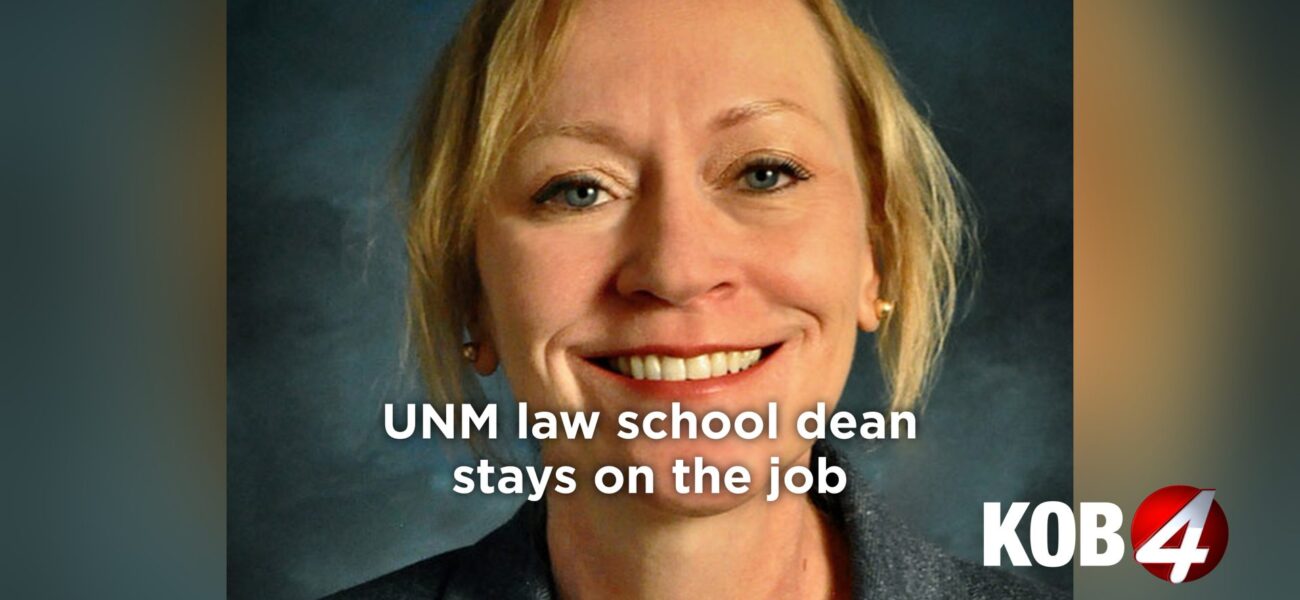
POLICY WIRE — ALBUQUERQUE, N.M. — The future of New Mexico’s sole law school isn’t playing out in courtrooms just yet, but in the less-dignified arena of faculty politicking and community dissent. While some expected a swift verdict on the leadership of Dean Camille Carey, the University of New Mexico’s Provost Barbara Rodriguez decided this week to keep her in the job, sidestepping — for now — a public relations quagmire that had simmered for weeks. It’s a move that certainly solidifies institutional support, even as the undercurrents of discontent continue to ripple across the state’s legal landscape.
Rodriguez’s decision to reaffirm Carey’s deanship since 2022 comes despite vocal protests. And that’s a polite way of putting it. The university officially announced the reappointment Monday, explaining it was made after careful consideration. But careful consideration often means navigating a tightrope walk between powerful internal factions and increasingly frustrated external stakeholders. As Provost, I remain committed to working with Dean Carey and the entire School of Law community to strengthen the School, support its mission, and ensure it continues to serve the people of New Mexico with distinction, Rodriguez stated, a sentiment as carefully crafted as any legal brief. [QUOTE_PLACEHOLDER]
Dean Carey, who manages over 30 faculty members and approximately 300 students, naturally welcomed the vote of confidence. I am honored by the opportunity to continue serving the UNM School of Law, she said, expressing a familiar pledge to uphold traditions and build upon them. Our law school has a proud tradition of preparing lawyers who make a difference in communities across New Mexico, and I look forward to working with our faculty, staff, students, alumni, and legal community partners as we build on that tradition.
But building on tradition sometimes means confronting difficult truths. And this entire saga isn’t just about an administrator; it’s about whose voices get amplified in a legal system that’s supposed to serve everyone. The faculty, it seems, has offered its own verdict: the university shared figures revealing that out of 33 eligible faculty members, 31 responded to the reappointment vote, reflecting a robust 93.95% participation rate. Of those, 24 backed Carey’s continued tenure, while seven opposed it, as publicly announced by the University of New Mexico.
The opposition, which has made waves far beyond the campus grounds, argues that under Carey’s watch, New Mexico applicants to the state’s lone law school have seen a concerning downturn. Organizations like the New Mexico Hispanic Bar Association and the American Civil Liberties Union of New Mexico had pushed for Carey’s removal. They allege that the percentage of non-resident students has surged for the classes of 2026 — and 2027. And, crucially, they contend that Native American students remain profoundly underrepresented.
📄 POLICY WIRE WHITEPAPER PUBLISHED: PAKISTAN'S NATIONAL SECURITY POLICY PRIORITIES
👉 READ BY CLICKING HEREBecause, for them, it’s about the soul of the institution. Our state’s only law school is turning away its own people. This is not simply a debate about admissions metrics. This is a debate about values, said Jessica Martinez, a UNM graduate whose words cut straight to the core of the political tension. This isn’t an abstract academic squabble; it’s a direct challenge to the mission of a public institution in a state with significant indigenous and Hispanic populations. From Albuquerque to Balochistan, questions about who controls educational gateways — and whose demographics benefit — ignite passionate debates, often framing broader national identity crises.
On the flip side, a group of faculty members on the 2025-26 UNM School of Law Admissions Committee came to Carey’s defense. In a letter sent to President Stephen Goldstein and Provost Barbara Rodriguez, they countered claims of declining local representation. They reported that New Mexico applicants for the 2025 entering class were actually up since 2011. And concerning Native American enrollment, the letter highlighted that 23 of 296 students (7.77%) enrolled for the 2025-26 academic year identified as American Indian or Alaska Native. They then made a direct comparison: that’s just shy of the 24 of 294 students recorded in 2021-22, the year before Carey took office. For good measure, they added that the 2025-26 student body also includes 36 Chicano students, constituting 12.16% of the enrollment, a figure they said has increased across the last three incoming classes.
What This Means
This decision, rather than quieting the storm, could merely usher in a new phase of institutional introspection. For policymakers, it’s a classic case of navigating political pressure from advocacy groups versus entrenched academic structures. The faculty vote, while ostensibly supportive, wasn’t unanimous. Those seven dissenters, coupled with vociferous community objections, suggest that Provost Rodriguez’s move might feel less like a resolution and more like a policy cliffhanger. It certainly won’t stop questions about the role of the University of New Mexico Law School in fostering a representative legal community, especially for those marginalized populations it claims to serve. When admissions statistics become public currency, it transforms administrative choices into referendums on justice and equity. The economic implications are also noteworthy: a law school perceived as detached from its community risks losing local talent, undermining its potential for homegrown legal solutions, and possibly affecting future funding or donor support. it speaks to a broader challenge seen globally—how institutions in the U.S. and even countries like Pakistan grapple with ensuring educational access reflects diverse national identities, balancing meritocratic ideals with equitable representation. This isn’t just about New Mexico; it’s about an institution’s mandate in an increasingly identity-conscious world.