


Hoops & Hardship: Unheralded Knick’s Contract Reignites Debate on Value in Global Talent Markets
POLICY WIRE — New York City, USA — So, what’s a journeyman athlete worth these days? More specifically, what about the kind of player who doesn’t soak up the bright lights but keeps a...

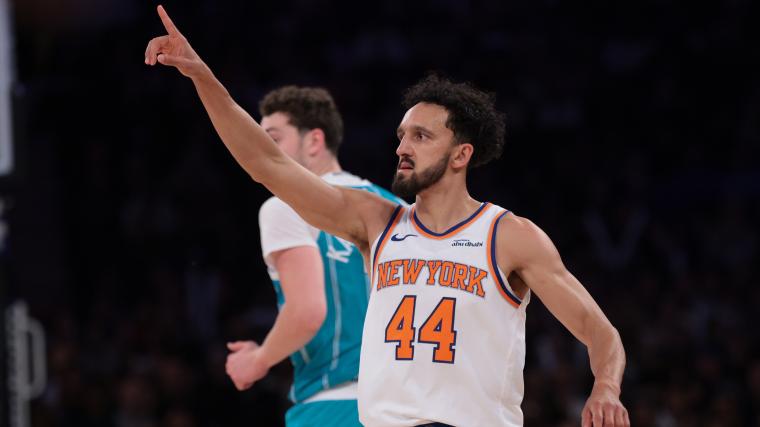
POLICY WIRE — New York City, USA — So, what’s a journeyman athlete worth these days? More specifically, what about the kind of player who doesn’t soak up the bright lights but keeps a championship engine humming from the margins? Forget the MVPs for a second. Let’s talk about the grimy, sometimes uncertain reality that defines most professional careers—the struggle, the bounce, the unexpected breakthrough. It’s in this rarely examined nook of the sporting ecosystem that Landry Shamet, a guard often an afterthought for the New York Knicks until very recently, found his financial emancipation. This isn’t just about a basketball deal; it’s a stark reminder of human capital valuation in an intensely scrutinized, globalized marketplace. For most of his career, you could say Shamet was pretty much ‘in limbo,’ always battling for a place.
His story, to a certain extent, mirrors the broader, ruthless currents of the modern workforce—talent recognized late, opportunities arising from others’ misfortune. It wasn’t the star power or the MVP chants that propelled Shamet to a lucrative four-year, $24 million extension; it was a sudden vacancy, caused by Malcolm Brogdon abruptly retiring, and a keen-eyed coach, Mike Brown, who spotted quiet worth. Brown, it seems, valued his impact as a shooter — and a positive defender. It’s a pragmatic recognition, far removed from the emotional fan rhetoric, yet every bit as consequential. Shamet played a crucial role as the season progressed, eventually becoming one of the first players off the bench during their championship run as the team’s resident knockdown shooter.
It’s fascinating, isn’t it, how global markets decide who gets paid — and how much? In a sport now undeniably international, where scouting extends from America’s inner cities to the smallest villages in Serbia, this type of transaction holds significance beyond mere athletic prowess. Consider how a similar calculation—the valuing of an individual’s skill and loyalty—plays out in other, perhaps more fraught, global economies. In Pakistan, for instance, skilled labor, from tech professionals to craftsmen, frequently seeks better compensation abroad, chasing the sort of secure, guaranteed futures that a Shamet contract now promises. But getting there—establishing that value in a larger arena—that’s the challenge. But hey, it seems Shamet has finally landed a long-term contract with the Knicks, at least for a while.
During the entire playoffs, Shamet only averaged six points per game. He was still a key member of the rotation. You might ask, how does that translate to $24 million? It translates when a team is winning, and when a player fills a very specific, quantifiable need, no matter how unspectacular. And what a need he filled: in the Eastern Conference Finals against the Cleveland Cavaliers, the man was simply unguardable. He shot at a historic 91.7% clip, making 11 of his 12 three-point attempts against Cleveland, according to the league’s official statistics. That kind of efficiency, in moments that truly mattered, carves out more than just victories; it carves out economic security.
Yeah, okay, so he wasn’t Jalen Brunson or Karl-Anthony Towns. And no, OG Anunoby got more shine in the NBA Finals. Despite that, Shamet knew how to play his role, which has now earned him a spot on the team for years to come. He signed a four-year contract worth $24 million to stay in New York. Of course, there’s a solid structure with this deal, as only the first two years are fully guaranteed, while the other two have partial guarantees. That partial guarantee, by the way, is the small print that reminds everyone: even in triumph, precarity looms just beyond the immediate horizon for these guys. Despite potential problems in the latter two years, this is a deal that Shamet has been working on.
📄 POLICY WIRE WHITEPAPER PUBLISHED: PAKISTAN'S NATIONAL SECURITY POLICY PRIORITIES
👉 READ BY CLICKING HEREIt impressed Leon Rose, the Knicks team president, to no end. Here’s what he had to say: [QUOTE_PLACEHOLDER] For Rose, it’s not merely a financial outlay; it’s an investment in a known quantity that proved effective when the stakes were highest. Moving forward, Shamet will play a key role for the Knicks as their best spot-up shooter. He will look to contribute to the team’s title defense in the 2026-27 season. So much rides on that continued performance.
What This Means
This extension, seemingly a mundane sports transaction, actually whispers volumes about the political economy of success and globalized merit. In an age where digital footprints and instant statistics quantify every micro-performance, Shamet’s journey illustrates that ‘soft skills’—like being a ‘positive defender’ or simply having the ‘willingness to do whatever the team needs’—remain highly valued, alongside raw talent. But it also highlights the hyper-competitive, almost ruthless, nature of capital allocation in talent-rich fields. Whether it’s a pro athlete, a tech startup founder in Lahore, or a climate scientist in Riyadh, the calculus remains eerily similar: prove your value quickly and decisively, or the market moves on.
Politically, the stability offered by a guaranteed contract provides an interesting contrast to the fleeting nature of political power. Athletes, like policymakers, often face immense pressure, with public opinion shifting faster than a fast break. But an athlete, if they’re lucky like Shamet, secures a future with a clear payout. For the average citizen, especially in developing regions, such long-term financial security is often a distant dream, complicated by geopolitical instability or economic volatility. This scenario for the Knicks, where a single valuable player finds security, reflects a fundamental market truth: scarcity drives value, and in highly specialized fields, even supporting roles can command significant wealth. It’s a phenomenon that creates both aspiration — and stark inequality. We see similar dynamics playing out across borders, from economic policy discussions to even the grand spectacle of global events—what makes a good investment, or how ambition can fizzle out for lack of precise valuation. One only needs to glance at the headlines surrounding fumbled ambitions in large-scale projects to understand that the path from potential to payout is fraught with challenges, political and economic alike.