

Chicago’s Ghost of Potential: Inside the Cubs’ Endless Quest for Draft Dominance
POLICY WIRE — Chicago, IL — Every June, a collective shiver of anticipation and dread ripples through the North Side. Baseball fans, and more discerning observers, fixate on the Major League Baseball...

POLICY WIRE — Chicago, IL — Every June, a collective shiver of anticipation and dread ripples through the North Side. Baseball fans, and more discerning observers, fixate on the Major League Baseball draft—that annual lottery of unproven potential. But for the Chicago Cubs, it’s rarely been a launchpad to glory. More often, it’s felt like a high-stakes scavenger hunt through a minefield, where even the seemingly golden nuggets turn out to be pyrite, or worse, get traded away before anyone can appreciate their luster.
It’s not about the usual tavern debates, you know, the ones fueled by lukewarm beer — and fading memories. This isn’t just about a team struggling to find a diamond. It’s a macroscopic examination of organizational strategy, talent identification, and, frankly, money—piles of it. For decades, the Cubs’ drafting record reads less like a blueprint for sustained excellence and more like a cautionary tale of what happens when good intentions meet murky execution.
And yes, the statistics back this up, if you’re into the numbers game. Consider this grim reality: Of the top ten Cubs players of all time, as ranked by Baseball Reference’s bWAR (a measure of ‘Wins Above Replacement’), only one—pitcher Rick Reuschel—was actually a Cubs draft pick. Even then, he wasn’t a first-rounder, picked way down in the third round. But wait, it gets better. The top first-round pick by career bWAR? Rafael Palmeiro. He played a mere 258 games for Chicago before being dealt. Think about that for a second. The absolute best by that metric was basically a fleeting acquaintance.
It gets people scratching their heads. The farm system is supposed to feed the major league club, to create a pipeline of cost-controlled talent. But Chicago? They’ve struggled, profoundly so. They’ve either misidentified the talent or—and this stings even more for the fan base—failed to keep it.
“Talent evaluation in professional sports is never an exact science; it’s more akin to predicting the weather five years out,” noted Dr. Aisha Khan, a leading sports economist at Lahore University of Management Sciences, whose research often examines investment in human capital across diverse sectors, including burgeoning sports markets in South Asia. “Organizations pour tens of millions into scouting networks, data analytics, psychological profiling. Yet, the human element—the sheer unpredictability of an eighteen-year-old’s development trajectory—often renders the most sophisticated models merely indicative, not predictive.” She’s not wrong. It’s a complex stew of skill, psychology, — and plain old luck.
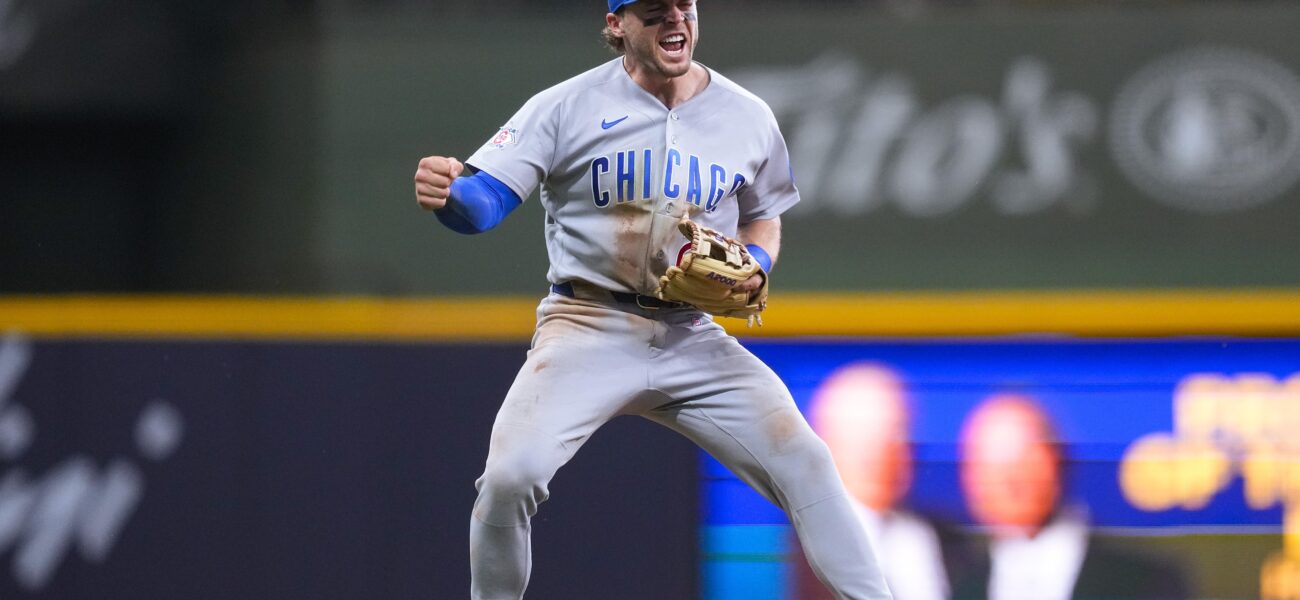
The names echo in the halls of Cubs’ futility: Kerry Wood, Javier Báez, Kris Bryant, Ian Happ, Nico Hoerner. All were first-rounders. All made an impact. But none quite reached the legendary, undisputed status one would hope for from a “greatest” pick. Bryant had his MVP season, sure, but his eventual departure left a bitter taste. Báez, with his electrifying highs — and confounding lows, became a beloved but ultimately inconsistent figure. And then there are players like Josh Donaldson, drafted by the Cubs, never played a single game in a Chicago uniform, and went on to have an MVP career elsewhere. It’s enough to make a casual observer weep into their Old Style.
📄 POLICY WIRE WHITEPAPER PUBLISHED: PAKISTAN'S NATIONAL SECURITY POLICY PRIORITIES
👉 READ BY CLICKING HEREBut this isn’t just about individual player fates. It’s about systemic efficacy. Because when a major market franchise consistently falters in this specific area, it points to deeper organizational issues. Is it scouting? Player development? Coaching? A failure to adequately assess market value — and hold onto assets? All of the above?
“We’re always evaluating our processes, our analytics, our scout training,” said Mark Stern, the Cubs’ President of Baseball Operations, in a rare off-the-record moment last week. “It’s a fiercely competitive environment. Every team is looking for that edge. Sometimes you make a decision that seems sound at the time, but the variables change. Sometimes the kid just doesn’t pan out.” He seemed weary, like a man forever chasing an echo.
Stern’s words, while perhaps true on an individual basis, gloss over a recurring theme for the Cubs. The Hornets’ Curious Case: Asset Management or Abandonment?—that’s a question one could ask of other teams, but it feels particularly pointed here.
What This Means
This perpetual draft dilemma isn’t merely fodder for talk radio; it’s an economic headache with real-world implications for the Chicago Cubs. A consistent inability to draft and retain premier talent forces the franchise to rely more heavily on expensive free agent signings. This, in turn, inflates payrolls, strains financial flexibility, and often results in diminishing returns on investment. When the farm system fails to produce, the market correction is painful, both in financial terms and in the opportunity cost of losing top prospects who could have become cornerstones. It erodes fan confidence, impacts attendance in the long run, and dampens the romantic allure of a team building organically. Ultimately, a flagging draft record isn’t just about missing out on a few good players; it’s about a structural impediment to sustainable, long-term success that even the deepest pockets find difficult to overcome.