


Fumbled Ambition: US World Cup Host’s Hopes Fizzle, Echoing Geopolitical Puzzles
POLICY WIRE — Washington D.C., USA — Imagine hosting the biggest party on the planet. Everyone’s here, the spotlight’s blazing, and then—poof—your star attraction exits stage left,...

POLICY WIRE — Washington D.C., USA — Imagine hosting the biggest party on the planet. Everyone’s here, the spotlight’s blazing, and then—poof—your star attraction exits stage left, far earlier than anyone wanted. That’s pretty much the narrative for the United States men’s national team, which bowed out of the 2026 World Cup in the round of 16. It wasn’t just a loss; it was a rather uncomfortable replay. Because, if you’re keeping tabs, it’s the same round the U.S. got eliminated in during the 2022 competition. A grand spectacle, an expanded tournament allowing ‘a first knockout win since 2002’, yet the familiar sting of early departure.
U.S. manager Mauricio Pochettino had dreamt bigger. You know, making history—’the first manager to lead the U.S. to a quarterfinal since Bruce Arena did it in 2002.’ Instead, he oversaw ‘a 4-1 defeat with Belgium comfortably sending the Stars and Stripes out of the tournament they were hosting.’ A tidy summation of ambition meeting brute reality. But it wasn’t all gloom, though. Even amidst the disappointment, some folks came out looking alright, if only relatively so. Others, well, their stock certainly took a hit. We’re talking careers here; this stuff isn’t just about kicking a ball around.
Malik Tillman, for one, was shining. The ‘free-kick goal in the 31st minute looked like it would spark a U.S. rally.’ But, hey, fate’s a cruel mistress; ‘instead, the Stars and Stripes conceded immediately.’ Not his fault, though. The kid, at ‘age 24,’ showed promise, exceeding expectations after a strong showing in the 2025 Gold Cup. He’s definitely one for the future. And you know who else walked away with a semblance of victory? Seattle. Its crowd at Lumen Field, that ‘loud, patriotic bunch,’ proved once more why the Pacific Northwest is an undeniable heartland of soccer fandom. But with new headquarters planned for U.S. Soccer down in Atlanta, fewer opportunities might present themselves for this region, making their energetic turn this summer all the more memorable. The locals rose ‘to the occasion this summer,’ bless their hearts. [QUOTE_PLACEHOLDER]
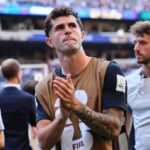
Then, the other side of the coin—the ‘losers’. Oh, where do you even start? Sergino Dest, poor chap, looked like he’d left his tactical brain in the locker room. ‘Falling asleep on the first goal’, then ‘too slow to react on what ended up being the second goal as well.’ He just couldn’t seem to ‘get plugged into the game,’ and consequently, got ‘the hook at halftime.’ A roller coaster tournament, indeed, showcasing his attacking flair but highlighting serious defensive gaps. Matt Freese, the goalkeeper, also had a rough one. This job’s brutal; you’re judged on scant ‘moments’. He let in the first two shots, and then, inexplicably, committed ‘a puzzling error, coming for a ball that he was able to claim but then feinting a clearance rather than booting it away.’ That blunder led to ‘Belgium taking a 3-1 lead’ and totally deflated the U.S. team, as recounted by FOX Sports, July 7, 2026. A collective sigh. And what about Christian Pulisic? He’s the American Messi, supposedly, ‘the star of the U.S.’ But ‘injury struck,’ again, ‘just as it did in the group stage.’ The ’27-year-old was playing in a home World Cup in the prime of his career.’ A home World Cup! Think of the pressure. He tried to gut it out, but knee — and ankle pain forced him off. He’ll hope to be ‘back as the veteran leader of the team in 2030,’ but knows ‘nothing – certainly not good health – is guaranteed.’
What This Means
This early exit, especially on home soil and despite the sheer monetary investment in growing the sport here, isn’t merely a sporting footnote; it’s a telling policy moment. America, much like its sometimes overambitious foreign policy initiatives — say, in Afghanistan or parts of South Asia — often approaches global projects with significant resources, boundless optimism, and a belief that sheer will (and money) can bend reality. Yet, this 4-1 ‘defeat’ against Belgium underscores a recurrent theme: raw investment doesn’t automatically translate to success against deeply entrenched, organically evolved global power structures.
For nations in the Muslim world, and specifically those watching closely from places like Pakistan, where football’s rising popularity contends with the global dominance of cricket, this U.S. performance might offer a nuanced, albeit unexpected, lesson. While they aspire to participate and excel on such world stages — think of the broader national development goals that echo sporting aspirations — they see the immense American apparatus still grappling with fundamentals. It highlights that soft power isn’t simply bought; it’s painstakingly earned, developed through sustained, grassroots engagement, not just flashes of brilliance or big-money events. The spectacle of hosting didn’t compensate for a lack of consistent, top-tier on-field execution. And that’s a political implication right there. The optics of a host nation folding prematurely can dampen enthusiasm, not just among domestic fans, but globally. It’s a bit like launching a grand initiative abroad that then fails to deliver concrete outcomes. Folks remember the letdown. Host Nation Hopes Implode: World Cup Dreams Turn to Dust for North America’s ‘Great Experiment’. Sometimes, you just can’t buy your way to victory, on the pitch or in the diplomatic arena. That said, it’s not all bleak; the crowds in Seattle showed that the passion exists. Now, can the policy infrastructure channel it into sustained, world-class performance? That’s the real question.