

Suspensions and Empty Stomachs: New Mexico Schools’ Hard Lesson in Unequal Justice
POLICY WIRE — ALBUQUERQUE, N.M. — It’s a bitter paradox: for some children, school isn’t just about reading, writing, and arithmetic. It’s also about breakfast and lunch. A recent, eye-opening...

POLICY WIRE — ALBUQUERQUE, N.M. — It’s a bitter paradox: for some children, school isn’t just about reading, writing, and arithmetic. It’s also about breakfast and lunch. A recent, eye-opening state report out of New Mexico has peeled back the veneer on the Gallup McKinley County Schools system, exposing a harsh reality where student discipline doesn’t just cut into classroom time; it can cut off a child’s only guaranteed meal of the day. This isn’t just about bad behavior; it’s about whether a child’s ethnicity dictates if they’ll go hungry, a disturbing echo of systemic issues seen far beyond America’s borders.
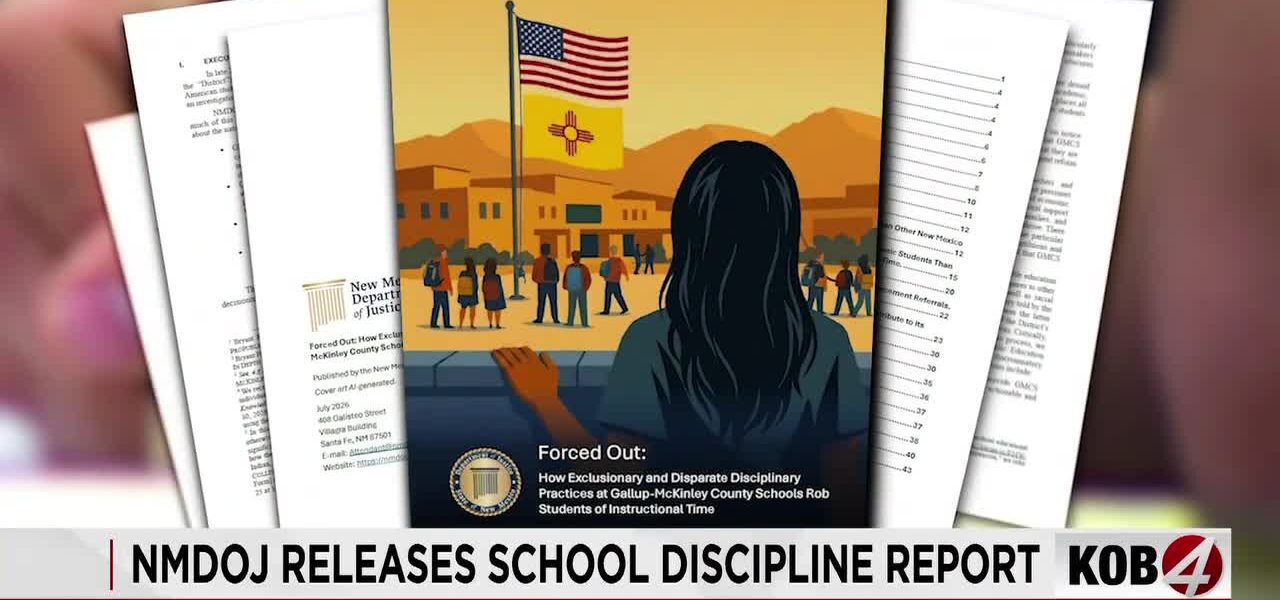
The New Mexico Department of Justice (NMDOJ), it appears, hadn’t been snooping around for fun. They started looking into Gallup McKinley County Schools in late 2023, sparked by a heap of claims about unfair student discipline practices. And what they found? A picture that isn’t just ugly—it’s frankly alarming. The investigators didn’t mince words: they said the discipline rates disproportionately affect Native American and Hispanic students compared to white students. One might almost hear a cynical sigh from anyone familiar with persistent inequalities in institutional settings, whether it’s in American education or, say, the educational challenges faced by Baloch communities in parts of Pakistan where historical grievances intersect with uneven access to resources. [QUOTE_PLACEHOLDER]
This report, the kind of detailed docket that usually gathers dust on shelves, found that GMCS students, across the board, are losing at least twice as many instructional days to out-of-school suspensions as the statewide average. Think about that for a second. And it’s not even because these kids are necessarily raising more hell. The report notes that student rule violations are comparable to other districts. But the kicker, the statistic that’ll really make you pause, is this: the report showed Native American students lost eight to 10 times as many days as white students between 2015 and 2025. That’s not a typo. That’s a decade of systemic disadvantage laid bare by raw data.
The ramifications stretch far beyond simply missing a day of class. The NMDOJ report was quick to outline several harms for students tied to suspensions, and some are more visceral than others. Consider this: 100 percent of GMCS students get free breakfast — and lunch. When they’re suspended from school, they don’t get that. It’s a basic human need, turned on and off like a spigot based on an administrative decision, a chilling prospect for any family struggling to make ends meet. But that’s not where the bad news stops. The report also cited lower test scores and graduation rates, both expected consequences of missed instruction, and then—the real gut punch—a greater likelihood of future contact with the criminal justice system. It’s a pipeline, plain — and simple, not always paved with good intentions but certainly laid with institutional biases.
It’s not all doom — and gloom, I suppose, if you’re a glass-half-full kind of person. The report did note some minor bright spots, including declines in expulsions and referrals to law enforcement in recent years. Small victories, perhaps, but they don’t erase the grand canyon of disparity it exposed. Because let’s be honest, those figures barely gloss over the deep chasms of inequality revealed. For real change, the NMDOJ didn’t just wag a finger; it issued some practical advice. They’re recommending expanded training, regular data reporting—which is usually where transparency goes to die—and, perhaps most intriguingly, stronger state oversight for the district. A dose of adult supervision, as it were.
📄 POLICY WIRE WHITEPAPER PUBLISHED: PAKISTAN'S NATIONAL SECURITY POLICY PRIORITIES
👉 READ BY CLICKING HEREAnd so, while a government body writes a report, children in New Mexico navigate a system that often feels stacked against them. This situation, of course, isn’t unique to America’s Southwest. In many nations, particularly across South Asia, debates often flare up about equitable access to quality education for marginalized groups, like the Adivasi communities in India or various minority sects elsewhere. These issues, while locally distinct, share a common thread: the long-term cost of failing to address educational and systemic inequalities, costing not just individuals their potential but societies their cohesion. One can scarcely look at the issues raised here without drawing parallels to Sri Lanka’s Prison Calamity: A Stark Look at Regional Strain, where systemic issues create deeply entrenched problems for already vulnerable populations. These are not merely administrative failures; they’re human rights challenges playing out in school hallways and lunchrooms.
What This Means
This NMDOJ report isn’t just another dry bureaucratic document; it’s a political landmine, pure — and simple. For New Mexico’s state government, it means direct scrutiny. It’s gonna put the onus squarely on them to ensure proper oversight isn’t just a talking point but an actual, tangible commitment. This could easily spark legislative pushes for more stringent accountability measures and possibly even federal interventions—civil rights investigations often don’t just stay local. The economic ripple effects? They’re considerable. If these students are missing so much school, it isn’t just their individual academic futures taking a hit; it’s the future workforce, the tax base, the very fabric of communities already facing economic headwinds. A less educated populace means a less competitive state, fewer opportunities, and a cycle of poverty that’s damn near impossible to break once it really sets in. Plus, this highlights the broader, uncomfortable truth about resource allocation—are districts truly getting what they need, or are systemic biases allowing funding and attention to be siphoned away from those who arguably need it most? Because when it’s an entire demographic facing this kind of systemic issue, you’ve got to ask who’s really paying the price, and it’s certainly not just the kids in the suspension room.