
Detention by Disparity: New Mexico’s School System Fails Native Youth, Fuels Crisis
POLICY WIRE — ALBUQUERQUE, N.M. — It’s more than just a missed math lesson. It’s a missed meal. A lost connection. A step closer, perhaps, to something far worse than a bad grade. When a child,...

POLICY WIRE — ALBUQUERQUE, N.M. — It’s more than just a missed math lesson. It’s a missed meal. A lost connection. A step closer, perhaps, to something far worse than a bad grade. When a child, already facing long odds, is yanked from the classroom, the ripples spread. They don’t just affect that kid, nope. They impact a whole community, really. That’s the cold reality staring down Gallup McKinley County Schools, deep in the arid heart of New Mexico.
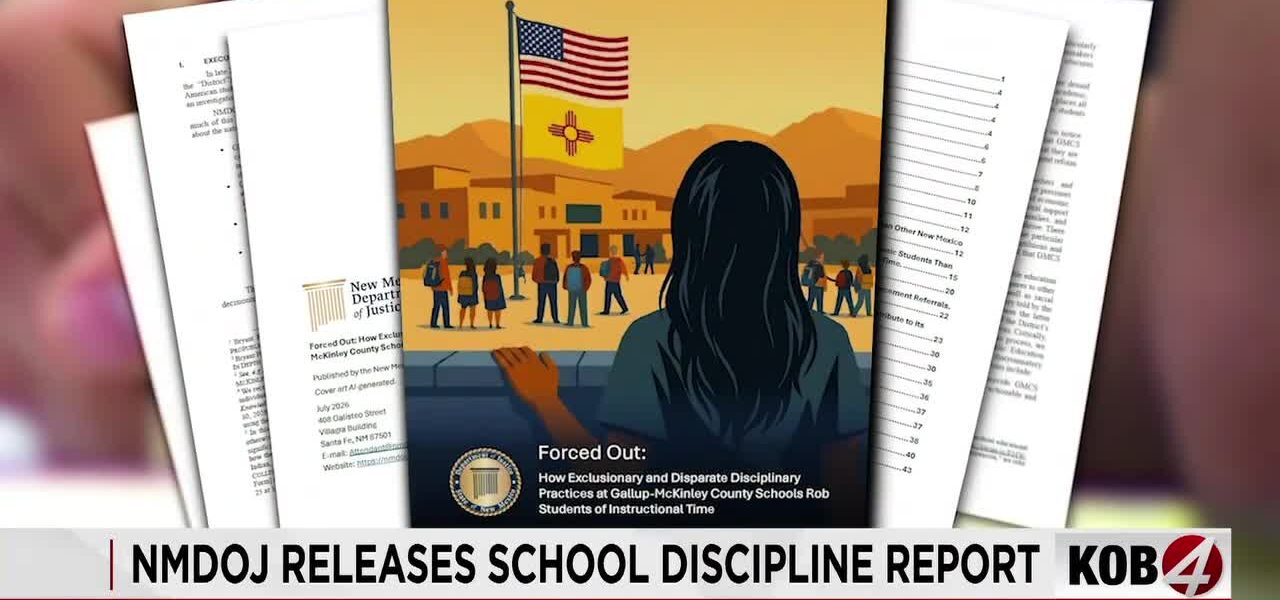
A recent, unsettling report from the New Mexico Department of Justice (NMDOJ) peels back the layers on disciplinary practices here. What it reveals isn’t pretty: a system seemingly rigged against its most vulnerable students, particularly Native Americans. These aren’t minor hiccups; we’re talking about stark, undeniable disparities that beggar belief.
The numbers are frankly, astounding. For years now, students in the Gallup McKinley district have been losing instructional time at more than twice the statewide average due to out-of-school suspensions. And get this: despite comparable rule violations across the board, Native American students? They’ve lost between eight and ten times as many instructional days as their white peers from 2015 to 2025, according to the NMDOJ’s damning findings. That’s not just a gap; it’s a chasm, isn’t it?
But the damage stretches way beyond a few missed hours in algebra. Because for a district where a full 100 percent of students qualify for free breakfast and lunch, a suspension means hunger. Pure and simple. Kids aren’t just losing learning opportunities; they’re losing basic sustenance. It’s a vicious circle, — and one that doesn’t just stop there. The report lays out a grim prognosis for suspended students: lower test scores, diminished graduation rates, and – this is the really chilling part – a significantly higher likelihood of future contact with the criminal justice system. That’s the notorious school-to-prison pipeline, on full display, stark — and unflinching.
Still, you see, it’s not all shadows. There’s been a glimmer of something, a slight shift: expulsions and referrals to law enforcement have actually gone down recently. A tiny win? Maybe. But not nearly enough to balance the scales.
“Look, these numbers are sobering, no doubt. But we’re not running from them,” offered Dr. Anya Sharma, Superintendent of Gallup McKinley County Schools. “We’ve actually seen declines in some areas, — and we’re committed to doing better for all our students. It’s a complex picture, and we’re taking the DOJ’s recommendations seriously, making sure everyone feels heard and respected.” That’s a careful statement, right? You can almost hear the political tightrope walking.
📄 POLICY WIRE WHITEPAPER PUBLISHED: PAKISTAN'S NATIONAL SECURITY POLICY PRIORITIES
👉 READ BY CLICKING HEREBut those reassurances don’t quite cut it for folks on the ground. “This report just tells us what we’ve known for generations,” remarked Charlene Begay, a Navajo Nation council member and longtime education advocate. “Our kids aren’t disruptive because they’re Native; they’re failed by a system that doesn’t understand them — and it pushes them right into that ‘school-to-prison pipeline’ we constantly warn about. It’s time for real accountability, not just more data or empty promises.” She’s not holding back, and you can hardly blame her.
The NMDOJ isn’t just pointing fingers, though. They’ve dropped a few sensible ideas on the table: more training for staff, regular data reporting to keep tabs on progress (or the lack thereof), and stronger state oversight for the entire district. Simple asks, aren’t they? But sometimes, simple fixes are the hardest to enact.
This report, remember, isn’t just about the American Southwest. It’s a stark echo of broader global patterns. Disadvantage, when allowed to fester, hits minority populations first — and hardest. We’ve seen similar patterns play out in places like Sri Lanka’s prison systems, where socioeconomic factors often predetermine someone’s path into — and through — state institutions. Education isn’t immune, whether we’re talking about underserved communities in Albuquerque or marginalized groups navigating Mumbai’s challenging urban sprawl.
What This Means
The implications here are far-reaching. Politically, the heat’s definitely on state — and local leaders. They can’t just brush this off as an anomaly. This is a systemic issue, plain as day, — and it threatens the social fabric of New Mexico’s Native communities. If the state doesn’t step up and enforce meaningful change, it won’t just be an educational failing; it’ll be a moral one, cementing generational disadvantage. Economically, well, you’re looking at a population routinely denied access to basic educational tools. That’s a direct pipeline to limited opportunities, lower earning potential, and an increased burden on social services down the line. It’s not rocket science: when you hamstring a significant portion of your future workforce, everyone suffers. This report isn’t a suggestion; it’s a loud, clear alarm bell, ringing not just for Gallup, but for every corner of society that turns a blind eye to fundamental inequity. Failure to act won’t just cost money; it’ll cost human potential, and you can’t put a price on that.