

Diamond Diplomacy: A Minor League’s Pittance Against Venezuela’s Quake of Despair
POLICY WIRE — Washington, D.C. — Venezuela’s landscape, a collage of hyperinflation, institutional decay, and profound human suffering, just added another layer of calamity: tectonic plates....

POLICY WIRE — Washington, D.C. — Venezuela’s landscape, a collage of hyperinflation, institutional decay, and profound human suffering, just added another layer of calamity: tectonic plates. The recent earthquake, yet another brutal blow to an already fractured nation, serves as a stark reminder of how rapidly natural disasters can compound man-made ones. This isn’t just about rocks moving, you know. It’s about a society stretched beyond its limit, watching its people scatter like marbles on a tilted floor.
It’s easy to look away, to label it just another Latin American crisis. But for many, the suffering there isn’t an abstraction; it’s family, it’s shared history, it’s the sheer, crushing weight of reality. The global aid machine grinds slowly, often with agendas attached, leaving local efforts to pick up the pieces, often with little more than pluck and pocket change. And this is where the story gets really — not better, exactly, but certainly more bizarre. Out of all the institutions one might expect to ride to the rescue, few would have placed bets on a minor league baseball outfit.
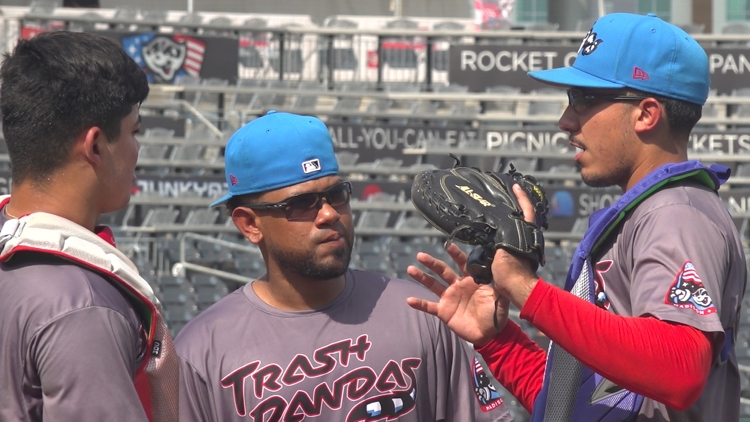
The Rocket City Trash Pandas, an Alabama-based minor league baseball team with an admittedly fantastic name, recently announced efforts to rally support for Venezuela’s earthquake victims. Through themed jerseys — and fan contributions, they aim to direct funds to various relief organizations. It’s a good-hearted gesture, certainly. A drop in the ocean, perhaps, but a sincere one. But it also paints a bleak picture of the aid landscape. When a baseball team’s fundraiser starts making international headlines (even small ones, like this), you’ve gotta wonder how desperately stretched thin the truly significant lifelines have become. The situation is pretty grim, if you ask me.
“We’re always encouraged by humanitarian gestures, large or small,” remarked Patricia Chen, Assistant Secretary for Western Hemisphere Affairs, during a recent digital briefing. “But it’s like using a thimble to empty an ocean when you consider the sheer scale of the Venezuelan catastrophe. True, sustainable relief demands significant political changes from the Maduro regime. Caracas knows it.” This bureaucratic pragmatism—the subtle deflection—it’s a D.C. classic. Because, honestly, what’s a thimble against an ocean?
From the other side of the fence, you get a different tune. Ricardo Morales, Venezuela’s Vice Minister of Foreign Relations, dismissed such initiatives as mere P.R. ploys. “The imperialist blockade creates the conditions for suffering, then they offer crumbs with one hand while holding a sledgehammer in the other. Our people don’t need charity; they need sovereignty, unmolested by Washington’s meddling.” There’s no love lost between these players, is there? This diplomatic impasse isn’t just theory; it’s got real consequences for people trying to survive. It’s what keeps countries like Venezuela — or say, regions struggling under similar geopolitical pressures in the Muslim world after their own disasters — from receiving aid without strings, or suspicion.
Venezuela, mind you, has seen its GDP contract by an astonishing 75% since 2013, according to a 2023 report from the United Nations Human Rights Office. That isn’t just a number. It’s the collapse of schools, hospitals, — and basic infrastructure, now compounded by natural fury. That’s a quarter-century’s worth of economic progress, erased. Gone. How do you recover from that, even with the best intentions from minor league ballplayers?
The situation in Caracas, then, becomes a microcosm of a larger, uncomfortable truth about global humanitarian assistance. It’s never just about helping people; it’s entangled in power, politics, — and historical grudges. Remember Haiti after its quakes? Or the uneven response to flooding in Pakistan, which displaced millions for months on end? The mechanics are different, sure, but the underlying friction—between the need for impartial aid and the political realities on the ground—it’s surprisingly consistent. And messy. Always messy.
📄 POLICY WIRE WHITEPAPER PUBLISHED: PAKISTAN'S NATIONAL SECURITY POLICY PRIORITIES
👉 READ BY CLICKING HEREWhat This Means
The sight of a baseball team stepping into the breach for a crisis on the magnitude of Venezuela’s earthquake is telling. It’s a quiet indictment, actually, of the often-paralyzed governmental — and international mechanisms. Politically, such gestures, while well-intended, do little to alter the deeply entrenched positions of the U.S. and Venezuela. Washington isn’t suddenly going to lift sanctions because some baseball fans bought a jersey. And Maduro isn’t about to embrace his ideological adversaries because a few dollars arrive through non-state channels. It really is a game of political brinkmanship, played with human lives as the chips.
Economically, this sort of micro-aid, while appreciated by recipients, barely scratches the surface. It provides immediate, localized relief—food, water, medicine—but does nothing to address the systemic economic collapse that makes Venezuela so acutely vulnerable to every new tremor, be it geological or political. It’s a Band-Aid on a gushing artery, essentially. these kinds of fragmented aid efforts can inadvertently obscure the need for a truly robust, internationally coordinated response—the kind that’s routinely bogged down by sovereign disputes and shadow games at NATO and other international bodies.
So, the Trash Pandas might score a small victory on the goodwill front, uniting a fanbase for a distant cause. But for Venezuela, it’s just another reminder of how individual charity must sometimes step in when grand international diplomacy and governmental assistance consistently strike out.