


King James’s Economic Play: Athlete as Global Asset
LeBron James leaves the Lakers. This isn't just sports; it's a strategic asset relocation. Discover how King James redefines athlete economics and global branding.

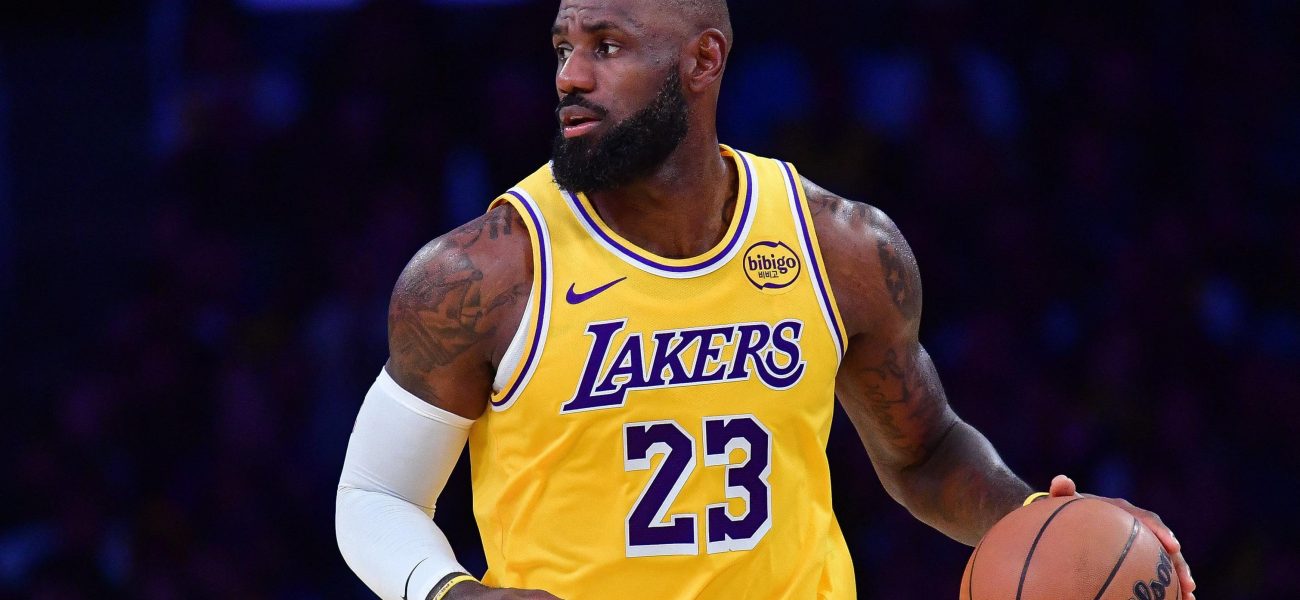
POLICY WIRE — Los Angeles, United States — They call him King James, and indeed, his reign over the basketball world has seen kingdoms rise and fall. But don’t mistake this for a mere changing of the guard in professional sports; this is an exercise in asset management, a high-stakes corporate relocation in basketball shorts. LeBron James, arguably the sport’s most valuable walking franchise, isn’t just leaving the Los Angeles Lakers. He’s re-positioning, shifting a formidable personal brand—and all its attendant influence—to yet another strategic location.
It’s a tale told repeatedly, every few years, in the brutal clarity of cold, hard economics. The spectacle of the professional athlete as a geopolitical commodity, someone whose gravitational pull affects markets and media, isn’t new. But with James, who’s now 41, it’s a career-defining ritual, an orchestrated drama watched across time zones, from Burbank to bustling bazaars in Lahore. This particular move marks the end of his past eight seasons in Tinseltown, a tenure that delivered a 2020 NBA title but also, perhaps, the most unique career achievement: playing alongside his son, Bronny, who’s 21, since 2024. That’s a lineage play, right there. It changes things.
The Lakers, for their part, delivered a communique dripping with deference. [QUOTE_PLACEHOLDER]They said: [QUOTE_PLACEHOLDER]LeBron James is one of the greatest athletes in history. We will always be grateful for his eight years with the Lakers – including the title he led us to in 2020, under the most difficult circumstances imaginable, and the countless records he broke in purple and gold. We wish him the best in his future, both on — and off the court. He will always be a cherished member of the Lakers family. It’s the usual gracious departure, the sort reserved for figures who’ve paid their dues in millions. But James’s social media response, terse — and effective, told a slightly different story: No, THANK YOU! It was truly a honor to wear the purple and gold while trying to continue the greatness & legacies that came before me! Hope I made a few proud during my stint. A curt, efficient end to an era.
James isn’t just any player; he’s a walking record book. He’s a 22-time All-Star and a four-time NBA champion—stats most players only dream of. The man is the all-time leader in games played, a staggering 1,622, — and points scored, an almost unbelievable 43,440. That last figure alone makes him a statistical anomaly in any era. But numbers only tell part of the story. It’s the decisions, the public pivots, that truly define his economic — and cultural footprint. His career path’s a blueprint for global brand maximization. Chosen as the first pick in the 2003 NBA Draft by his hometown Cleveland Cavaliers, he bolted for the Miami Heat after seven seasons, announcing it with a live television special provocatively titled ‘The Decision’.
But then, he reversed course, heading back to Cleveland. He didn’t just return; he performed a basketball miracle, rallying the team from a 3-1 series deficit in the NBA Finals in 2016 to stun the mighty Golden State Warriors and deliver Cleveland its first-ever championship. It wasn’t just a win; it was an emotional reckoning, fulfilling a promise and demonstrating a unique capacity for narrative control. And because of moments like those, because he delivered when it mattered most, because he rebuilt, won, and rebuilt again, the league’s all-time leading scorer is now reportedly a target for those very same Golden State Warriors. Funny how these things come full circle.
📄 POLICY WIRE WHITEPAPER PUBLISHED: PAKISTAN'S NATIONAL SECURITY POLICY PRIORITIES
👉 READ BY CLICKING HEREIn his recent season with the Lakers, James averaged 20.9 points, 7.2 assists, and 6.1 rebounds—stellar numbers for a man nearing middle age, an age when most mere mortals are contemplating early retirement or comfortable slippers. But he’s not just defying age; he’s redefining athlete longevity — and economic value. This kind of consistent output, over such a protracted period, turns a player into something more: an institution. And institutions, even itinerant ones, command attention, always.
What This Means
This isn’t merely sports trivia; it’s a bellwether for the increasingly fluid, almost liquid, nature of top-tier talent in a globalized economy. When an asset like LeBron James moves, it’s not just about a basketball team’s wins — and losses. It’s about market visibility, endorsement deals, television ratings in burgeoning overseas markets—even the perceived stability of a sports franchise as a corporate entity. His relocation suggests a heightened negotiation around not just salary, but legacy, family integration, and a specific organizational culture that serves a personal brand’s evolving needs. This movement signals that power continues to consolidate around star players, less tied to franchises and more to their personal corporate empires.
The implications ripple far beyond the American West Coast. In a country like Pakistan, where sports fandom is passionate and often tied to local and regional heroes, the global allure of someone like LeBron James still cuts through. People in Lahore, Karachi, or Islamabad might not follow every NBA game, but they’re keenly aware of such a significant movement—a superstar switching teams. It resonates with a global narrative of talent migration and the often-harsh realities of loyalty in a world driven by capital. Elite talent, whether in sports, technology, or finance, isn’t bound by sentiment; it goes where the strategic advantages and personal aspirations align best. From an economic perspective, his market value and freedom of movement underscore a significant trend: individual branding eclipsing traditional institutional power structures. It makes us wonder, doesn’t it, about the transferability of this kind of influence and individual sovereignty across other, more fraught arenas, perhaps even within the delicate balance of regional power plays like those concerning the Khyber Pass? A star, it seems, remains a star, no matter the specific orbit, drawing eyes, and capital, wherever it chooses to shine.