

Silent Days Beneath Rubble: Venezuela’s Echoes of Global Fragility
POLICY WIRE — Caracas, Venezuela — For a place routinely wrestling with the weight of global indifference, another layer of suffering often registers as mere arithmetic. We’re fed numbers daily,...

POLICY WIRE — Caracas, Venezuela — For a place routinely wrestling with the weight of global indifference, another layer of suffering often registers as mere arithmetic. We’re fed numbers daily, aren’t we? Gross domestic product figures. Inflation rates that warp the mind. But what happens when the very ground beneath feet decides to participate in the ongoing drama? And what if those numbers, instead of economic indicators, become human lives extinguished beneath concrete and twisted rebar? It makes you pause, doesn’t it?
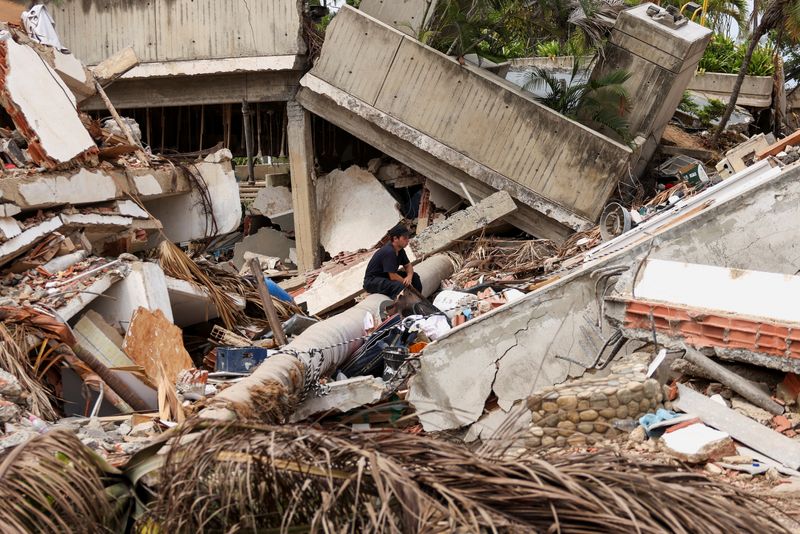
It’s a chilling reminder of how close chaos always is—especially when infrastructure crumbles. The whispers of survival, those stories clawed back from the brink of the abyss, they rarely get the same airtime as pronouncements from air-conditioned offices. This past week, while official tallies for disaster victims mounted in Venezuelan towns, a survivor’s fragmented recount, though sparse on immediate detail from the ground (as we understand it), nonetheless paints a gut-wrenching portrait. It ain’t just about a collapse; it’s about the agonizing slow discovery, the days turning into weeks, for those stuck under what used to be home. But that’s often how these things go down, isn’t it?
Because, really, when buildings fold like paper in an already precarious landscape, you’re looking at more than just a localized tragedy. You’re observing a system failing. The survivor’s experience of protracted isolation—[QUOTE_PLACEHOLDER]—underneath tons of debris, awaiting rescue that often seemed impossibly slow to materialize, or perhaps, didn’t come at all for many. It’s a stark, human-scale measure of institutional capacity, or a heartbreaking lack thereof. This isn’t just a Venezuelan problem; it’s a symptom seen globally.
You know, rough estimates from the Latin American Infrastructure Assessment Institute (LAIAI) suggest that roughly 40% of structural failures in South American natural disasters over the past decade have been linked directly to inadequate building codes or notoriously corrupt construction practices. Just think about that. That’s a lot of preventable human misery baked right into the blueprints.
When you hear these kinds of stories, you can’t help but consider their reverberations far beyond South America. You’ve got places like Pakistan, for instance, a nation no stranger to seismic activity and, too often, to the devastating impact of insufficient infrastructure and rapid, unplanned urbanization. They’ve lived through these kinds of horrors, where poor construction, weak enforcement, and bureaucratic entanglement can turn a tremor into an existential threat for entire communities. It’s a similar narrative of fragility. It shows you the universal thread that binds countries struggling with development and governance—how human vulnerability gets amplified in specific geopolitical climates.
But back to the present ordeal. The survivor’s struggle for breath, for light, for a sign of help, isn’t just a story of grit. It’s a piercing echo of millions caught in similar binds across the developing world. The political machinations—the sanctions, the internal struggles—often steal the headlines. They suck the oxygen out of conversations about essential services. But when the dust settles, or in this case, when it blankets over the fallen structures, it’s the basics that bite. People need stable homes. They need rapid response. They need a government that’s able to provide a safety net, not just more instability. And that’s where the true failure lies, often before any ground even shakes.
We’re talking about real people here. Not data points. Their ordeal often lasts far longer than the initial catastrophe itself. Post-disaster care, rebuilding efforts—these are lengthy, costly undertakings that can completely bankrupt a struggling nation’s already thin coffers. It’s a bitter truth, isn’t it?
The incident reminds me of conversations I’ve had with folks over at Pakistan’s disaster management authority, the sort who see firsthand how political instability can absolutely gut any proactive efforts to shore up infrastructure. They tell you stories, you wouldn’t believe. It’s all too familiar—the reactive scramble when proactive measures are desperately needed. This is the global playbook of crisis, often rewritten but rarely improved. Pakistan’s peril, in many ways, isn’t that far removed from Venezuela’s predicament, even though the geography says otherwise.
What This Means
This escalating human cost in Venezuela isn’t just another sad item on the global news wire; it’s a harsh mirror reflecting systemic frailties prevalent across the Global South. Economically, prolonged instability means essential infrastructure maintenance is deferred indefinitely, and emergency response capabilities—already weak—are further compromised. Venezuela’s government, already constrained by sanctions and internal strife, has minimal bandwidth or resources for a robust, organized disaster relief effort. The economic implications are staggering: lost productivity from shattered communities, an exodus of skilled labor, and an even deeper dependency on often politicized international aid. This reinforces a cycle where political gridlock directly translates into increased human suffering, eroding public trust even further. It’s not just an earthquake or a collapse that brings a society to its knees; it’s the preceding years of neglected oversight and corrupt practices. This creates a terrifying feedback loop, making recovery more distant — and painful. The human cost isn’t measured in just the initial death toll, but in the sustained decay of a functioning society. It’s an issue that impacts not only Venezuela but also its neighbors, prompting concerns about potential refugee flows and regional stability. It’s what happens when the societal safety net develops gaping holes.