


Mexico’s Youngest World Cup Starter: A Cautionary Tale of Global Ambition?
POLICY WIRE — Mexico City, Mexico — In the cutthroat crucible of international soccer, where careers ignite and extinguish in the span of ninety minutes, the stage usually belongs to seasoned...

POLICY WIRE — Mexico City, Mexico — In the cutthroat crucible of international soccer, where careers ignite and extinguish in the span of ninety minutes, the stage usually belongs to seasoned veterans. But occasionally, a child, barely old enough to vote, strolls onto the pitch — and promptly rewrites history. And when that happens, you’ve gotta wonder what it says about the state of the game, or perhaps, the nation that’s putting that kid through the paces. Mexico, it seems, has decided to find out.
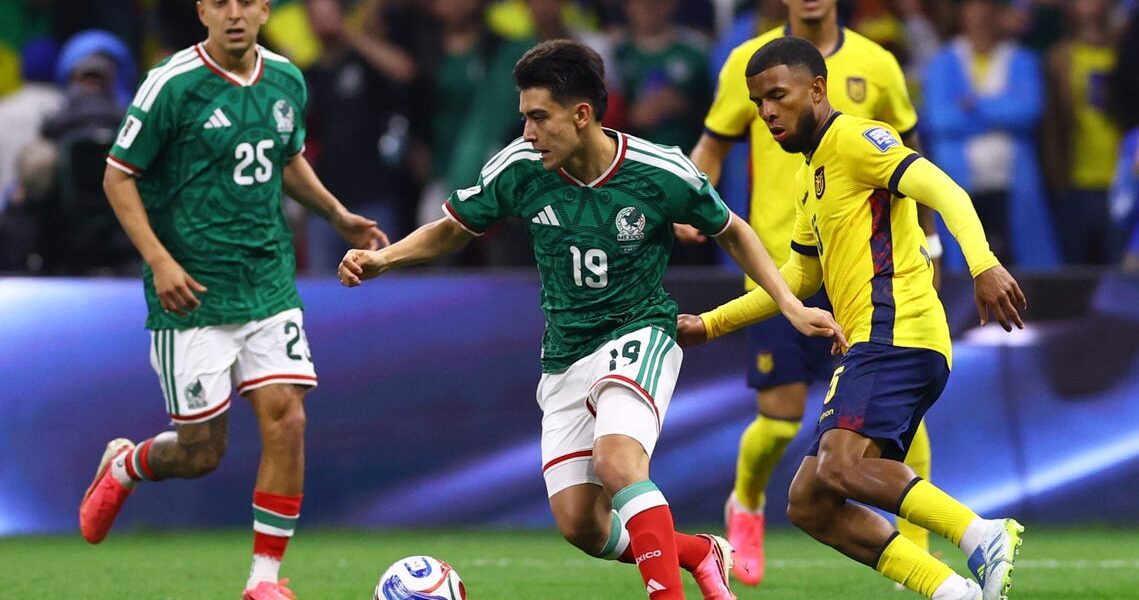
Gilberto Mora, a fresh-faced midfielder born on Oct. 14, 2008, earned his second consecutive start in the knockout rounds when he was selected to the Starting XI against England in the World Cup round of 16. Just consider that for a moment: England. Not some friendly scrimmage in a remote corner of the earth. But this isn’t his first rodeo on the grandest stage. He previously started against Ecuador in the Round of 32 and in the final group game against Czechia when he made history as Mexico’s youngest World Cup starter. Quite a whirlwind, eh?
His debut wasn’t even a starting one. In the first game of the tournament against South Africa he came off the bench and at that time was Mexico’s youngest player to enter a World Cup match. Manuel “Chaquetas” Rosas, historical records indicate, set the previous record way back in 1930, when he was 18. Mora eclipsed that mark as a second-half substitute against South Africa, making his entry at 17 years and 240 days old. It’s a rapid rise that would make even the most hardened scout raise an eyebrow—or two.
Gilberto Mora got his third consecutive start at the 2026 FIFA World Cup when he was named to the starting XI against England. He is, by all accounts, a phenomenon. The 17-year-old Mora came up through Tijuana’s system as an attacking midfielder — and joined their senior club in 2024. He’s made 50 appearances — and scored eight goals for the Xolos. That’s an impressive tally for anyone, let alone someone who’s not old enough to legally buy a cerveza after a win. But football, like many high-stakes global endeavors, has a way of expediting maturity, doesn’t it?
He began playing for Mexican age-group national teams in 2022 with the U15s, a conveyor belt system proving its efficacy, if perhaps, a touch too quickly. And get this: he made his senior club debut in a friendly in January 2025, making him, at 16, the youngest player in national team history. His first meaningful matches came in the 2025 CONCACAF Gold Cup. Talent, they say, knows no age. But then again, neither does pressure.
In a twist that might suggest a touch of nepotism, or just simply a family business, he’s the son of former professional player Gilberto Mora, who’s now the U17 and academy coach for Tijuana. And like his father before him, who likely knew a thing or two about the weight of national expectations, the younger Mora is now firmly in the spotlight. He wears the No. 19 for the Mexican national team — and the No. 10 for his club team, Tijuana. Because, of course, the number 10 shirt, that iconic emblem of a team’s creative heartbeat, simply belongs to the precocious prodigy.
His story—from Tuxtla Gutiérrez, a city in Chiapas, basically on the opposite side of the country from Tijuana—is one of raw talent traversing geographical divides for opportunity. But perhaps that’s not just a Mexican story. Many nations, from the dusty fields of Lahore to the bustling academies of Istanbul, watch their brightest young prospects follow similar trajectories. Sometimes, they represent a nation’s pride, sometimes its deep-seated societal issues with opportunity. Or its hope, maybe.
📄 POLICY WIRE WHITEPAPER PUBLISHED: PAKISTAN'S NATIONAL SECURITY POLICY PRIORITIES
👉 READ BY CLICKING HEREBut the fairy tale didn’t end in victory for Mexico in the England game. Gilberto Mora subbed out in the 60th minute for Érik Lira. At that time Mexico trailed 3-1. He didn’t record a goal or assist as his chances to impact the match were limited. A brutal lesson, even for a veteran. For a kid, it’s probably a world-sized punch to the gut. The world doesn’t care for narratives when the scoreline dictates otherwise.
What This Means
Mora’s meteoric ascent, while inspiring, isn’t just a sporting narrative; it’s a telling symptom of broader geopolitical and economic pressures. For nations like Mexico, and indeed many across South Asia and the Muslim world, young prodigies in global sports represent far more than athletic prowess. They embody national pride, a symbol of potential in a world often dominated by established powers.
Politically, the anointing of a 17-year-old to such a high-profile role can be seen as both a gamble — and a statement. It’s an assertion of a nation’s belief in its youth, perhaps an admission of reliance on individual brilliance over a deep pool of consistently world-class talent. Economically, a player of Mora’s potential is a significant asset. His future transfers and endorsements could pump considerable funds into domestic clubs and, by extension, the broader sports economy, drawing parallels to how nations strategize the export of their skilled labor or high-tech innovation. But the weight on these individual shoulders is immense, reflecting the aspirations of millions, even billions, particularly in regions where systemic development for athletes still lags. The push to global stardom, exemplified by players like Mora, speaks to an urgent need for visibility, a place at the table, whether that table is in Zurich or London.
This situation also raises questions about sustainability. Are national federations sacrificing long-term development for short-term gains — and spectacle? Or is this just the brutal new reality of modern sport? The sheer speed of Mora’s rise forces a discussion not just about individual talent, but about the systemic challenges nations face in nurturing and retaining it. Nations across the global south—including Pakistan, Malaysia, and many Gulf states—often contend with talent drains as their brightest stars seek opportunities elsewhere, a dynamic echoed, albeit differently, in the journey of a player plucked from Tuxtla Gutiérrez for the world stage. Sometimes, a team’s resilience is built on more than just a single player, no matter how gifted they’re.