

Kremlin’s Thin Veil: Putin Hints at Infrastructure Woes Amidst Kyiv’s Strikes
POLICY WIRE — Moscow, Russia — The mighty always have a way of downplaying a punch to the gut. They call it a ‘niggle.’ Or perhaps, if you’re the leader of a sprawling nation...

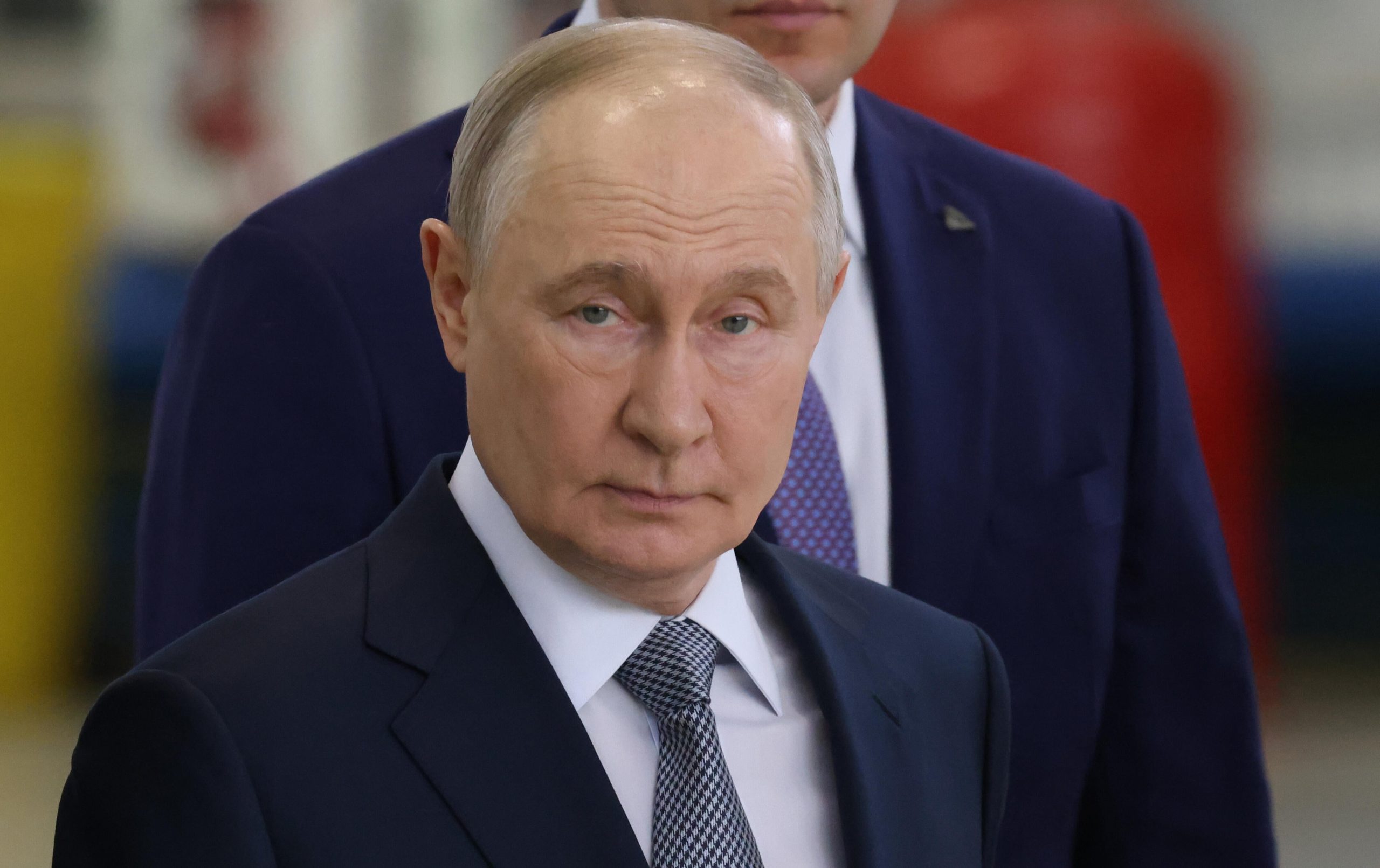
POLICY WIRE — Moscow, Russia — The mighty always have a way of downplaying a punch to the gut. They call it a ‘niggle.’ Or perhaps, if you’re the leader of a sprawling nation engaged in an unforgiving conflict, you brand it a ‘problem.’ That’s precisely the word Russian President Vladimir Putin chose, offering a rare, if veiled, acknowledgement of the damage Ukrainian strikes are inflicting on Russia’s economic and military infrastructure. It wasn’t a lament, mind you, more an irritated sigh, but the implications are hardly minor.
It’s not just the big flashy hits on oil depots or arms factories making headlines. It’s the grinding, relentless pressure on rail lines, logistics hubs, and energy facilities that, cumulatively, start to fray a nation’s ability to wage sustained war—and keep the lights on for its citizens. Because you see, calling these escalating, strategically targeted disruptions mere ‘problems’ does a disservice to the methodical campaign Kyiv has undertaken, forcing Moscow to expend resources and divert attention from the front lines.
But how do these ‘problems’ manifest in the Kremlin’s internal messaging? “These hostile actions certainly present operational challenges for specific sectors, but our capacity to adapt—it’s robust,” offered Dmitry Peskov, the long-standing Kremlin spokesman, through state media channels earlier this week. “We’ve weathered far worse storms, and this merely reinforces our resolve to achieve our objectives, however long it takes.” It’s the familiar refrain, isn’t it? The same kind of stoic bluster one hears from embattled regimes everywhere, always emphasizing resilience while carefully omitting the actual cost.
On the flip side, Kyiv isn’t playing coy. They view these attacks as a necessary evil, a way to level the playing field against an aggressor with vastly superior resources. “Russia started this war by bombing our cities, our homes, our energy grid,” stated Oleksiy Danilov, Secretary of the National Security and Defense Council of Ukraine, in an interview. “We’re simply ensuring they understand the economic calculus of their continued aggression. They’ll feel the cost, right down to their logistical networks, until they decide to pull back.” He makes it sound less like revenge and more like economic statecraft. And in a war this dirty, perhaps it’s.
These strikes, initially dismissed as mere provocations, have graduated into a sophisticated campaign that challenges Russia’s narrative of impregnability. They also stretch the already strained air defense systems responsible for protecting an area roughly the size of Canada. When Putin himself talks about ‘problems,’ you know it’s transcended the realm of minor annoyance. This isn’t just about local inconveniences; it’s about the erosion of national economic resilience and, frankly, the leader’s very credibility.
The global audience, particularly countries in the Global South often caught in the geopolitical crosscurrents, are watching closely. For nations like Pakistan, navigating its own complex energy security needs and strategic partnerships, seeing Russia grapple with infrastructure vulnerability offers a potent lesson. Any major disruption to global oil and gas markets—even one triggered by Ukrainian drone strikes far from Karachi or Islamabad—has direct, often devastating, effects on import-dependent economies already teetering. The cost of living spirals, — and political stability, it suffers.
Because ultimately, these aren’t just ‘problems’ for Russia. The International Monetary Fund (IMF) projects Russia’s 2024 economic growth to hover around 2.6%, a figure many analysts contend remains artificially buoyed by wartime spending and sanction circumvention, rather than underlying economic vitality. Imagine what even larger ‘problems’ could do to that already shaky projection.
What This Means
Putin’s use of ‘problems’ isn’t accidental; it’s a calculated, yet perhaps involuntary, softening of Moscow’s long-standing facade of invulnerability. For internal consumption, it acknowledges challenges without appearing weak. Externally, it seeks to temper expectations of rapid escalation while subtly warning of Ukraine’s evolving capabilities. It certainly tells us Moscow’s defensive posture is being tested. We’re seeing Kyiv’s growing ability to project power deep into Russian territory, forcing a strategic redeployment of resources, not to mention a considerable dent in Moscow’s swagger.
Economically, persistent strikes on infrastructure don’t just reduce immediate capacity; they sow uncertainty. They force businesses to re-evaluate investment, escalate insurance costs, and generally put a wet blanket on economic activity. It’s a long game, undoubtedly. For onlookers, from Tehran to Islamabad, observing this cat-and-mouse game on civilian-critical infrastructure provides an unsettling template. What Russia can do to Ukraine, Ukraine can increasingly do to Russia. This isn’t just a kinetic war; it’s an economic war, a logistical war, and increasingly, a war of perceptions, where even a slight slip from the top can signal greater fragility. For more on how state narratives often differ from realities, consider the analysis in Minsk’s Precarious Pivot: Lukashenko’s High-Wire Act Between Autocrats.
And it signals something else too: the limits of air superiority. No matter how many missiles Russia claims to shoot down, some are getting through. And the effects are registering at the very top. Aftershocks of Neglect: Venezuelan Quakes Expose Deeper Rifts offers insight into how often surface-level issues betray deeper, structural weaknesses. Here, ‘problems’ mask far larger strategic headaches for the Kremlin.