


Brazil’s World Cup Fiasco: The Cost of Second-Guessing in Football’s Grand Theatre
POLICY WIRE — EAST RUTHERFORD, N.J. — There it sat, a solitary, spherical object of immense national hope and, as it turned out, profound national despair. Vinícius Júnior had the ball at the penalty...

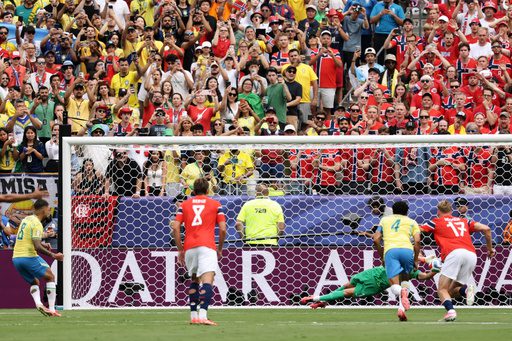
POLICY WIRE — EAST RUTHERFORD, N.J. — There it sat, a solitary, spherical object of immense national hope and, as it turned out, profound national despair. Vinícius Júnior had the ball at the penalty spot. A singular moment. He could have just laced it himself, put the country on his back. Instead, a peculiar transaction occurred, a seemingly innocuous gesture that would reverberate through an entire nation’s collective psyche: he handed it to Bruno Guimarães. The weight of Brazil, you see, isn’t always carried by its biggest stars in its biggest moments.
And so began the agonizing unraveling. Guimarães’ shot was stopped by Ørjan Nyland in the 14th minute. A bad sign, right off the bat. It was a stop that buoyed the Norwegians, a jolt of belief for a squad that’d never really shone in the knockout rounds before. What came next was an inevitable descent for Brazil, a national team so often associated with sheer, undeniable brilliance. They couldn’t get another past Nyland until stoppage time, way too late, losing 2-1 on Sunday in the round of 16. It was Brazil’s earliest World Cup exit since 1990. Not a great look, especially for a footballing dynasty.
Vinícius, the man who started it all by passing the ball, came into that game leading Brazil with four goals in four games. You’d think he’d be the logical choice, right? But logic, it turns out, is a tricky thing when you’re managing a global football superpower. He appeared poised to take the kick. Then, he didn’t. Guimarães walked to the spot. Vinícius just stood there to the left of the box, watching as Guimarães stutter-stepped, then fired a shot Nyland met head-on, diving left to knock it away. Bang. Game altered.
Coach Carlo Ancelotti later spilled the beans, explaining it was all down to a combination of analytics and some nasty injuries. Apparently, they’d compiled statistics on their best penalty takers for a year. Neymar — and Raphinha topped that particular leaderboard. Guimarães was next in line. But Neymar wasn’t even on the pitch then, battling back from injury, having missed their first two matches. And Raphinha? He’d pulled his hamstring last month. So, who steps up? The next guy, apparently.
The coaching staff’s thinking, according to Ancelotti, was: [QUOTE_PLACEHOLDER] We chose Bruno Guimarães because we felt that he was the best on the field at that point. A calculated risk, certainly, but one that blew up spectacularly in their faces. This miss was a significant statistic in itself: Brazil’s first unsuccessful penalty kick in the World Cup—not counting shootouts—since 1986, a fact pointed out by the Associated Press.
Captain Marquinhos, wearing the weight of the five-time champions’ failure, offered the predictable but sincere apologies. [QUOTE_PLACEHOLDER] We just have to apologize to the Brazilian people, to everyone that attended this venue and witnessed this match, and I think we have to learn from our mistakes, he said. And then: [QUOTE_PLACEER] For those that come in the new generation, I ask that the people will support them from the beginning. A plea for mercy, a call for a fresh start, you might say. Later, he’d simply declare, [QUOTE_PLACEHOLDER] I mean, I’ll do the mea culpa here. I’m the captain. I’m one of the older guys. Because somebody has to take the hit, don’t they?
The Seleção, those vibrant yellow-shirted maestros, remain empty-handed since their fifth title in 2002. Neymar, bless his heart, did make his mark later in the game. He came on in the 68th minute, brought some extra firepower, — and then took and made another penalty shot late. That joined him with Pelé as the only Brazilians to score in four World Cups. A personal triumph, yes. But it was overshadowed, like a solitary, flickering candle in a hurricane of national disappointment.
But sometimes, the game becomes more than a game. Look at a country like Pakistan. They’ve got a cricket obsession that makes Brazilian football passion seem understated sometimes. Every bad performance by their national cricket team isn’t just a loss; it’s an existential crisis. Fans demand accountability, coaches get sacked, — and national pride takes a beating. The pressure on their athletes—imagine a captain like Babar Azam or Shaheen Afridi in a similar high-stakes, globally televised moment—is immense, echoing the weight of expectation on Brazilian football legends. For both, sport isn’t just recreation; it’s a vessel for national identity, a projection of power and spirit on the global stage. And when that vessel falters, well, the fallout can feel like a national disaster.
What This Means
This early exit for Brazil isn’t just about a missed penalty; it’s a political headache and a soft economic blow wrapped in a national tragedy. On the political front, it’s a morale crusher. In countries like Brazil, national sporting success often correlates with public sentiment, even if indirectly. A win provides a unified moment of joy, a distraction from everyday woes. A loss? It breeds cynicism, opens avenues for critics, and feeds into a narrative of underperformance, making life tougher for existing administrations.
Economically, there are direct hits too. Merchandise sales, tourism spikes linked to deeper tournament runs, advertising revenue—it’s all truncated. Consider the lost economic impact of another week or two of Brazil in the World Cup, filling hotels, bars, and generating buzz. The domestic mood often has ripple effects on consumer confidence. Then there’s the longer-term impact: potential reduction in foreign investment interest in sports development, and less exposure for younger talents seeking international club contracts, slowing down the ‘export’ of a valuable commodity—elite footballers. It also puts intense pressure on the coaching staff and the national football federation, probably setting off a whole cycle of introspection, scapegoating, and structural changes. This wasn’t just a game; it was a silent stunner that reveals how deeply sports, policy, and national well-being are entangled, from Brasília to Islamabad. It’s a clear reminder that in the grand theatre of global sport, decisions on the pitch, even minute ones, carry heavy implications off it, reverberating far beyond the stadium walls and influencing national narratives for years.