

Red Card Revelation: A Trump Call, a FIFA U-Turn, and the Game’s Fading Credibility
POLICY WIRE — Zurich, Switzerland — For decades, it was a gospel truth of global football, etched in granite as surely as the laws of gravity. Take an early shower with a red card at the World Cup, —...

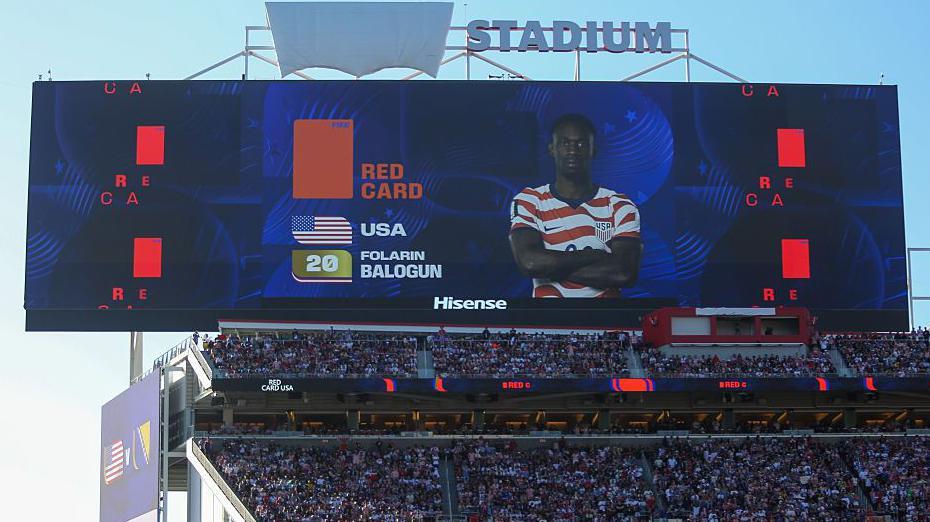
POLICY WIRE — Zurich, Switzerland — For decades, it was a gospel truth of global football, etched in granite as surely as the laws of gravity. Take an early shower with a red card at the World Cup, — and you were out of the next game. Period. “No ifs, no buts, no appeals,” the pundits would declare. That certainty, a foundation of fair play, has now been kicked decisively into touch by FIFA’s latest, peculiar decision. The effective overturning of Florian Balogun’s red card, the United States’ star striker, isn’t just a talking point; it’s a seismic event that’s rattling the very bedrock of the sport’s integrity.
Balogun, booted in the round-of-32 win against Bosnia-Herzegovina, will now surprisingly feature in the round-of-16 clash versus Belgium on Monday. He’s been the US’s top scorer this tournament, bagging three goals. This isn’t just unusual; it’s almost unheard of. History books, compiled by FIFA, list 189 red cards handed out in World Cups. Guess how many players ducked their subsequent ban? Just two. The first time was 1962, when Brazil’s Garrincha somehow played in the final after a semi-final dismissal. Back then, there wasn’t an automatic ban; a committee weighed in. And then, well, then there’s Balogun. [QUOTE_PLACEHOLDER]
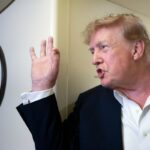
It’s easy to dismiss this as mere sporting drama, a footnote in a tournament that’s (almost) always packed with them. But when allegations of presidential intervention swirl around a governing body—a body that claims to be fiercely apolitical—it starts smelling distinctly of something more rotten than just bad sportsmanship. Multiple reports from Reuters, AFP and the New York Times claim US President Donald Trump personally called FIFA President Gianni Infantino earlier this week, ostensibly to push for a review. And you can bet your bottom dollar, it’s those whispers about White House muscle twisting FIFA’s arm that’ve got the football world up in arms.
FIFA’s disciplinary code, usually a weighty tome, lays out pretty clearly that serious foul play should net you “at least two matches” out of the action. And teams aren’t allowed to appeal red cards in World Cups. But what did FIFA do? Nothing. They cited “article 27 of the Fifa disciplinary code,” a remarkably capacious rule allowing FIFA “to fully or partially suspend the implementation of a disciplinary measure.” This article? Never before wielded at a World Cup. It’s a bit like finding a trapdoor in the rulebook, isn’t it?
And what about consistency? The other eleven players who’ve seen red this tournament have dutifully sat out. Take Qatar’s Assim Madibo. Involved in an accidental incident that broke a Canadian midfielder’s leg. FIFA smacked him with a five-game ban. He didn’t even make a proper challenge, for crying out loud. But Madibo sits, Balogun plays. Because Balogun is the host nation’s poster boy, maybe? Because “the US administration” had “pressure” on FIFA, as some reports suggest? U.S. Secretary of State Marco Rubio himself claimed the US “got screwed with that red card” and insisted “there needs to be an appeal process.” On Sunday evening, Trump “thanked Fifa for “reversing a great injustice” in a post on Truth Social. And if this isn’t politics meddling with sport, what’s?
Belgium, naturally, is seeing red. They’re “astonished” their upcoming opponent got a free pass. Coach Rudi Garcia, with a sharp observation of his own, noted, “I didn’t know that [at] the Fifa World Cup 5 July is now 1 April, and that’s April Fool’s.” They aren’t wrong to be incensed. The Belgian FA cited specific tournament regulations saying a player “will automatically be suspended from their team’s subsequent match.” So, essentially, FIFA’s own rule book overrode its competition regs. Nice. That leaves “a bad taste in a lot of people’s mouths,” as BBC Sport pundit Micah Richards put it.
📄 POLICY WIRE WHITEPAPER PUBLISHED: PAKISTAN'S NATIONAL SECURITY POLICY PRIORITIES
👉 READ BY CLICKING HEREWhat This Means
This episode, messy — and opaque as it’s, extends far beyond the green pitch. For one, it smacks hard at FIFA’s already strained reputation for integrity. FIFA’s ethics committee was already asked to investigate Infantino in the past, relating to Trump and a so-called FIFA Peace Prize — because world football’s governing body also gives out peace prizes now, apparently. The governing body’s statutes are supposed to forbid political interference. If these reports about Trump’s alleged involvement prove accurate, it’s not just a breach; it’s a blatant disregard for its foundational principles.
Secondly, it fuels global perceptions—especially in regions like South Asia and the wider Muslim world—that international institutions, even those supposedly apolitical like FIFA, can bend to the will of powerful Western nations. From Lahore to Jeddah, the perception of fairness often feels elastic, stretched or compressed by geopolitical heft. When Pakistan’s national federation was temporarily banned by FIFA in 2021 over a “third-party interference” dispute, it felt like an unwavering stance. But now, with Balogun’s case, the line seems blurrier. How can rules be sacrosanct for some but remarkably flexible for others? This dual standard isn’t just bad for football; it erodes trust in any institution claiming universal adherence to its own rules. Nations like Bangladesh or India observe these power plays with an unblinking gaze, noting how readily universal principles yield to national interests. This particular incident could even find itself analyzed in forums examining FIFA’s peculiar leniency and the broader implications of such decisions on international sports governance.
And FIFA, whose grand statements about global unity always felt a little self-serving anyway, now has to answer how an iron-clad rule became so utterly malleable just when the host nation’s tournament chances needed a boost. But we probably won’t get those answers, will we? This leaves a vacuum of information which can only lead to speculation, speculation that undermines the spirit of competition itself. It tells us that perhaps, just maybe, some teams are more equal than others. And that’s not football; it’s just plain messy politics dressed in cleats.