

Beyond the Whistle: How Bureaucracy’s Finer Points Decide National Fates on the Pitch
POLICY WIRE — Geneva, Switzerland — You’d think the biggest global drama unfurling on the planet, capable of galvanizing entire nations and dictating headlines for weeks, would hinge on something...

POLICY WIRE — Geneva, Switzerland — You’d think the biggest global drama unfurling on the planet, capable of galvanizing entire nations and dictating headlines for weeks, would hinge on something grand. Strategic genius, perhaps. Unmatched athletic prowess. Or maybe a heroic act of pure, unadulterated willpower. But often, it’s just about rules. Finely parsed, meticulously defined rules for how a game — yes, a game — will end. And when that game is the World Cup, the lines drawn in FIFA’s rulebook suddenly take on the gravitas of international treaty negotiations.
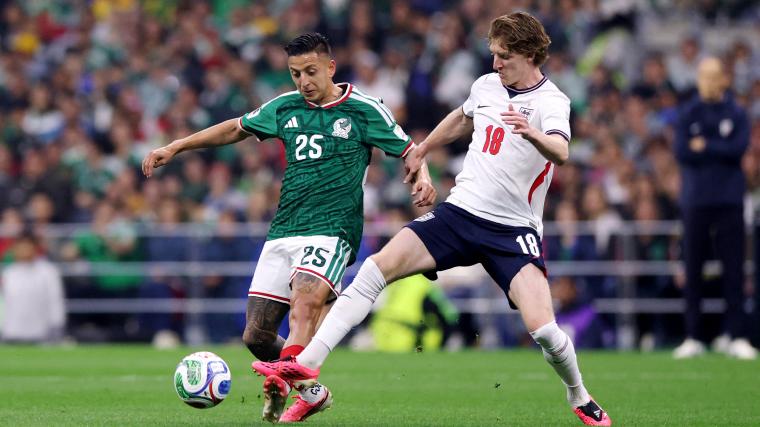
Take that England-Mexico Round of 16 clash, for instance. It was one of those where both teams gave it absolutely everything. A game where England held the lead for much of the match, but it was one of those that seemed to deserve more than 90 minutes
. An affair at the legendary Azteca, no less, that many felt seemed like it could be special, and it more than lived up to the hype
. You could feel the weight of expectation on both sides—the historical baggage for England, the fierce national pride for Mexico. But the passion, the athleticism, the strategic gambits all fade to a meticulous formality when the whistle blows for full time, and the scoreboard reads a draw. Suddenly, it’s not about art anymore. It’s about arbitration. [QUOTE_PLACEHOLDER]
When the spectacle exceeds the clock, we pivot from free-flowing narrative to strict, codified procedure. For extra time, there are no histrionics or surprise twists like the bygone golden goal. As per the current diktat, There’s no golden goal, also known as sudden death
. Instead, we settle in for a pair of two 15-minute halves of extra times
, each one a micro-contest of wills and stamina. And because life, — and football, can be messy, the meticulousness extends even to substitutions. Teams also get an additional substitute to use during extra time
, a little tactical gift to refresh flagging legs and hopefully tip the scales. But if the scoreboard still stares back in grim symmetry after the 30 minutes of extra time, it goes to penalties
.
And that’s when the entire world holds its breath. That’s when football’s grand, global appeal, which drew an estimated 5 billion viewers to the 2022 World Cup finals, according to FIFA figures, coalesces into 12 yards of turf and the agonizing flight of a ball. It’s here, in the cold calculus of the penalty shootout, that all the pre-game geopolitics—the diplomatic tensions, the national rivalries, the simple desire for global bragging rights—come down to individual nerves. five penalty takers on each side
line up, each stepping forward to a silence you could almost hear across continents. It’s almost primitive, this sudden narrowing of epic ambition to a single, solitary kick.
And then what? The rules, of course, prescribe it all. The teams alternate, — and at the end of five kicks apiece, if one team is ahead, they advance
. Simple, brutal, definitive. But what if it isn’t? What if parity persists, a deadlock refusing to yield even after this miniature drama? Well, then they go to sudden death, one round at a time to determine who moves on in the World Cup
. It’s like the judicial process after all other appeals have failed, the ultimate arbiter, stark — and unyielding. You couldn’t design a more high-stakes scenario, honestly. For a nation like Mexico, such moments encapsulate the hopes and dreams that ripple far beyond the pitch. But it’s the same story for every team, really.
What This Means
This elaborate framework for breaking a tie in a football match isn’t just about sporting fairness; it’s a microcosm of how global order often operates. Think about it: a meticulous, agreed-upon structure to resolve conflict when diplomacy (the 90 minutes of regulation) or intense negotiation (extra time) fails. And it shows you how arbitrary human-made rules underpin incredibly weighty decisions. It highlights the peculiar paradox of global competition: immense financial, political, and cultural capital is poured into outcomes dictated by margins so fine, a fraction of an inch on a penalty kick. This isn’t just a game; it’s a spectacle that generates billions in revenue, influences national morale, and becomes a canvas for soft power projection.
From an economic standpoint, the simple act of progressing in a tournament can unlock millions in prize money, sponsorship, and national tourism bumps. But this impact isn’t just felt by traditional footballing powers. For developing nations, especially in regions like South Asia or the broader Muslim world, a strong World Cup run is less about GDP impact and more about national cohesion and pride. Pakistan, despite not being a football powerhouse, has communities that follow the sport with religious fervor. Imagine the ripple effect across the Subcontinent if a team from a neighboring, under-represented nation somehow went on a magical run and reached such a critical juncture. The emotional dividends are incalculable, — and even a loss in a high-stakes penalty shootout leaves an imprint. It’s a moment of collective catharsis, of shared vulnerability and triumph that often outstrips any measurable economic benefit. This carefully constructed bureaucracy of sport reveals how tightly interwoven our globalized world is, where a single kick can carry the symbolic weight of an entire nation’s aspirations, reinforcing narratives of success or—alas—heartbreak. But you gotta admit, it’s pretty gripping stuff, even for the most cynical among us.