


Shadow of Withdrawal: Allies Count the Cost of America’s Wavering Hand
POLICY WIRE — Washington, D.C. — Not long ago, the American diplomat on the ground—often a lanky figure in a perfectly tailored suit—was considered the harbinger of certainty, a calm amidst any...

POLICY WIRE — Washington, D.C. — Not long ago, the American diplomat on the ground—often a lanky figure in a perfectly tailored suit—was considered the harbinger of certainty, a calm amidst any geopolitical storm. Today? Not so much. The once-sacrosanct pledge of Washington, D.C., a city that once presented itself as the very heart of global stability, feels less like granite and more like shifting sand, leaving allies – especially those far from the polished halls of Western diplomacy – scrambling to pick up the pieces of an international order many thought was settled. It’s a seismic shift, — and nobody’s quite sure where the aftershocks will cease. America’s allies are learning the hard way that promises aren’t etched in stone anymore.
It’s become common wisdom, a dreary refrain in every embassy lounge from Islamabad to Cairo: a pattern’s emerged. Countries that anchored American strategic interests for decades now find themselves reassessing. This isn’t just about diplomatic niceties; it’s the brass-tacks business of survival for some nations. The idea that a global superpower would just up and leave, changing its mind on a dime, would have been unthinkable a generation back. But it’s now Tuesday’s news, then yesterday’s. But what does it truly mean when the phrase “America’s word isn’t what it used to be
” floats casually through conversations of foreign ministers? It means real consequences, sharp — and painful.
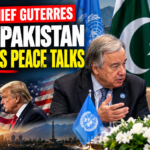
Take Pakistan, for instance, a nation that has often found itself, sometimes willingly, sometimes not, on the razor’s edge of U.S. geopolitical ambitions. Its history with Washington is littered with episodic engagement, punctuated by abrupt withdrawals of support or, worse, condemnation. Back in the heady days of the War on Terror, Islamabad was a frontline ally, absorbing staggering blows to its internal stability while battling extremism. Now, as the U.S. pivoted towards other concerns, leaving a fragmented Afghanistan in its wake, the message to Pakistan, and indeed the broader Muslim world, couldn’t be clearer: fend for yourselves. That kind of messaging isn’t lost on Karachi’s businessmen or Quetta’s tribal elders; it registers, and it reshapes regional outlooks. They’re making new plans, you bet they’re.
The notion of American exceptionalism
, that foundational bedrock for foreign policy buffs for over half a century, is starting to feel to many like a cruel joke. They’ve seen the United States make and break promises with disquieting regularity.
You don’t build long-term trust, genuine, sticky alliances, on such unsteady ground. A country, a bloc of countries even, that built its strategic thinking around U.S. engagement—military, economic, diplomatic—suddenly finds its blueprint useless. Geopolitical trust, once a precious commodity, is now in short supply,
creating voids quickly absorbed by other players. We’re talking Russia, China, even emerging regional powers—they don’t miss a beat.
It’s a pragmatic scramble. Nations, especially those in vulnerable positions, don’t have the luxury of ideological loyalty. If Washington isn’t offering a reliable hand, they’ll shake hands elsewhere. In the last year alone, China’s Belt and Road Initiative, a comprehensive global infrastructure development strategy, invested approximately $93 billion across various projects globally, as reported by the American Enterprise Institute’s China Global Investment Tracker. That’s a big number. And it illustrates a clear appetite from other global players to fill the vacuums left by a disengaged America. We, the people of the world, we’re not waiting around.
The long shadow of past interventions and abrupt departures—remember Iraq, Vietnam, Somalia—hangs heavy, complicating future collaborations. Many feel the U.S. prioritizes short-term domestic political gains over long-term strategic commitments.
It’s not just a perception; it’s a cold, hard fact many leaders must factor into their risk assessments. You’ve got to weigh every word from Washington with a metric ton of skepticism. And who can blame ’em? We promised a steady hand, a steadfast partner, but often delivered vacillation and abandonment.
This current administration—and to be fair, past ones have been just as guilty—insists it’s [QUOTE_PLACEHOLDER], yet the tangible evidence screams disengagement that’s broad and unsettling. But the consequences of this wavering aren’t just theoretical. They hit pocketbooks, destabilize borders, and, for some, trigger very real fears.
And so, America’s traditional friends are being forced to explore new allegiances.
It’s an inconvenient truth, perhaps, for those who believe in an unshakeable U.S.-led world order. The age of a benevolent hegemon, if it ever truly existed outside of Cold War fantasies, is long gone. What remains is a complicated, multi-polar world where trust is earned, often painstakingly, and lost with breathtaking speed. It’s not pretty, but it’s the reality folks have to navigate. It’s a hard lesson, but they’re learning it. For policymakers back in Washington, ignoring this shifting global calculus isn’t just naive; it’s downright dangerous.
What This Means
The geopolitical implications of a perceived U.S. retreat are far more profound than just bruised feelings. Economically, this transactional approach to foreign policy means instability for developing nations who relied on consistent foreign direct investment and market access through traditional alliances. Many will naturally pivot towards rising economic powers, particularly China, seeking new avenues for trade, infrastructure development, and financial stability. This isn’t merely about capital; it’s about a new kind of geopolitical leverage for Beijing and, to a lesser extent, Moscow. For regions like South Asia and the broader Muslim world, it signifies a forced recalibration of security architectures. Old dependencies erode, giving way to pragmatic, often uncomfortable, alignments with whoever promises a degree of consistency, however conditional.
Politically, the U.S. cedes moral authority. Its calls for democracy, human rights, or rule of law lose potency when viewed through the lens of self-interest and fluctuating commitment. This fosters an environment where non-democratic states feel less constrained, and regional conflicts, once held in check by the distant, but present, shadow of Washington, may fester or even escalate without consistent pressure or mediation. The void created by U.S. disengagement isn’t left empty; it simply attracts new actors, each with their own complex agendas, ushering in an era of unpredictable regional dynamics and potentially renewed instability. We’re in uncharted waters, no two ways about it. It’s a messy, new chapter, — and nobody’s quite ready for the ending. It won’t be simple.