

Whistle’s Edge: The Political Subtext of a World Cup Showdown
POLICY WIRE — Mexico City, Mexico — The clock ticks down, the stadium roars, and two nations hold their collective breath. But here’s the thing: this isn’t just a game of 22 men chasing a ball for 90...

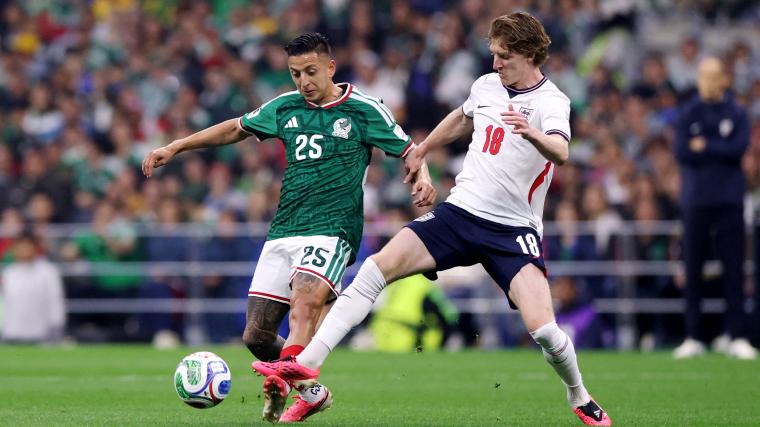
POLICY WIRE — Mexico City, Mexico — The clock ticks down, the stadium roars, and two nations hold their collective breath. But here’s the thing: this isn’t just a game of 22 men chasing a ball for 90 minutes. Never is. Not when England, with its fading imperial whispers, clashes with Mexico, a nation perennially battling its own powerful neighbor’s shadow—and its global perceptions—on the biggest stage. This particular World Cup Round of 16 encounter, stretching into the grueling purgatory of extra time, is a masterclass in how something as ‘trivial’ as sport morphs into a high-stakes diplomatic arena, without anyone ever having to sign a treaty.
It’s an almost ludicrous burden to place on young athletes, isn’t it? Every pass, every save, every botched penalty, feels like a referendum on national character. And make no mistake, government officials, corporate sponsors, and even rival intelligence agencies (yes, really) are watching, calculating. This isn’t just about sporting glory; it’s about brand England, brand Mexico, and the countless nuanced narratives that spill over when the whistle blows.
When the score remains stubbornly level at the end of regulation play, everyone knows what’s coming. The rules themselves, clinical as a surgeon’s instructions, strip away any hope of a quick reprieve. No ‘golden goal’ that delivers instant triumph or despair. Instead, it’s thirty additional minutes—two 15-minute halves of sheer, nerve-wracking endurance. Teams switch ends; the extra substitute, a tactical lifeline, comes into play. You see it all over their faces: the exhaustion, the mounting pressure. They don’t call it sudden death, but for many, it sure feels like it.
Should the deadlock persist, after that energy-sapping half-hour, we arrive at the quintessentially dramatic yet cruelly arbitrary penalty shootout. Five takers from each side, alternating shots from the spot, the goalkeeper a lonely figure against a global spotlight. Any player on the pitch at that final whistle can step up. If it’s still tied after those initial ten kicks—because, you know, fate just loves to toy with us—it rolls into sudden death, one agonizing shot at a time. The margins couldn’t be thinner, the consequences more immense.
Consider the official pronouncements leading up to such events. They’re rarely just about the game itself. “These moments, when our lads don that jersey, aren’t just about a game. They’re about projecting our character, our resilience, globally,” quipped UK Minister for Culture, Sport, and Media, Alistair Finch, with a practised grin. He knows exactly what he’s doing: associating sporting performance with national pride, with an implicit message to global partners and rivals alike. Because when your nation is seen as a winner on the field, it doesn’t hurt perceptions elsewhere, does it? That’s soft power, raw — and unadulterated.
But Mexico’s response resonates with an equally fierce, albeit different, intensity. “For us, the ‘Tri’ on that pitch—it’s Mexico. It’s a roar that silences every cynic. It’s us telling the world we belong,” asserted Elena Rodríguez, Mexico’s Undersecretary for Public Diplomacy, her voice bristling with conviction. Her words highlight a different kind of stake: national identity, cultural assertion, a refutation of stereotypes, and a demand for recognition that goes well beyond the soccer pitch.
And these sentiments—this fusion of sport and national self-perception—aren’t confined to the two nations playing. They’re echoed globally. Consider Karachi or Jakarta, cities far removed from the raucous Azteca Stadium. Even there, the final whistle means something. Global broadcasters aren’t just tallying eyeballs in London or Mexico City; they’re counting millions glued to screens from Cairo to Kuala Lumpur. FIFA’s own data, from the 2022 World Cup, confirmed that audiences across Asia and the Middle East contributed over 2 billion views to the tournament’s overall 5 billion engagement, underscoring football’s universal draw and the shared human drama it represents, whether it’s a fan in Manchester or Mindanao. The global ambitions of nations, often shaped by sporting prowess, resonate universally.
What This Means
This match, like so many high-stakes encounters in global sports, transcends simple athleticism. For England, a successful World Cup campaign often correlates with a temporary boost in national morale and, dare I say, political stability for the ruling party—a useful distraction from domestic woes, even if fleeting. Economically, advancing deep into the tournament means significant commercial windfalls from sponsorship, merchandise, and tourism. But, a premature exit? That can leave a bitter aftertaste, affecting not just the fan base but also investor confidence and even diplomatic leverage.
For Mexico, a deep run amplifies its soft power immensely within Latin America and among its diaspora in North America, often challenging monolithic narratives propagated by its powerful northern neighbor. It bolsters national pride, unifies disparate communities, and acts as a powerful marketing tool for tourism and trade, particularly as global industries increasingly look towards emerging markets for growth. A strong performance subtly communicates readiness, modernity, — and a vibrant national spirit on the global stage. It’s a message that travels farther — and hits harder than any ambassadorial statement ever could.
The rules of engagement for extra time and penalties aren’t just footnotes in a playbook; they’re a designed crucible, pushing teams to the absolute brink, ensuring maximum drama, and thus, maximum global viewership. This drama isn’t just about entertainment; it’s about concentrated attention, a blank canvas onto which nations paint their aspirations, their vulnerabilities, and their hopes. The political and economic reverberations—though often unspoken—are very real, shaping perceptions and alliances in ways a parliamentary debate simply can’t.