


FIFA’s Peculiar Leniency: Red Card Reversal Ignites Geopolitical Fray
POLICY WIRE — Geneva, Switzerland — FIFA, that esteemed arbiter of global football, recently found itself in an intriguing tangle, less a standard regulatory pronouncement and more a delicate act of...

POLICY WIRE — Geneva, Switzerland — FIFA, that esteemed arbiter of global football, recently found itself in an intriguing tangle, less a standard regulatory pronouncement and more a delicate act of political tightrope walking. The international body’s abrupt reversal of Folarin Balogun’s one-game red card ban, initially received as a minor footballing footnote, has detonated a surprisingly loud international incident. Suddenly, the quiet machinery of sporting bureaucracy stands exposed to the bluster of political accusations and the predictable outrage of a perceived underdog.
It’s not often a disallowed goal or a missed penalty call spills into geopolitical chatter, but here we’re. This isn’t just about Balogun, the USMNT’s goalscorer, playing against Belgium. It’s about optics. It’s about the raw nerve of fairness in an organization perpetually battling its own reputational ghosts. The move, hailed by United States men’s national team head coach Mauricio Pochettino as a belated moment of reason, has concurrently spurred incredulity across the Atlantic—Belgium, for one, isn’t amused. One can’t help but notice the convenient timing, perhaps, or the selective application of due process that seems to align rather tidily with the interests of a certain influential nation and its domestic agenda. Old habits, as they say, die hard.
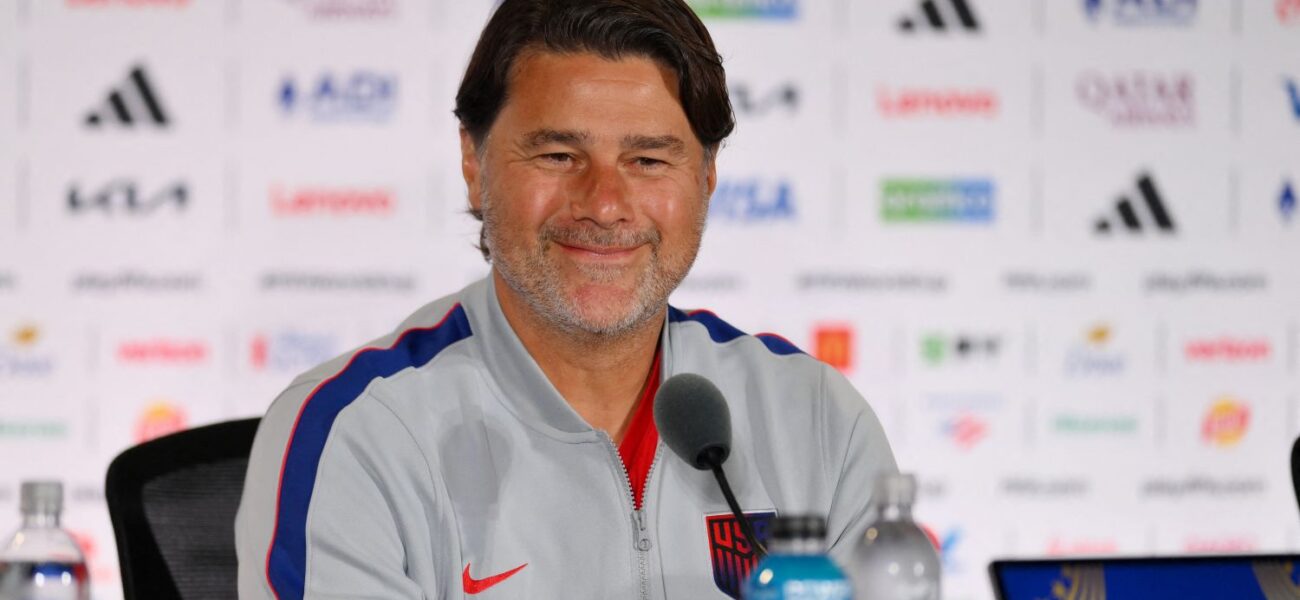
Pochettino, naturally, isn’t hiding his satisfaction. He says, [QUOTE_PLACEHOLDER] Well, that much is obvious, isn’t it? He argues the initial sanction was — to use his exact words — “a decision that was [completely] unfair.” The coach suggests a broad consensus agrees with him, asserting that a staggering 99.9 percent of people concur the initial red card was indeed unjust. This specific figure, attributed directly to Pochettino himself, highlights the perceived obviousness of the injustice, at least from the U.S. perspective. The initial incident, for context, occurred during the United States’ round-of-32 match against Bosnia and Herzegovina, forcing the USMNT to hold a slim 1-0 lead with only ten men for a full 30 minutes.
And what of Belgium, the team set to face a full-strength USMNT? The Royal Belgian Football Association (RBFA) expressed that they were “astonished by FIFA’s decision.” A clear-eyed observer might recognize that particular word as diplomatic-speak for something far more robustly unprintable. The RBFA has even hinted at investigating all available avenues “in order to safeguard the legitimate rights of all participating teams and to protect the fundamental principles of fair play in our sport.” Pochettino, knowing Rudi (the Belgian national team’s head coach) and acknowledging his role to [QUOTE_PLACEHOLDER] couldn’t resist a gentle jab, implying that terms like “integrity and ethics” cannot be universally applied without context. His statement, [QUOTE_PLACEHOLDER] feels like an intricate piece of rhetorical gymnastics, managing to endorse both the decision and the Belgian coach’s indignation.
But the true venom isn’t just in Brussels. It’s found a surprisingly vocal perch among American political commentators. Yes, you read that right. Mehdi Hasan, the British-American television journalist, and American radio journalist Kai Ryssdal have both weighed in. They contend that Balogun should, perhaps paradoxically, sit out against Belgium. Their argument? To protest President Trump’s alleged intervention in securing the red card’s rescission. It’s a notion that immediately brings to mind Pakistan’s cricket obsession and its fierce sense of national pride in the sport. Such perceptions of political interference in international competitions, whether a red card in football or a contentious umpiring decision in a pivotal match, aren’t new to countries like Pakistan. The idea that global sporting bodies can be swayed by powerful states, irrespective of formal rules, resonates deeply in a region often feeling the sharp edges of geopolitical maneuverings. For them, the integrity of the game isn’t just abstract; it’s intrinsically tied to national honor and often, to questions of global power dynamics.
Pochettino, while happy with the outcome, did manage to draw a line in the sand on the political front. He stated unequivocally, [QUOTE_PLACEHOLDER] Fair enough, from his vantage point. He attributes the reversal to “a decision from FIFA with the evidence that happened before.” A perfectly clean, technical explanation, devoid of presidential phone calls or geopolitical chess moves, which of course, makes it entirely believable to those who find convenience in such narratives. Sometimes, the cleanest explanations are the most performative. But then again, this is international sports, where purity is often more myth than reality. Trump’s Red Card Gambit: When US Power Kicks Goals in Global Sports Governance isn’t an uncommon scenario, as we’ve seen before.
📄 POLICY WIRE WHITEPAPER PUBLISHED: PAKISTAN'S NATIONAL SECURITY POLICY PRIORITIES
👉 READ BY CLICKING HEREWhat This Means
The Folarin Balogun episode, superficially about a soccer match, illuminates far broader geopolitical currents and the precarious nature of international governance. Economically, a U.S. national team performing well on the global stage carries significant commercial weight—sponsorships, media rights, national pride translating to consumer engagement. FIFA, ostensibly a non-political body, faces immense pressure from economically — and politically dominant member states. This incident underscores how the pursuit of sporting advantage can become intertwined with high-level political influence, real or perceived. It subtly challenges the notion of fair competition, implying a stratified playing field where some nations possess the leverage to bend regulations. For smaller nations, particularly those without a seat at the top tables of global influence—such as many in the Global South or the Muslim world—this perceived bending of rules by or for powerful actors only reinforces a deep-seated cynicism about the impartiality of global institutions. The outrage from Belgium is predictable, but the deeper implication is the erosion of trust in FIFA’s universal application of its own statutes, setting a precedent that might empower future, less justifiable interventions. This isn’t merely about one player, it’s about the continued health of the ‘beautiful game’ and the belief that the rules apply equally to everyone.
It also highlights how readily national politics can infect even the most ostensibly apolitical arenas. When figures like Trump are mentioned in conjunction with sporting outcomes, it drags the integrity of the game into the partisan mud, making it difficult for even casual fans to view events through a purely sporting lens. The short-term benefit for the USMNT might be Folarin Balogun on the pitch, but the long-term cost could be further discrediting FIFA, making it harder for the organization to govern credibly in a fragmented, suspicious world. We’ve seen similar questions raised globally, from international trade disputes to aid allocations. A seemingly minor sports decision becomes a microcosm for larger power dynamics. And that’s never a good look for a global arbiter, is it?
This discussion also inevitably links to other complex intersections of sport — and politics. Consider, for instance, the scrutiny surrounding silent omissions and team selections in cricket-obsessed Pakistan, where national sentiment and allegations of backroom dealings can create a firestorm of debate, paralleling the broader international skepticism towards decisions perceived as anything but transparent.