

America’s Explosive Ritual: Albuquerque’s Fourth of July Burn Ignites Public Safety Debate
POLICY WIRE — Albuquerque, N.M. — The smell of sulfur and smoldering sagebrush hung heavy over New Mexico’s largest city the morning after America’s loudest holiday. Folks here woke not to patriotic...

POLICY WIRE — Albuquerque, N.M. — The smell of sulfur and smoldering sagebrush hung heavy over New Mexico’s largest city the morning after America’s loudest holiday. Folks here woke not to patriotic hymns, but to the sobering truth of a municipality teetering on the edge of its operational limits. It wasn’t the distant echoes of last night’s blasts that reverberated through Albuquerque, no, it was the chilling calculation of resources stretched thin, of emergency services pushed hard—almost to breaking point.
It seems that for many, Independence Day isn’t just about freedom; it’s a permit for reckless pyrotechnics. And the city pays the price, every year. This Fourth of July, the city’s 311 emergency lines just plain melted down with an astronomical 877 fireworks-related calls, according to Albuquerque Fire Rescue (AFR) data. That’s a staggering figure, considering what it takes to dispatch units, and it’s indicative of a broader cultural moment we’re living in—one where personal celebration often trumps communal safety.
AFR’s Fire Marshal’s Office didn’t just log complaints; they were on the ground, issuing 62 cease-and-desist orders that night alone. Think about that: 62 instances where people were told, point blank, to cut it out. To put it in perspective, they’d only issued 47 such orders in the *entire year* prior to that one holiday. Now, the annual tally sits at 109. That’s a hell of an increase, isn’t it? It reflects a collective disregard for city ordinances—not just a few isolated incidents.
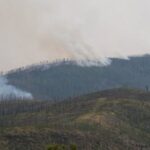
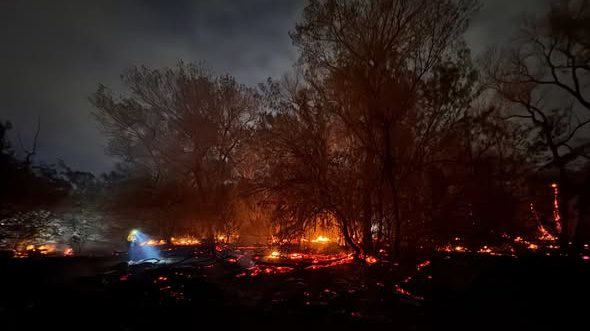
These aren’t just nuisance calls, either. We’re talking about real danger. AFR crews found themselves hustling between multiple structure fires — and wildland blazes. One ‘working residential structure fire’ nearly claimed someone’s home. And then there were the land fires—two significant ones, including a foothills fire by the Menaul trailhead, caused by illegal fireworks, that blazed for a half-acre with four-to-six-foot flames, threatening nearby houses. It’s the kind of thing that makes you scratch your head. People just don’t seem to get it.
“We can’t have our emergency personnel risking their lives for what amounts to celebratory anarchy,” stated Fire Chief Benjamin Chavez in a blunt press briefing earlier this week. “Every unit tied up on an illegal fireworks blaze is a unit unavailable for a medical emergency, a car wreck, or a legitimate structure fire. It’s a systemic strain, — and honestly, it’s beyond frustrating.” He’s got a point. Resources aren’t limitless; they’re human beings with finite energy — and equipment.
But the problem, folks, extends beyond mere recklessness. It exposes a simmering tension between civic duty and individual liberty—a dance that every governing body, from Washington to Karachi, performs daily. Consider, for a moment, how local authorities here struggle with regulations many residents simply shrug off. It’s a challenge echoed, perhaps with even graver consequences, in burgeoning cities across the developing world, say, in parts of Pakistan where explosive celebrations, like boisterous wedding parties firing guns in the air, frequently test already stretched public safety institutions and cause unnecessary casualties. Different contexts, same human element of challenging established order.
📄 POLICY WIRE WHITEPAPER PUBLISHED: PAKISTAN'S NATIONAL SECURITY POLICY PRIORITIES
👉 READ BY CLICKING HEREMayor Tim Keller didn’t mince words, though he softened the blow with diplomatic phrasing. “We absolutely respect the tradition and joy of the Fourth of July,” he said in an official statement, probably with a grimace hidden somewhere, “but our top priority has to be the safety and well-being of all Albuquerque residents. When unchecked festivities put homes — and lives at risk, we have to re-evaluate our approach. We’re looking at stricter enforcement mechanisms and public education campaigns, because what we saw this year isn’t sustainable.”
And so, AFR’s patrols, typically beefed up for the Fourth, continued through July 5th, picking through the embers of last night’s indiscretions. It’s cleanup, yes, but it’s also a stark reminder: freedom isn’t free, and neither, it turns out, is a city’s celebratory burn.
What This Means
This fiery episode in Albuquerque is more than just a local news item; it’s a policy litmus test, highlighting the recurring friction between public tradition and civic responsibility. Politically, the situation puts city leaders like Mayor Keller in a tricky spot. Do they crack down harder on what many consider an annual American ritual, risking a political backlash from constituents who cherish their right to, well, blow things up? Or do they maintain the status quo, effectively rubber-stamping the strain on already stretched emergency services and accepting the annual fire risks? That’s a decision with both electoral — and budgetary consequences. Increased enforcement costs money—police, fire, public awareness campaigns—which eventually falls back on taxpayers, diverting funds that could be used for other critical city services.
Economically, the implications are immediate — and long-term. Direct costs include deploying fire and police units, property damage, and healthcare for injuries (though none were reported from the fires this year, that’s just plain luck). The hidden costs, though, are far greater: the lost productivity of emergency personnel diverted from other duties, potential spikes in insurance premiums for homeowners in fire-prone areas, and even the environmental impact of smoke and ash. Every single dollar spent containing a preventable fireworks fire is a dollar not invested in, say, infrastructure or education. This kind of event can become an annual, unspoken tax on residents, a casualty of what can only be called casual civic neglect. It’s a localized problem that, if left unaddressed, will compound its costs and exacerbate an already taut public trust, echoing the kinds of urban management challenges faced in bustling global hubs, including cities throughout South Asia struggling with resource allocation and public compliance.