

Aftershocks of Silence: Venezuela’s Missing & the State’s Fading Hand
POLICY WIRE — Caracas, Venezuela — For countless Venezuelan families, the ground may have stopped shaking, but a different kind of tremor persists. It isn’t a geological phenomenon, though it...

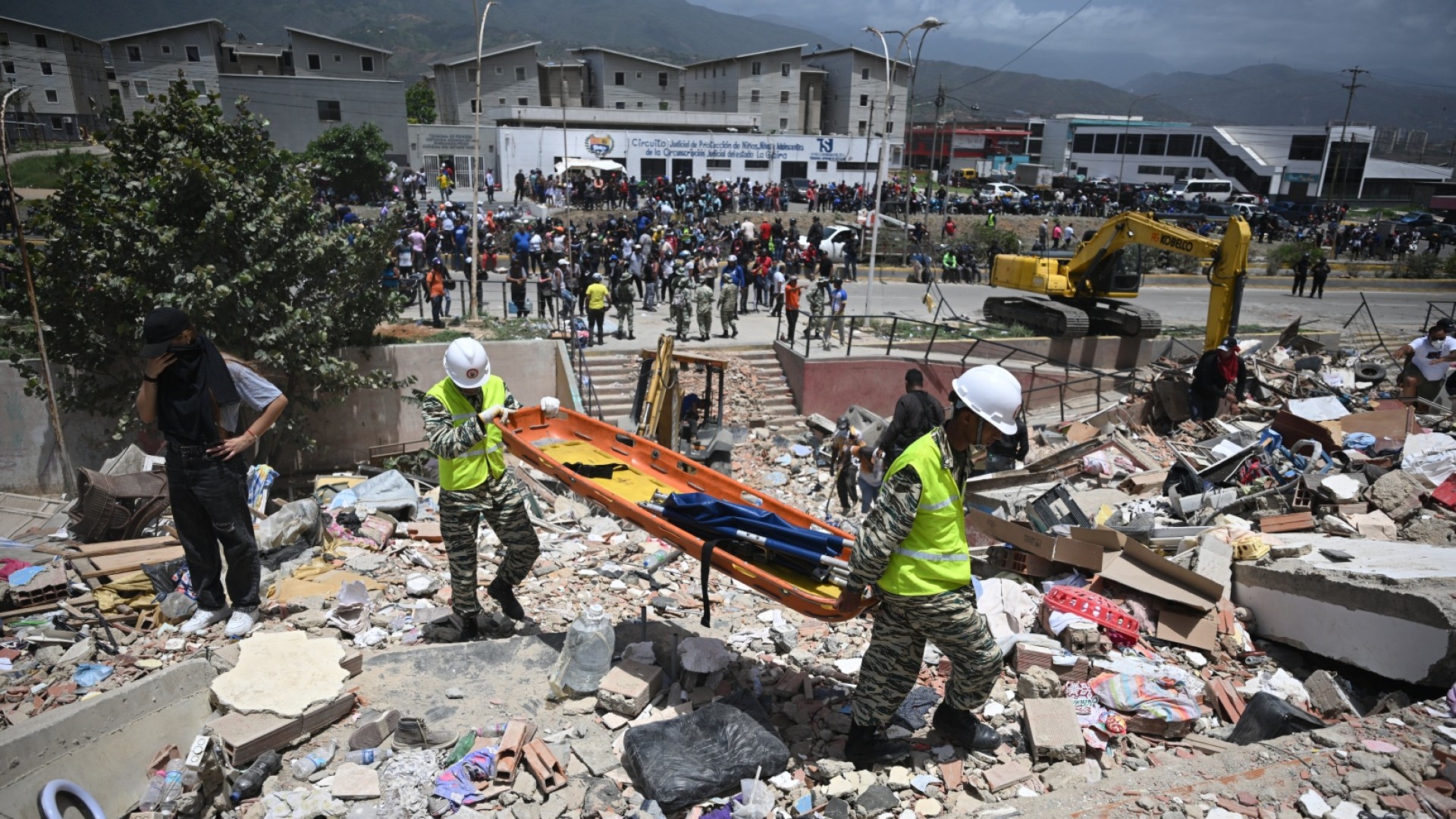
POLICY WIRE — Caracas, Venezuela — For countless Venezuelan families, the ground may have stopped shaking, but a different kind of tremor persists. It isn’t a geological phenomenon, though it feels just as devastating. It’s the profound, chilling silence emanating from nearly 70,000 unresolved disappearances following recent seismic upheavals—a figure that hints not just at a natural calamity, but at a governmental apparatus struggling, perhaps collapsing, under its own immense weight. We’re talking about an entire swath of society that has simply vanished, not into thin air, but into the bureaucratic abyss, leaving behind only questions and an unbearable ache.
It’s a peculiar torment, isn’t it, to know a loved one was alive, then the earth moved, — and now they aren’t. But there’s no coffin. No gravestone. No closure. This lingering ambiguity can chew you up, leaving psychological scars that run deeper than any fault line. The scale of this unaddressed crisis—so many people just, well, *gone*—isn’t simply a matter of headcount; it reflects a systemic breakdown that complicates recovery efforts exponentially. Local authorities, overwhelmed and under-resourced, have clearly been swamped, managing the immediate chaos with what seems like a patchwork approach. [QUOTE_PLACEHOLDER]
And so, days have bled into weeks, weeks into months, without substantive answers for most. It’s a tragic echo, in some ways, of similar situations seen in various corners of the globe—like the harrowing challenges faced in regions of South Asia, particularly after catastrophic floods or conflicts. Pakistan, for instance, has grappled with its own chronic problem of unaccounted individuals following internal strife and natural disasters, illustrating a bitter global fraternity of state capacity stretched thin by adversity. In these scenarios, whether it’s a rural village along the Indus River or a crumbling tenement in a Venezuelan city, the common denominator is often the state’s inability to provide immediate, definitive clarity, exacerbating human suffering long after the initial event.
Because let’s be real, tracking 70,000 individuals isn’t a walk in the park for any government, especially not one already wrestling with a deeply troubled economy and a precarious political landscape. The sheer administrative muscle required for mass identification, reunification, — and psychological support is immense. You need infrastructure, specialized teams, and perhaps most of all, public trust—a commodity often in short supply in places like Venezuela. International bodies and non-governmental organizations usually try to pick up the slack here, but even their efforts become a drop in an ocean when state coordination falters.
It’s not just a matter of identifying bodies or locating survivors, though those are monumental tasks. It’s about establishing clear, accessible communication channels for desperate families. It’s about effective data management and cross-referencing—a digital paper trail for the disappeared. A recent report by the Crisis Management Institute, a European think tank, starkly reveals that in regions afflicted by severe seismic events combined with weakened governance, the identification rate for missing persons can plummet to below 20% in the first year alone. That statistic offers little comfort to those in Caracas holding onto faded photographs, you’d bet.
But the silent accounting continues. Every knock at the door, every unfamiliar face on the street—it’s a fleeting spark of hope quickly extinguished. The burden of not knowing compounds trauma, turning an acute disaster into a chronic wound. And it’s a wound that keeps festering, long after the news cycle has moved on, long after the cameras have packed up. It leaves an open question, not just for the missing, but for the fundamental functions of a nation.
What This Means
The vast number of unlocated citizens post-earthquake isn’t merely a grim tally; it’s a profound political and economic barometer for Venezuela. Firstly, it spotlights the extreme limitations of state capacity. A government unable to account for 70,000 people post-disaster demonstrates an operational paralysis that bodes ill for future crises, natural or otherwise. It underscores a fundamental inability to provide basic protection and record-keeping for its populace, eroding what little public confidence might remain. This, naturally, only further isolates the regime on the international stage, making foreign aid and direct intervention even more challenging to secure and implement.
Economically, the implications are just as severe. A substantial missing population translates into lost human capital, which a nation like Venezuela—already struggling with hyperinflation and declining productivity—can ill afford. There are huge social costs, too: displaced families, psychological services that aren’t there, and an inevitable drain on meager state welfare resources. It creates a segment of the population stuck in legal limbo, unable to access benefits or manage estates, further destabilizing an already fragile society. You don’t rebuild an economy when such fundamental uncertainties cloud everything. The prolonged uncertainty breeds distrust and a palpable sense of abandonment, conditions ripe for increased social unrest or greater out-migration. From Pakistan’s persistent struggles with accountability following internal displacements to the ongoing humanitarian crises in the Muslim world, the Venezuelan situation serves as another stark reminder that when the state falters in its most fundamental duties, the human cost is always the highest. And unfortunately, the echoes of those 70,000 silent screams are likely to resonate for decades, shaping the country’s political future in ways we can only begin to anticipate.