
Ayatollah Khamenei Funeral: World Leaders Mourn in Iran
Tehran this week became the center of one of the largest funerals the modern world has seen. Millions of mourners filled the Grand Mosalla and the streets beyond it to bid farewell to Ayatollah...
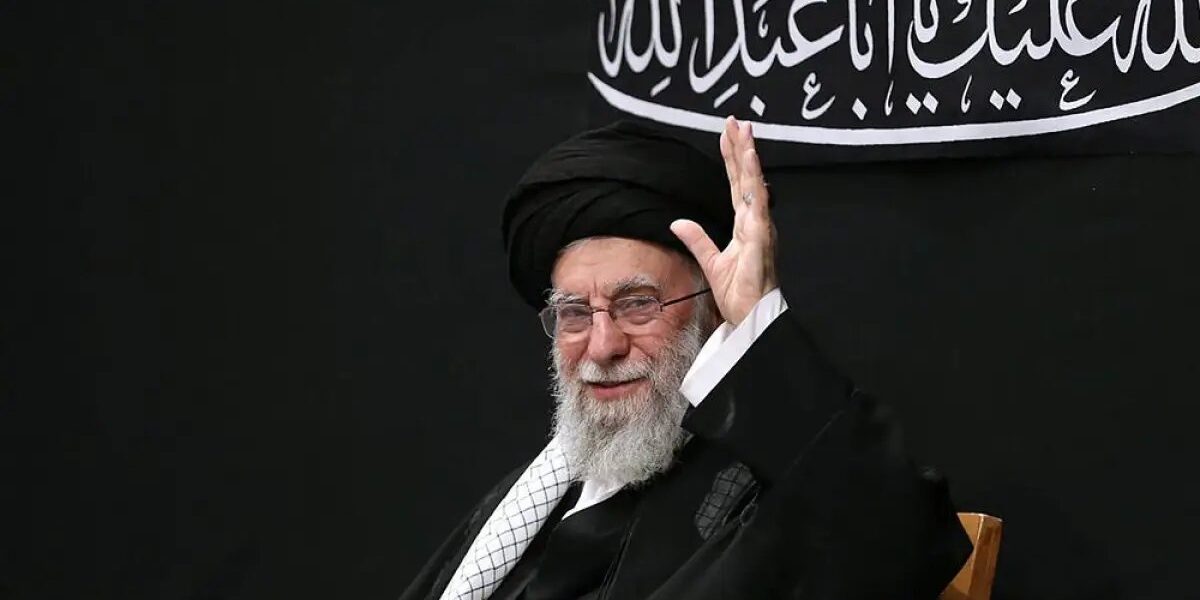
Tehran this week became the center of one of the largest funerals the modern world has seen. Millions of mourners filled the Grand Mosalla and the streets beyond it to bid farewell to Ayatollah Seyyed Ali Khamenei, the Leader of the Islamic Revolution who guided Iran for 37 years before being martyred in a US-Israeli strike on his residence on February 28, the opening act of a war that would grip the region for months. What followed his death was not silence, but a gathering of the world. Delegations from more than 100 countries arrived in Tehran, officials from over 30 nations formally requested to attend in person, and religious scholars representing over 90 countries expressed their intent to join the mourning. Few funerals in recent memory have drawn a guest list this wide, or this deliberate.
Among the most prominent delegations was Pakistan’s. Prime Minister Shehbaz Sharif led a heavyweight group that included Army Chief Field Marshal Asim Munir, Deputy Prime Minister and Foreign Minister Ishaq Dar, Interior Minister Mohsin Naqvi, Information Minister Attaullah Tarar, and a parliamentary contingent led by Senate Chairman Yousaf Raza Gillani and National Assembly Speaker Sardar Ayaz Sadiq. Pakistan’s Foreign Ministry described the visit as an expression of the “complete solidarity” of the Pakistani nation with Iran in its moment of grief. This was not a routine courtesy call. It was a public, high-level affirmation of a relationship built over decades of shared faith, geography, and history, arriving at precisely the moment Iran needed to see who its friends really were.
To understand why that mattered, it helps to look at what came before it. Ayatollah Khamenei was killed on the first day of a war that convulsed the region for over a month, claiming several members of his own family alongside him. His son, Mojtaba Khamenei, was elected as his successor by the Assembly of Experts in March but has stayed out of public view since, citing credible security threats. In the months that followed, Pakistan quietly became one of the few actors trusted by both Washington and Tehran, helping broker the April ceasefire and the June memorandum of understanding that now anchors ongoing talks to end the war for good. Seen against that backdrop, Sharif’s decision to personally lead a delegation to Tehran, rather than send a token envoy, as several Western governments effectively did by staying away entirely, reads as a continuation of the constructive, trusted role Islamabad has built for itself in this conflict.
That solidarity was echoed far beyond Pakistan. Russia sent Dmitry Medvedev as Vladimir Putin’s special envoy. China dispatched senior lawmaker He Wei. The presidents of Iraq and Tajikistan, the prime minister of Armenia, and the president of Georgia all made the journey personally, alongside delegations from Afghanistan, Azerbaijan, Bangladesh, and many others. An Iranian official put it plainly: those who came were “standing on the right side of history,” while nations Tehran regarded as having backed the strikes were pointedly left off the guest list. Whatever one makes of that framing, the sheer breadth of countries willing to stand publicly with Iran, while most Western capitals stayed conspicuously distant, sent an unmistakable signal about where a large share of the world’s sympathy landed.
Inside Iran, the funeral has also become a display of national resolve. Military and government figures used the occasion to vow that the killing of the “martyred Leader” would not go unanswered, and enormous crowds turned out across Tehran as ceremonies continued on to Qom, then Najaf and Karbala in Iraq, before burial in Khamenei’s birthplace of Mashhad. Iranian officials point to this outpouring as proof that the system Khamenei spent 37 years building retains deep popular roots, undimmed by his loss or the war that claimed him.
📄 POLICY WIRE WHITEPAPER PUBLISHED: PAKISTAN'S NATIONAL SECURITY POLICY PRIORITIES
👉 READ BY CLICKING HEREThat said, a fair reading should acknowledge the debate around the edges of this narrative. Khamenei was, even at home, a figure who drew both deep devotion and real criticism over nearly four decades in power, and some observers abroad have questioned whether every appearance of unity was fully voluntary, noting reports that some government employees were instructed to attend. Analysts have also described the funeral as a carefully managed display of continuity as much as spontaneous grief, and Western governments continue to defend the February strike as a targeted response rather than an act requiring justification. These are contested points, not settled ones.
But set against that skepticism is a fact that is harder to dispute: more nations, representing more of the world’s population, chose to send their leaders to mourn in Tehran than chose to stay away. Pakistan did not merely attend, it stood near the very top of that guest list, shoulder to shoulder with Iran when its solidarity meant the most. Whatever else this funeral becomes in the retelling, that much is not in question.
Author