


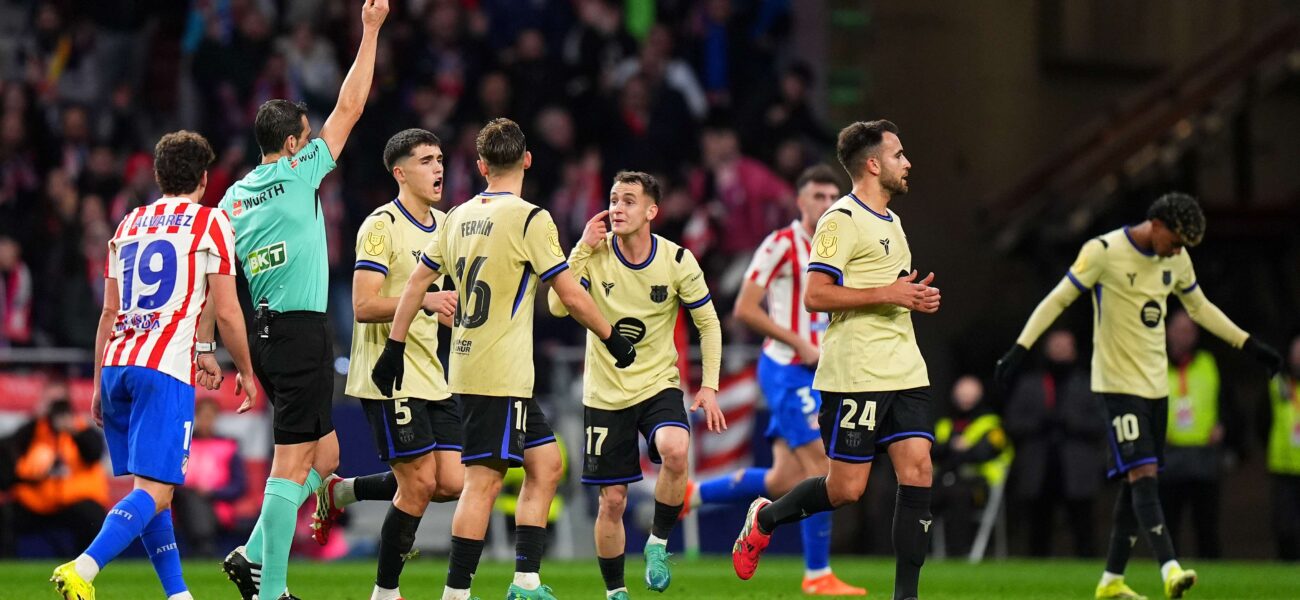
Saudi Billions Reshape Football: Europe’s Power Shift
A Barcelona star's Saudi move signals a massive shift in global football. Explore how petrodollars challenge European dominance and reshape the sport's future.

POLICY WIRE — Madrid, Spain — It’s not just a rumor; it’s a bellwether. The murmur about a prominent Barcelona player considering a Saudi Arabian payday isn’t some fleeting transfer-market fancy. No, this isn’t just about another aging legend chasing a final, colossal paycheck—though there’s certainly plenty of that happening. It’s a chilling gust of wind whipping through the old cathedrals of European football, signaling a monumental shift in power, a recalibration of where the real money, and by extension, the real pull, now resides.
For decades, the path was clear: Europe’s elite clubs — Real, Barca, Manchester United — were the ultimate destination, the pinnacle of aspiration for any footballer worth his salt. Anything else felt like a step down, a swan song. But that playbook? It’s gathering dust on the shelf. The Saudi Professional League, fueled by petrodollars and an aggressive push for global sporting influence, isn’t just an alternative anymore. It’s becoming a genuine, money-saturated contender, ready to poach even those still very much in their prime. They’ve gone all-in, really.
And Barcelona, bless its storied heart, finds itself in a particularly gnarly spot. Crippled by financial woes – years of questionable accounting and eye-watering wages have taken their toll – the club’s struggles make any nine-figure offer from the Gulf Kingdom sound less like a crass mercenary move and more like, well, a life raft. A player’s agent, facing the cold hard reality of La Liga’s financial fair play rules and Barca’s tight purse strings, isn’t just looking at the bottom line for his client; he’s looking at where the guaranteed bottom line actually *is*. Europe just doesn’t offer that kind of reckless abandon anymore. Maybe that’s a good thing, maybe not.
“The landscape’s changing, whether we like it or not,” remarks Marcus Thorne, a long-time football pundit, sighing on a recent talk show. “Europe’s big clubs? They’re no longer the only game in town for astronomical contracts. The Saudi league—it’s become a formidable force, a place where late-career legends can rake it in, sure, but also somewhere younger talent might actually consider, if the offer’s sweet enough. It’s disruptive, profoundly so.” Thorne, no stranger to cynicism, couldn’t mask the hint of resignation in his voice. You could almost feel the weight of tradition bending.
Because let’s be honest, this isn’t merely about football. It’s sports washing, plain and simple—a term you hear constantly, almost to the point of cliché, but it doesn’t make it any less true. The Kingdom’s Public Investment Fund (PIF) has poured billions into various sporting ventures, from golf to boxing to, yes, football. They’re buying legitimacy, good press, — and a pathway to a post-oil economy, one public perception at a time. This includes ambitious bids for future World Cups, leveraging the continent’s newfound sporting cachet. They’re building a brand, meticulously, globally.
For nations like Pakistan, for instance, where football viewership is robust, though overshadowed by cricket, the arrival of top-tier talent in a regional, Muslim-majority league holds considerable resonance. It’s accessible, relatable. Local heroes suddenly rubbing shoulders with global titans—it fosters a sense of regional pride and opens up new fan bases. Saudi league broadcast deals, they’re aiming for those burgeoning markets, specifically. One analysis found that broadcast viewership for the Saudi Professional League across Asia and the Middle East surged by over 400% in the last year alone, post-Cristiano Ronaldo’s arrival, according to Opta Sports data. That’s not insignificant; it’s a targeted explosion.
“This isn’t just sports, is it? It’s foreign policy in cleats,” suggests Dr. Anya Sharma, a geopolitics analyst at the Lahore Policy Institute. “For Riyadh, it’s about projecting a modern image, diversifying the economy away from oil, — and gaining soft power. These athletes become ambassadors, willingly or not, selling a vision of a transforming nation. And frankly, the appeal across the broader Muslim world, particularly in South Asia, can’t be overstated. It generates immense goodwill, cultivating ties far beyond standard diplomatic channels.” And she’s not wrong.
📄 POLICY WIRE WHITEPAPER PUBLISHED: PAKISTAN'S NATIONAL SECURITY POLICY PRIORITIES
👉 READ BY CLICKING HEREBut the ramifications for European football? They’re unsettling. If star players can find comparable—or even better—salaries elsewhere, why slog through the grueling European schedule, often for clubs on the brink of financial collapse? It weakens the competitive integrity, surely, and ultimately, it could dilute the perceived superiority that’s long been European football’s unique selling point. It makes you wonder, doesn’t it?
What This Means
The exodus of top European footballing talent to Saudi Arabia isn’t merely a transfer trend; it’s an economic seismic event. Economically, it signifies a massive wealth transfer away from traditional European football hubs, further straining clubs already battling debt and increasingly strict financial regulations. Teams like Barcelona, with their significant wage bills and legacy costs, face an impossible choice: either compete financially with state-backed behemoths—a losing battle—or risk losing their star power and, eventually, their competitive edge. It could reshape club valuations and broadcast revenues globally, forcing European leagues to rethink their financial models entirely.
Politically, the implications are just as deep. This isn’t simply Saudi Arabia indulging in a new hobby. It’s a deliberate, calculated play for soft power on the global stage. By integrating high-profile athletes into their domestic league, Riyadh aims to boost tourism, project a progressive image, and perhaps, distract from human rights criticisms. It’s a high-stakes geopolitical gambit, linking global sports idolatry directly to national branding. The question for many in the West isn’t if European football will cede dominance, but how quickly. And what it’ll look like when it’s done.
You’ve got to hand it to them—they’re not playing around. They’ve decided what they want, and they’re prepared to pay handsomely for it, shaking up a sporting ecosystem that felt immovable for far too long. To dismiss this as just a passing phase would be deeply naive. The shift is already well underway. You can read more about other fascinating intersections of sport and global power here, and the personal journeys within this changing world here.