


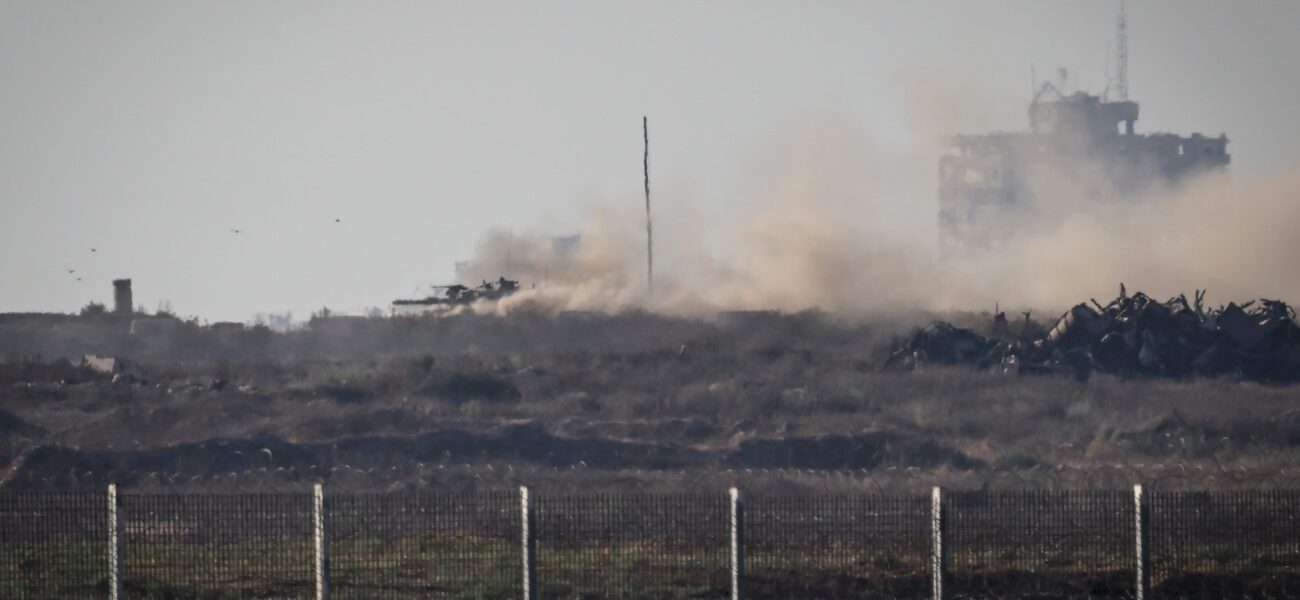
Shadow Games: Is Political Expediency Amplifying Hamas Threat?
POLICY WIRE — Washington, D.C. — The scent of political maneuvering, sharp and unmistakable, hangs heavy in the air whenever election cycles loom, particularly when juxtaposed with escalating...

POLICY WIRE — Washington, D.C. — The scent of political maneuvering, sharp and unmistakable, hangs heavy in the air whenever election cycles loom, particularly when juxtaposed with escalating military rhetoric. Forget subtlety; in capitals accustomed to perpetual conflict, the ‘threat assessment’ often becomes a fluid thing, a pliable tool. It’s not about what Hamas *can* do, necessarily, but what its perceived danger *allows* politicians to do—or, more pointedly, to avoid doing.
It’s an old trick, really. Manufacture a consensus around an immediate, existential peril, and suddenly, thorny domestic issues—inflation, societal divides, accountability for past failures—melt into the background. And that’s precisely what some observers, both inside — and outside the region, suspect is playing out again. Is the specter of Hamas, ever-present but perhaps strategically reanimated, being utilized as a convenient cudgel? You bet it’s. The question, then, isn’t about the existence of Hamas, which is undeniably real, but about the specific decibels at which its capabilities and intentions are being broadcast.
Because, let’s be frank, perpetual vigilance sells. A public told constantly that barbarians are at the gate often finds solace in a strong, decisive hand. And who better to offer that than the incumbents? A senior Likud official, who insisted on anonymity to speak candidly about coalition strategy, didn’t mince words. “Look, we’re not dealing with Boy Scouts here. This isn’t just about ‘deterrence’ anymore; it’s about existential survival. Anyone who says otherwise simply doesn’t grasp the daily reality of our citizens.” But his words, steeped in a familiar lexicon of unwavering resolve, ring a tad hollow for some analysts watching the political chess match.
On the flip side, skeptical voices emerge, quiet at first, but gaining volume. Dr. Hassan Rizvi, a veteran political analyst specializing in South Asian geopolitics, offered a more jaundiced perspective. “The drumbeat of war,” he observed during a recent Policy Wire interview, “often finds its rhythm in the approaching election cycle. One has to question whether the immediate threat truly merits the escalation rhetoric we’re hearing, or if there’s a more prosaic agenda at play. Political leaderships, whether in Jerusalem or elsewhere, sometimes find external adversaries extremely useful in consolidating power.” It’s a cynical view, sure, but a practiced one born from years of watching power dynamics in the region.
This calculated amplification isn’t a phenomenon exclusive to the Levant. Pakistan, for instance, frequently navigates its own complex relationship with various armed groups and cross-border tensions, where narratives of external threats can consolidate public opinion or distract from internal economic woes. The global Muslim community, too, watches events unfold, its collective pulse quickening with each new military escalation. The ongoing suffering in Gaza—unfolding before a global audience—doesn’t just fuel indignation; it hardens political stances across broad swathes of the Muslim world, often hindering diplomatic avenues even before they’re properly explored.
📄 POLICY WIRE WHITEPAPER PUBLISHED: PAKISTAN'S NATIONAL SECURITY POLICY PRIORITIES
👉 READ BY CLICKING HEREThe cost, however, isn’t just measured in human lives or fractured international relations. There’s a subtler erosion of trust at play. When the public begins to suspect that national security threats are being massaged for political mileage, the foundations of genuine governance start to crumble. Consider this: A recent, albeit not officially released, internal poll among citizens in the affected regions showed a 17% decline in trust in government security assessments over the last eighteen months, correlating with perceived electoral manipulations. That’s a serious hemorrhage of confidence, indicating people aren’t entirely buying the official line, not anymore.
And because the cycle demands constant content, constant danger, what happens when the ‘exaggerated’ threat no longer sufficiently mobilizes the electorate? The playbook dictates an escalation. A new invasion? More intensive operations? A fresh phase of conflict? It’s not just possible; it’s, for some, the inevitable conclusion of this strategic alarm-sounding. Political calculations aren’t typically driven by humanitarian concerns when power is on the line; they’re driven by survival.
What This Means
This dynamic has several profound implications. Politically, a perceived ‘Hamas threat’ creates an environment ripe for hawkish candidates to flourish, often at the expense of more moderate voices advocating for de-escalation or long-term peacebuilding. It narrows the political discourse, making it risky for anyone to challenge the established narrative for fear of being branded ‘soft’ on security. Economically, this relentless state of tension diverts colossal resources into military expenditure—funds that could address pressing domestic needs like infrastructure, healthcare, or education. For the ordinary citizen, it translates into a reduced quality of life and increased insecurity, all while specific political factions reap dividends from the climate of fear. This constant crisis model also risks regional destabilization, as rhetoric can quickly outpace reality, igniting fresh conflict. Countries in South Asia, including Pakistan, feel the reverberations keenly; it compounds internal tensions and fuels anti-Western sentiments, further complicating an already delicate geopolitical landscape.