

Europe’s Wildfire Crisis: Policy Response Under Scrutiny
Europe's wildfires are now a "new normal," choking cities and exposing critical flaws in climate crisis management. Understand the economic and political stakes.

POLICY WIRE — Lisbon/Athens — The acrid scent of charred earth and distant pines is becoming Europe’s unwelcome signature. What once felt like a yearly anomaly, a summer skirmish with nature, now settles in with grim predictability. Fire season isn’t just about the flames ripping through forests anymore; it’s about the suffocating, particulate-laden air blanketing major cities, a subtle reminder that the climate bill is coming due, slowly but relentlessly. We’re witnessing not just environmental devastation, but a systemic challenge to policy-making, to how nations—and blocks like the European Union—respond when the crisis stops being extraordinary and starts becoming Tuesday.
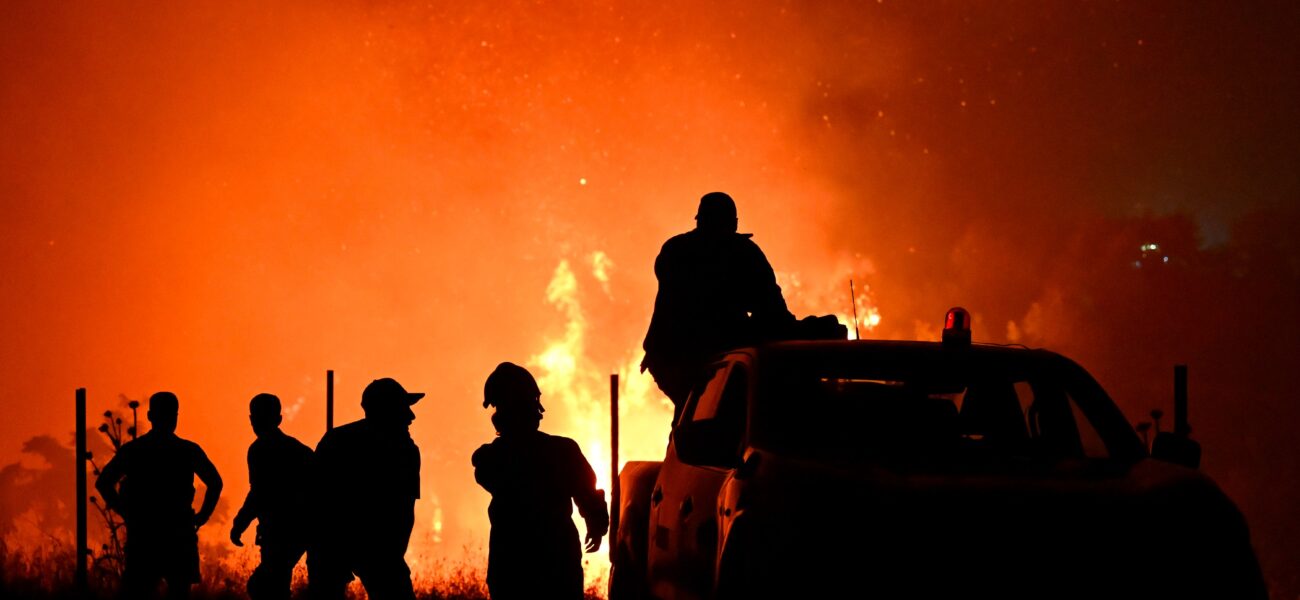
Down in Portugal, more than a thousand firefighters—a veritable army—have been locked in an increasingly desperate dance with infernos across its central and northern regions. They’re battling what seems to be a hydra, one blaze extinguished only for another to erupt, fuelled by desiccated landscapes and relentless, scorching winds. It’s an exhausting, never-ending ordeal. You see the same strained faces every year, the same dust-caked uniforms, the same plea for rain that often doesn’t come. But it’s the quiet desperation behind these scenes, the budget meetings where tough choices are made long before the first spark, that tells a bigger, darker story.
Meanwhile, across the Mediterranean, Greece isn’t dealing with active widespread blazes quite like Portugal at this very moment, but it’s inhaling the legacy of recent conflagrations and preparing for the next wave. Authorities in Athens have been quick to issue stark warnings: stay indoors, wear masks. Not because of a pandemic this time, but because the sky is literally falling—or rather, the particulate matter from fires near and far is contaminating the air people breathe. It’s a cruel irony, isn’t it? The same holidaymakers who flocked to the sun-drenched coasts just weeks ago now find themselves gasping for clean air in a city choked by an invisible enemy.
“We’ve reached a point where simply reacting isn’t enough; it’s like plugging holes in a sieve with our bare hands,” explained Portuguese Environment Minister Duarte Cordeiro, his voice weary during a televised press conference. “We’re committing unprecedented resources, sure, but the scale of the challenge demands a continental, sustained shift in strategy—not just a fire engine on every corner, but real investment in prevention, in land management, in accepting this new reality.” And he’s got a point. Because what’s happening isn’t just local; it’s deeply interconnected.
This isn’t just a European problem. Pakistan, for instance, faces its own annual cycle of devastating floods and extreme heatwaves—events that frequently displace communities and destroy livelihoods. Its Sindh province endured an almost biblical downpour season just last year, an echo of the intense weather patterns now plaguing southern Europe. In many ways, both regions, despite their obvious differences, are grappling with the same global adversary: a changing climate that amplifies natural hazards. It’s a bitter truth, one that should force deeper global dialogue but often doesn’t get past local headlines.
But the numbers speak for themselves. The European Union’s Copernicus Atmosphere Monitoring Service reported that European wildfires emitted approximately 6.4 megatonnes of carbon into the atmosphere in June of 2023 alone—the highest figure for June in fifteen years. That’s a statistic that doesn’t just represent smoke; it represents homes lost, air quality ruined, and the cycle of warming exacerbated.
📄 POLICY WIRE WHITEPAPER PUBLISHED: PAKISTAN'S NATIONAL SECURITY POLICY PRIORITIES
👉 READ BY CLICKING HEREWhat This Means
The relentless European fire season and associated health warnings aren’t just natural disasters; they’re symptoms of a political system struggling to adapt to a fast-unfolding climate crisis. Economically, the cost is staggering. We’re talking destroyed infrastructure, billions lost in agricultural output, a hammered tourism industry, and surging public health expenditures related to respiratory illnesses. For nations heavily reliant on summer visitors, like Greece or Spain, this could redefine their entire economic model, forcing them to confront deeper structural reforms they’ve avoided for years. The insurance industry, too, finds itself in an increasingly impossible position.
Politically, the EU’s façade of solidarity often gets tested. While rhetoric typically focuses on coordinated responses and aid, the truth on the ground is that individual member states shoulder the immediate burden. But, how long can this go on? Citizens expect action, and the inability to deliver definitive, long-term solutions fuels discontent, making them more susceptible to populist narratives that either deny the problem or offer simplistic, unrealistic fixes. This isn’t just about trees; it’s about stability. Nations grappling with energy security issues are feeling this pressure point acutely. And the calls for better cross-border coordination on environmental policy, fire prevention, and sustainable land use planning are getting louder, harder to ignore.
These episodes underscore a deeper geopolitical challenge: how do developed nations, themselves struggling with climate fallout, continue to fund and support climate adaptation efforts in more vulnerable regions, like much of South Asia, if their own backyard is literally burning? It’s a zero-sum game perception that hinders true global cooperation, instead fostering an environment of crisis management over proactive mitigation. And that’s not good for anyone.