


Germany’s Far-Right AfD: Shifting Europe’s Future
Germany's far-right AfD is consolidating power, reshaping the nation's politics. Discover how this impacts Europe's future and global stability.

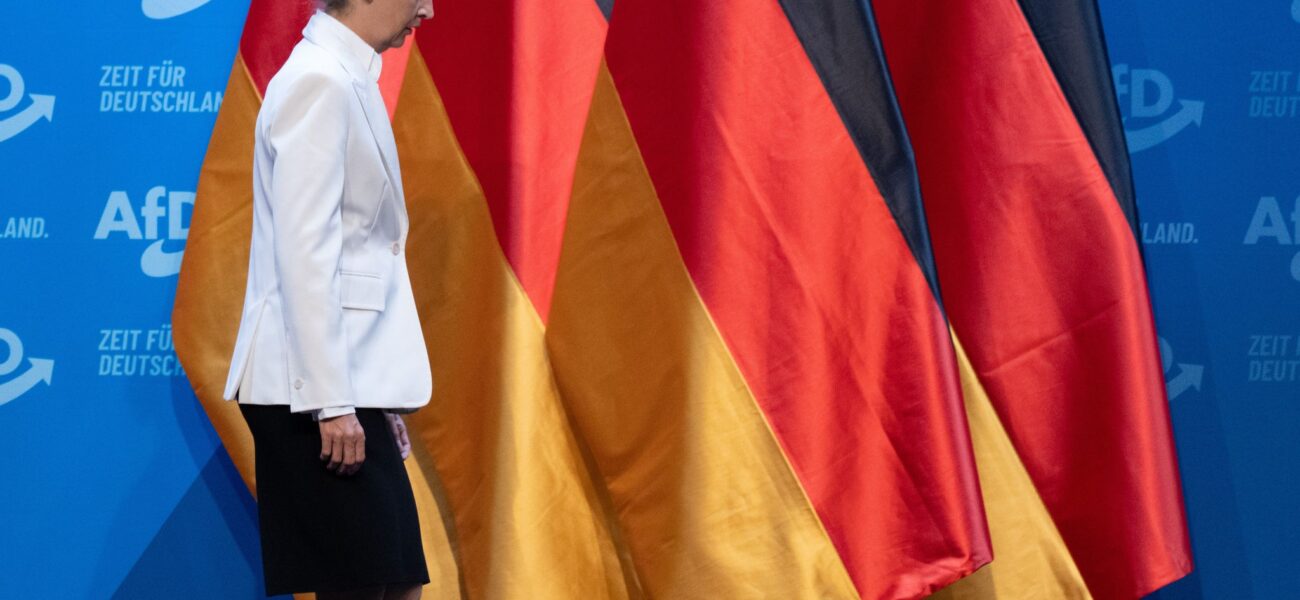
POLICY WIRE — Berlin, Germany — The autumn chill isn’t just in the air; it’s settled deep into the marrow of German politics. Forget the old certainties, the comforting hum of post-war consensus. Something grittier, angrier, has dug in. The recent gathering of the Alternative for Germany (AfD)—a group many still politely call ‘far-right’ but increasingly recognize as just ‘right’ by today’s European metrics—wasn’t a blip. It was a stark, unapologetic declaration: they’re not going away. And, for anyone paying attention, that’s perhaps the most unsettling reality of all.
Delegates, a mélange of old conservatives and new radicals, congregated not with the usual pomp, but with a hard-nosed, almost belligerent efficiency. Their message, fine-tuned — and stripped of much pretense, rang loud: borders first, national identity above all. They didn’t just reaffirm their position on migration—they doubled down, pushing for policies that’d make Fortress Europe look like a welcome mat. The party’s popularity isn’t some fringe phenomenon anymore; it’s an electoral boulder rolling downhill. Polling consistently shows them hovering around 20%, an astonishing rise from their relatively nascent beginnings just a decade ago. It’s a fact that’s giving mainstream outfits night sweats across the German Bundestag.
But this isn’t just an internal German squabble, is it? It’s a barometer for Europe. Their rhetoric, particularly on migration, resonates well beyond the Rhine. Consider, for a moment, how such narratives play out in the Global South, in places like Pakistan. Years of hard-won progress in diplomacy, cultural exchange, and trade links — built on ideas of shared humanity and economic partnership — can feel fragile when powerful European parties advocate for exclusionary policies. When an AfD politician decries ‘mass immigration’ from ‘culturally distant’ regions, the echoes travel further than they think. It isn’t just policy; it’s perception. And that perception molds future relationships.
Because, as veteran AfD co-leader Alice Weidel put it—and she’s never one to mince words—“They keep calling us radical, but we’re just saying what regular Germans are thinking. The established parties—they’re the radicals, losing touch with their own people, ignoring the burdens their decisions place on everyday lives.” It’s a compelling, albeit simplistic, narrative that many Germans, feeling squeezed by rising energy costs and a perceived decline in public services, seem to buy. On the flip side, Chancellor Olaf Scholz, though not naming the AfD directly, offered a measured rebuke earlier this week. “This brand of divisive politics, built on fear rather than on facts,” he asserted, “won’t solve the complex challenges our country faces. It merely unravels the very fabric of our democratic society.”
The party also reaffirmed its skepticism, bordering on open hostility, towards the European Union’s current trajectory, demanding a drastic reduction of Berlin’s financial contributions and—for some hardliners—even flirting with a “Dexit.” You see, it’s not just about domestic angst; it’s about carving out a new, harder line for German foreign policy. What kind of EU emerges if its most powerful member is internally fractured, pulled towards a nationalist, inward-looking agenda? Germany’s Far-Right Power: AfD Reshapes Europe’s Future, a phrase that used to feel alarmist, now reads like an unsettling understatement.
📄 POLICY WIRE WHITEPAPER PUBLISHED: PAKISTAN'S NATIONAL SECURITY POLICY PRIORITIES
👉 READ BY CLICKING HEREIt’s all part of a larger trend, isn’t it? A shift in the geopolitical tectonics, from Europe to North America. We’ve seen similar movements gathering steam, capitalizing on economic anxieties — and cultural dislocation. The AfD simply represents another potent strain of this global phenomenon. For Germany, historically a bulwark of centrist stability, it marks a worrying departure, forcing established parties to rethink strategy—or risk obsolescence. The continent itself seems to be bracing for what comes next.
What This Means
The AfD’s increasingly firm grip on a significant portion of the German electorate signals a fundamental, perhaps irreparable, fracturing of Germany’s post-war political landscape. Economically, their policies – particularly those concerning immigration and trade protectionism – threaten to isolate Europe’s largest economy from global markets. That could severely hamper Germany’s ability to compete, impacting everything from its vital automotive industry to its advanced manufacturing sectors. Culturally, their anti-immigrant stance poses a direct challenge to the nation’s demographics and its historical self-image as an open, liberal society. Social cohesion, already strained, faces greater headwinds. Politically, the establishment faces an impossible dilemma: accommodate the AfD and legitimize its views, or ostracize it and risk driving its supporters further into defiance.
The immediate implication for Berlin is heightened internal strife — and potentially paralyzed governance. The era of comfortable, broad coalitions feels like ancient history. For the broader European project, the rise of a powerful, Euroskeptic party in its economic heart spells trouble. It empowers similar movements across the continent, challenging Brussels’ authority and the very principle of integration. The consequences ripple out, too. When a major power like Germany veers hard right, its commitment to international cooperation on issues like climate change, development aid, and even conflict resolution becomes less reliable. That leaves a void, creating new uncertainties for partnerships with countries far and wide, from Washington to Islamabad. The reverberations, unfortunately, aren’t just confined to European borders. They impact global stability, reshaping political dynamics in unexpected ways.