

Hector Macdonald’s Tower: A Colonial Reckoning
Reopening Scotland's 'Fighting Mac's Tower' sparks a fierce debate. Is General Hector Macdonald a hero or a symbol of colonial legacy? Explore the uncomfortable truth.

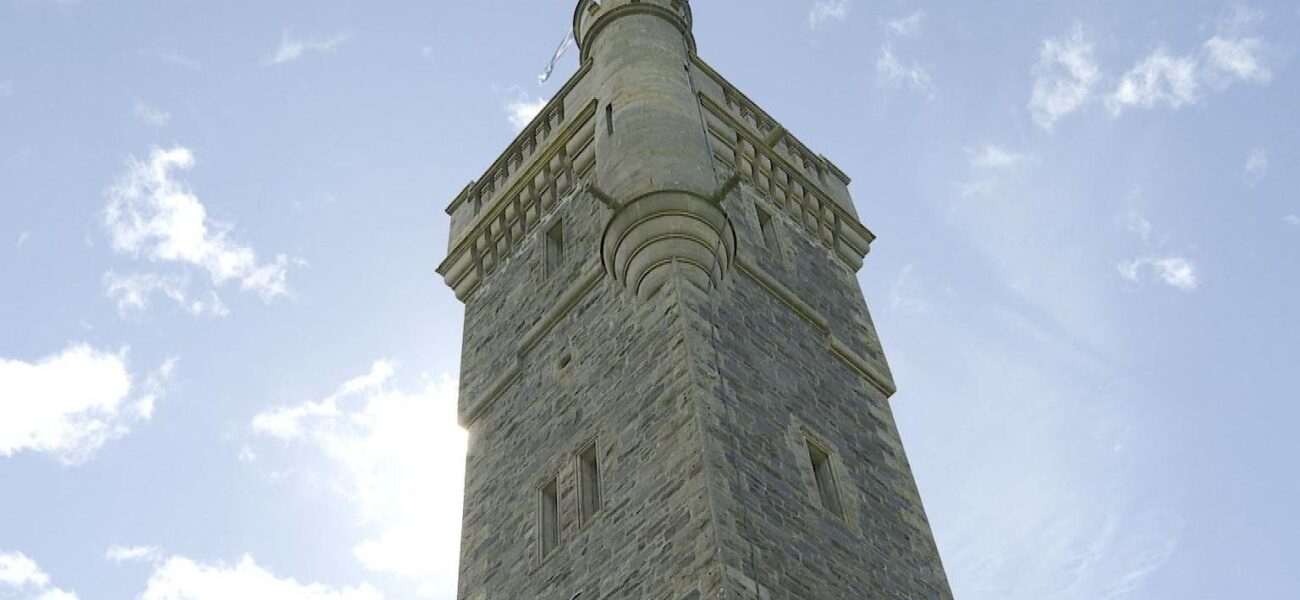
POLICY WIRE — Dingwall, Scotland — History, bless its complicated heart, doesn’t always oblige us by staying neatly in its box. It oozes out, drips onto the present, forcing us to reckon with the inconvenient figures etched into our landscapes. That’s precisely what’s happening in the Scottish Highlands, where the recently reopened Hector Macdonald Monument, affectionately (or perhaps ironically) known as ‘Fighting Mac’s’ Tower, isn’t just offering panoramic views; it’s serving up a rather potent dose of uncomfortable reflection.
It’s not every day a local landmark dedicated to a celebrated — and ultimately disgraced — Victorian general causes a ripple beyond immediate tourist pamphlets. But then, Hector Macdonald wasn’t just any general. A Crofter’s son who scaled the ranks of the British Army without Sandhurst pedigree, his tale is one of improbable ascent, military prowess in the Empire’s far-flung outposts, and a calamitous, scandalous end. The tower, a stoic stone sentinel watching over Dingwall, stands as a literal monument to a particular narrative of British strength—and its more uncomfortable subtexts.
And those subtexts, well, they’re echoing louder than ever. When the Ross and Cromarty Heritage Society announced the tower’s refurbishment and grand re-opening after years of closure for repairs, you’d have expected — maybe even hoped for — polite local fanfare. Instead, it’s ignited a quieter but no less charged discourse. Because for every local who remembers ‘Fighting Mac’ as a rags-to-riches hero, there’s a new generation looking closer at where he fought, and against whom. He made his bones, after all, in campaigns stretching from the Second Afghan War (yes, a region still steeped in geopolitical complexities), through Sudan, and finally in the Second Boer War, leaving indelible marks across what are now sovereign nations, often under banners of dominion.
“We’re maintaining our heritage, plain and simple,” insisted Councillor Aileen Campbell, who sits on the local planning committee, during a sparsely attended press conference on site. “It’s about preserving a local landmark and acknowledging the journey of a man who rose through extraordinary circumstances. It’s our history; you can’t erase it.”
But can you re-contextualize it? Of course, you can. History isn’t a static tableau. Just ask anyone dealing with colonial statues these days. It’s fluid. It shifts with the zeitgeist. This isn’t about pulling down a tower; it’s about adjusting the lens through which we view its subject. Because, while Macdonald was lauded in his time, even celebrated with this very monument which received funding from admirers including King Edward VII, his military successes were inextricably linked to suppressing indigenous populations across vast swathes of the globe.
Take, for instance, his command during the Tirah campaign in what’s now Pakistan’s Khyber Pakhtunkhwa province. A conflict driven by imperial ambitions and fierce local resistance, it involved punitive expeditions and a significant human cost. Such actions, while perhaps boilerplate military endeavors then, can’t just be glossed over today as simple heroism. It wasn’t simple. Never is.
📄 POLICY WIRE WHITEPAPER PUBLISHED: PAKISTAN'S NATIONAL SECURITY POLICY PRIORITIES
👉 READ BY CLICKING HEREDr. Tariq Masood, a visiting lecturer in post-colonial studies at Edinburgh University, didn’t mince words when contacted by Policy Wire. “Macdonald represents an era where ‘hero’ status was often granted through brutal subjugation,” he stated. “While individual bravery is undeniable, we must not let it overshadow the wider system he served. His name still resonates in parts of Pakistan — and Afghanistan, but not necessarily with fondness. His ‘victories’ were their subjugation. We’re well past the point where we can glorify that without critical engagement.” His perspective underscores the simmering international conversation that many in Britain find uncomfortable, but can no longer realistically sidestep.
The upkeep for this particular monument doesn’t come cheap, mind you. Reports from the Highland Council indicate over £80,000 was spent on restoration, largely drawn from heritage grants and public funds—a sum that, for context, is nearly half the annual budget of many smaller local arts initiatives across the region. And that number, it isn’t insignificant for a structure that some now view with more ambiguity than pride.
What This Means
The modest re-opening of ‘Fighting Mac’s’ Tower, seemingly a local heritage affair, is actually a microcosm of a much larger, politically charged debate rippling through post-colonial nations and former imperial powers. For local authorities, it’s often a pragmatic exercise: a structure needing repair, an attraction potentially drawing tourist pounds. But for a public increasingly aware of global historical narratives and the long shadow of empire, it’s become a test of how we collectively choose to remember.
Economically, these debates carry weight, too. Heritage tourism is a significant earner, but does a monument with contested meaning attract or deter? Culturally, it’s about national identity — whose stories get told, whose sacrifices are celebrated, and from what perspective. For every council striving to preserve a monument’s physical integrity, there’s a pushback, perhaps less vociferous but consistently present, demanding ethical scrutiny. It’s a messy business, reconciling past glory with present sensitivities. And honestly, it’s not going away anytime soon. It never really does.