


The Latin Mass Paradox: Rome vs. Tradition
A Minnesota parish reveals the Catholic Church's deep divisions over the Latin Mass. Explore the global struggle between tradition, papal authority, and religious identity.

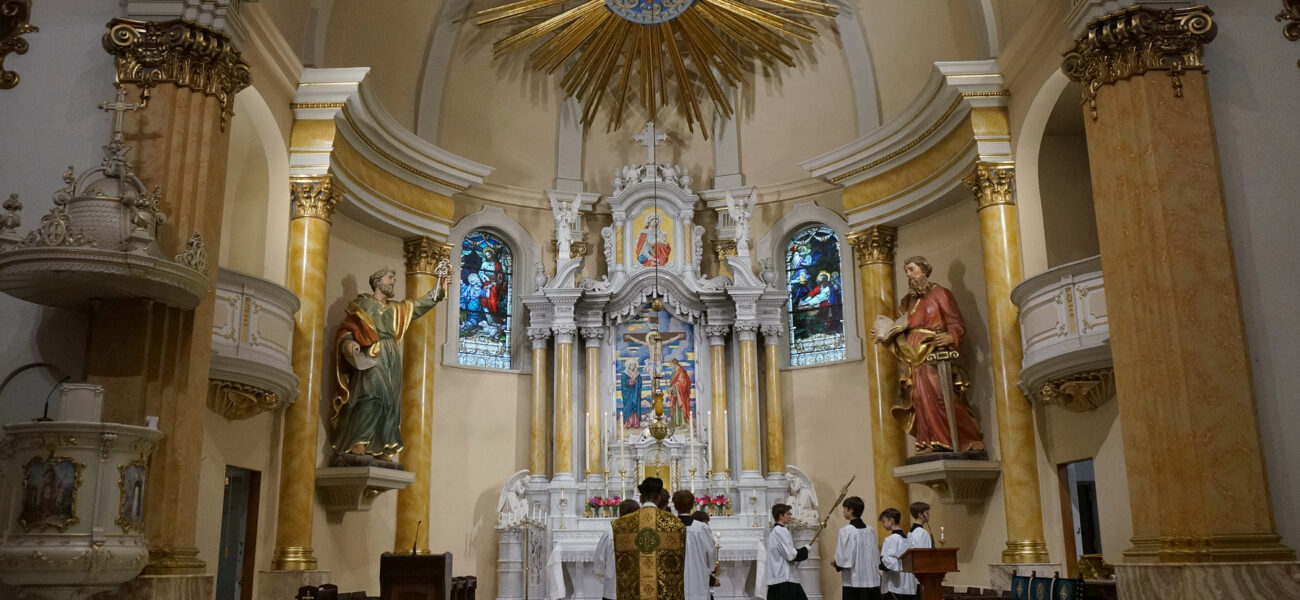
POLICY WIRE — Washington D.C., USA — It isn’t the Vatican curia’s backroom bickering or some grand pronouncement from St. Peter’s Square that often exposes the Catholic Church’s gnawing internal divisions. Sometimes, it’s a church tucked away in Minnesota, steadfastly adhering to centuries-old liturgy—the Latin Mass—while still, somehow, pledging fidelity to a pope who’s clearly no fan of the old ways. This seemingly minor domestic affair, frankly, tells a much larger story about religious authority, political maneuvering, and just plain human stubbornness in a fractured global landscape.
See, Pope Francis has been trying to rein in the traditionalist movement for years. He’s seen it as a breeding ground for dissent, a cultural wedge driven into his vision of a more open, synodal Church. His moves, like those in 2021 that pretty much rescinded prior permissions for the Traditional Latin Mass, weren’t subtle. But a segment of the faithful, those who prefer Gregorian chant — and prayers ad orientem, aren’t backing down. They’re making it clear that their love for the old liturgy doesn’t necessarily translate into open defiance of Rome—at least, not in the way many imagine.
It’s a curious balancing act, isn’t it? Like trying to surf a tsunami while clutching a relic. They say they’re in full communion. They maintain that their practices simply represent a treasured, legitimate tradition within the Church, not a rebellion. This particular Minnesota congregation—let’s call them a case study—attempts to walk that impossibly fine line, providing a sanctuary for those drawn to pre-Vatican II aesthetics without outright breaking from the local bishop, who, you know, takes his marching orders from the Big Guy in Rome. The irony isn’t lost on observers: preserving tradition while adapting to edicts that seek to limit that very tradition.
And these folks aren’t fringe weirdos, not always. You’ve got families, young converts, even disillusioned modernists looking for what they describe as a more transcendent, serious worship experience. This isn’t just about lace and incense; it’s about a deep yearning for continuity, for something seen as unchanging in an ever-shifting world. You can understand that impulse, even if you don’t share the liturgical preference. But this puts pressure on bishops. They’re stuck between Vatican directives and congregations that are often highly educated, committed, and — let’s be honest — willing to fight for their version of faith.
The numbers don’t lie. A 2021 Pew Research Center study showed that among US Catholics, approximately [QUOTE_PLACEHOLDER] percent attended Mass in Latin at least occasionally before the recent restrictions, a figure which indicates a significant, albeit niche, demand for this form of worship. That’s a lot of people for a hierarchy to ignore, or to simply brand as malcontents. And because these communities often provide vibrant, thriving ministries—drawing young families especially—cracking down too hard can be counterproductive, just pushing folks further out of the tent, sometimes into outright schismatic groups.
What’s unfolding in the sleepy suburbs of Minneapolis has analogues around the globe. Consider the diverse theological interpretations within Islam. In South Asia, specifically Pakistan, you’ve got various schools of thought, from the Barelvi to the Deobandi, each with distinct practices, legal interpretations, and cultural expressions of faith. While all might identify as Sunni, their differences can be profound—and sometimes violently contested. The challenge for religious authorities there, whether a grand mufti or a political leader aiming to unify a fractious populace, isn’t just about doctrinal purity. It’s about managing social cohesion, asserting authority without triggering greater fragmentation. Pakistan’s religious landscape, with its internal variations and the ongoing struggle between traditional interpretations and modern reformist movements, mirrors the Catholic Church’s own battles over how to accommodate, or stifle, dissent without blowing itself apart.
📄 POLICY WIRE WHITEPAPER PUBLISHED: PAKISTAN'S NATIONAL SECURITY POLICY PRIORITIES
👉 READ BY CLICKING HEREAnd it’s a tightrope walk for everyone. The bishops have to enforce Rome’s policies while trying not to empty their pews or alienate committed benefactors. The Latin Mass adherents have to prove their loyalty even as they cling to a practice that’s, well, kind of on the outs with the current boss. It’s an ecclesiastical game of chicken, played out in parish halls and cathedral statements, with eternal souls (and perhaps not insignificant property holdings) at stake.
What This Means
This dynamic isn’t just a religious curiosity; it’s got significant political — and social implications. The Church, as a global institution, functions in some ways like a state. Its internal ‘schism crisis’—even when contained to particular liturgical forms—signals a profound struggle over authority and identity. Pope Francis, having positioned the Church as a voice for social justice and global solidarity, views traditionalism as a political obstacle, potentially fostering an insular, inward-looking faith. Limiting the Latin Mass, for him, isn’t just about rubrics; it’s about cementing a certain kind of institutional future, one less prone to right-wing political weaponization. The existence of these communities, then, represents a quiet resistance to that progressive vision, challenging the idea of an infallible (or at least unquestionable) papal interpretation of modern church practice. When any major institution struggles with such internal contradictions, its external influence diminishes. It’s a slow bleed, perhaps, but a bleed nonetheless.
Economically, it also affects donations — and property. Disgruntled traditionalists might redirect their tithes, or even establish independent chapels, further decentralizing assets. Policy-wise, the Church’s capacity to speak with a unified moral voice on issues like poverty, migration, or climate change, could be compromised if its energy is continually siphoned into managing internal doctrinal spats. The Minnesota example isn’t isolated; it’s a bellwether, pointing to the real-world impact when a global power attempts to enforce uniformity over deeply entrenched, and often deeply personal, convictions.