


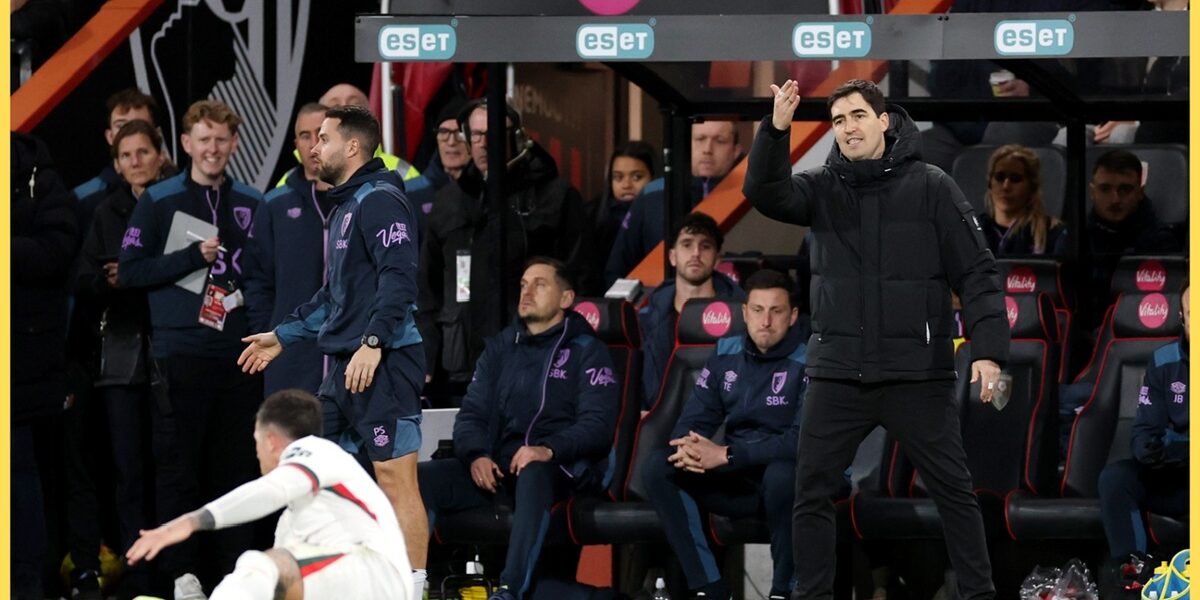
Liverpool’s Iraola: A Masterclass in Agile Leadership
Andoni Iraola's leadership at Liverpool offers a new global model for agile adaptability. Discover how his approach to filtering complexity transforms strategy for business and governance.

POLICY WIRE — London, UK — Conventional wisdom often dictates that leadership—especially in high-stakes environments—requires an almost immutable conviction, an unwavering vision passed down from the top. But what if the real genius lies in relentless adaptability? In the ability to morph, pivot, — and process torrents of information into actionable, bite-sized directives? The hiring of Andoni Iraola by Liverpool, a move celebrated within the sporting press, presents an intriguing case study for anyone tracking contemporary leadership models, well beyond the touchline. We’re talking boardroom strategies, perhaps even the geopolitical arena. Don’t think for a second this is just about passing footballs.
Pablo de la Torre, a man who’s followed Iraola across multiple clubs, recently spilled the beans to a Spanish outlet. He didn’t just laud his boss’s coaching chops; he painted a portrait of a leader whose cognitive architecture sets him apart. “He’s incredibly intelligent,” De la Torre insisted, adding, “leads by example, and has a rare emotional stability in such a visceral sport. From day one, you sense he’s different – his ability to read the game — and its needs is almost unique. He filters information so players can digest it easily — and apply it every week.” That last part? That’s the gold. Filtering complexity into simplicity is what leaders everywhere—from parliament to startups—are constantly failing at, or at least struggling with, these days.
It’s not just an anecdote. The kind of dynamic, real-time problem-solving Iraola purportedly brings to Merseyside speaks to a broader shift in what the world—whether that’s governments grappling with supply chain disruptions or corporations navigating volatile markets—demands from its figureheads. Forget the ‘visionary’ who simply dictates; we’re now scouting for the ‘architect of agile responses.’ That ability to discern, distill, and then distribute intelligence efficiently? It’s currency.
Spanish Minister of Sports, Pilar Alegría, reflecting on Spain’s growing export of top-tier footballing intellect, once remarked, “Our coaches aren’t just selling a game; they’re demonstrating a methodology of human organization and rapid adaptation. It’s a reflection of our educational robustness, showcasing that Spanish ingenuity, whether in sports or science, offers valuable models for navigating modern complexities.” It sounds a bit like an endorsement for Spain’s human capital export—which, incidentally, generates considerable soft power and, of course, tax revenue. And it doesn’t take much to imagine similar conversations happening in, say, Islamabad or Dhaka, where emerging economies are desperate for leaders who can make sense of chaotic local and global pressures, then articulate clear paths forward.
De la Torre’s observation that Iraola “builds brave teams, capable of believing they can beat anyone” is another nod to psychological warfare, really—the kind politicians and economic ministers employ when staring down inflation or rallying international support. The man orchestrated an 18-match unbeaten run for Bournemouth, a feat that shocked many who’d pegged them for relegation. That’s a serious bit of alchemy, proving you can wring unexpected performance from supposedly lesser resources, given the right strategic framework. For context, the global talent economy is constantly reshuffling the deck, making such leadership ever more precious.
📄 POLICY WIRE WHITEPAPER PUBLISHED: PAKISTAN'S NATIONAL SECURITY POLICY PRIORITIES
👉 READ BY CLICKING HERESir Geoffrey Richmond, former UK Trade Envoy for Asia Pacific (now retired from government service, but still active in advisory roles), recently posited that “The UK’s strength, frankly, lies in its capacity to attract and integrate global intellectual property—and that includes tactical mastery, be it in finance or on the pitch. What Mr. Iraola brings isn’t just football know-how; it’s a testament to superior organizational psychology and adaptive management, a sort of intellectual infrastructure that benefits our entire economy. We aren’t just buying goals; we’re absorbing a cutting-edge approach to team dynamics.” Because, let’s face it, good management ripples through sectors.
And yes, that ‘almost unique’ ability to process data, to adapt tactics mid-match—that’s what every nation wishes its planning committees possessed. It suggests a comfort with uncertainty, a disdain for static plans. It also speaks to a global search for models that don’t just react but *anticipate*, and then synthesize that anticipation into clear, executable steps. The global sports market, by the way, is projected to hit nearly $600 billion by 2025, according to a recent PwC report, making its management models anything but trivial economic footnotes.
What This Means
The murmurs surrounding Iraola’s unique leadership style, even in the football echo chamber, carry surprisingly broad implications for global governance and corporate strategy. Think about it: every minister, every CEO, every developing nation leader struggles with turning chaotic inputs—geopolitical crises, market volatility, social unrest—into coherent output. Iraola’s reported talent for filtering information, making it digestible and actionable for his ‘team,’ represents a sort of managerial holy grail. It isn’t just about winning football matches; it’s about efficient organizational learning, swift tactical adjustments, and sustained belief in difficult circumstances. In regions like Pakistan and throughout South Asia, where complex challenges require exceptionally adaptable leadership and rapid policy iterations, this type of model offers lessons. They aren’t looking to hire a football coach, no. But the underlying principles of smart, agile leadership? Those transcend borders and industries. Governments could learn from this approach to data interpretation, streamlining bureaucracy, and maintaining cohesion within their ranks when things, inevitably, don’t go according to plan. This whole episode isn’t just about a club getting a new boss; it’s about the market, broadly construed, identifying and valorizing a particular kind of effective leadership. One that’s in desperately short supply.