

Iran’s Hormuz Deception: ‘Foreign’ Ship, Real Ties
Iran's 'foreign' ship claim in the Strait of Hormuz masks deeper ties & strategic aims. Uncover Tehran's geopolitical game in the world's oil choke point.

POLICY WIRE — Washington, D.C. — The Strait of Hormuz, that narrow, churning neck of water, often feels like the world’s most precarious choke point for global trade. Every so often, another maritime drama unfolds there, demanding international attention, yet rarely does one unfurl with such an overt comedic flourish as Iran’s latest public pronouncements. But sometimes, even by the region’s seasoned standards for brinkmanship, the script veers into pure, unadulterated farce.
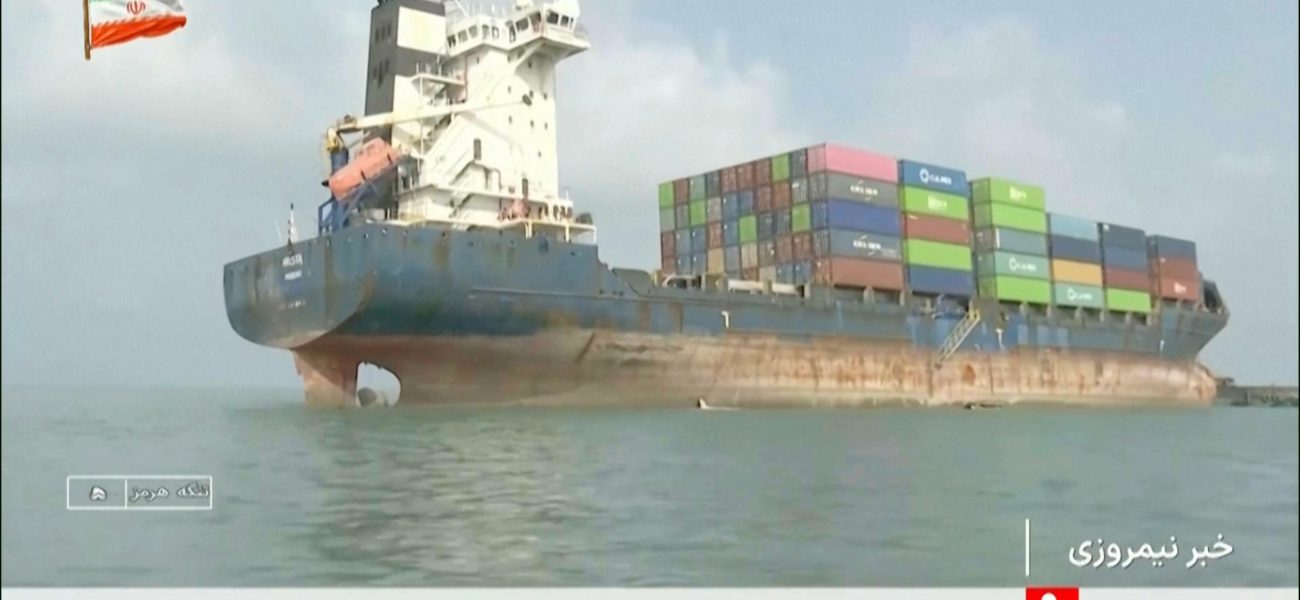
It goes like this: Tehran’s official channels broadcasted word of a foreign ship. A vessel, apparently not Iranian, finding itself rather unfortunately stuck within those contentious waters. A navigational snafu, one might suppose, that demanded immediate, stern comment. The narrative suggested some rogue element, some unfamiliar vessel causing a stir—a handy foil, it seems, for a regime often eager to highlight external meddling. [QUOTE_PLACEHOLDER]
Only, things aren’t always what they appear. And here’s where the dramatic irony — or perhaps just plain irony — begins to drip. That alleged ‘foreign’ ship? Turns out, it’s quite cozy with Tehran itself. Not quite the detached, international incident Iran initially portrayed, was it? This isn’t just about a boat getting into a bit of a scrape; it’s about the intricate, often opaque web of shipping interests, sovereign claims, and the art of international messaging.
One might wonder at the utility of such a transparent gambit. Is it designed to project an image of vigilant naval oversight? Or perhaps to remind the world, once again, just who holds the metaphorical keys to that incredibly busy, globally significant waterway? The Strait, for the uninitiated, is a gauntlet that roughly a fifth of the world’s total oil consumption navigates daily. The U.S. Energy Information Administration (EIA) has pointed out that about a third of all seaborne traded oil, nearly 21 million barrels per day, flows through it, tying its stability directly to global energy prices. It’s a massive, crucial artery.
For decades, nations—not least the United States—have committed significant resources to ensuring unfettered passage. Because disruptions, even minor ones, reverberate across continents. But Tehran, for its part, seems quite content to test those international nerves. It’s a game they’ve played before, a high-stakes poker match with global economies watching every card dealt.
The subtle machinations of maritime identity often obscure bigger geopolitical truths. A ship’s flag isn’t always the full story. Ownership structures can be deliberately convoluted, registration shifting across different nations—a practice well-known in the shipping world, particularly when attempting to skirt sanctions or simply manage public relations. So, for a ship allegedly tied to Tehran to suddenly be rebranded as ‘foreign’ during an incident isn’t just convenient; it’s practically textbook strategy for managing unwanted scrutiny. It’s certainly an interesting choice of words.
And then there’s the broader context. Regional power plays are rarely isolated incidents. For nations like Pakistan, sitting just a short hop across the Arabian Sea, these kinds of stunts are more than just news cycles. They’re about stability. They’re about the reliability of energy supply chains. They’re about balancing complex diplomatic relationships—maintaining cordial ties with Saudi Arabia while also needing functional engagement with Iran. Pakistan, along with other Muslim-majority nations in South Asia, needs a stable, predictable Persian Gulf for its trade, its energy imports, and for its own geopolitical standing. This isn’t abstract policy stuff; it’s got tangible impacts.
The Strait of Hormuz isn’t just an arbitrary line on a map. It’s a pulsating artery, connecting producers to markets, economies to consumers. And when incidents like this occur, however minor they may appear on the surface, they’re invariably imbued with layers of geopolitical messaging. This episode? It wasn’t about a stranded ship. It was about perceived leverage. It’s almost always about that.
What This Means
This incident, small in isolation, speaks volumes about Iran’s ongoing strategy in the Persian Gulf. It’s a low-cost, high-visibility tactic designed to remind global powers of its unique leverage over a critical global transit point without resorting to overt military provocation. The deliberate misdirection around the ship’s ownership underscores a penchant for plausible deniability, a cornerstone of Tehran’s regional foreign policy. It forces international actors, particularly those reliant on Gulf oil, to constantly weigh the economic repercussions of escalating tensions against the need to assert freedom of navigation.
Economically, such ambiguous incidents contribute to an undercurrent of uncertainty in energy markets. While not causing immediate price spikes, they reinforce a ‘risk premium’ for oil transiting the Strait. This directly impacts energy-importing nations across Asia, from China to India and Pakistan, making their energy security more volatile. Politically, it tests the resolve of international alliances. Washington, for instance, must carefully calibrate its response—asserting deterrence without inadvertently handing Tehran a pretext for further escalation. But it’s always a tricky dance. Domestically, for Iran, this narrative reinforces a public image of a defiant nation holding its own against perceived external pressures, a useful narrative to rally support during challenging economic times.