

Iran’s Hormuz Gambit: Staged Ship Crisis Exposed
POLICY WIRE reveals how Iran fabricated a "foreign ship" crisis in the Strait of Hormuz, using its own vessel to create geopolitical drama and impact global oil markets.

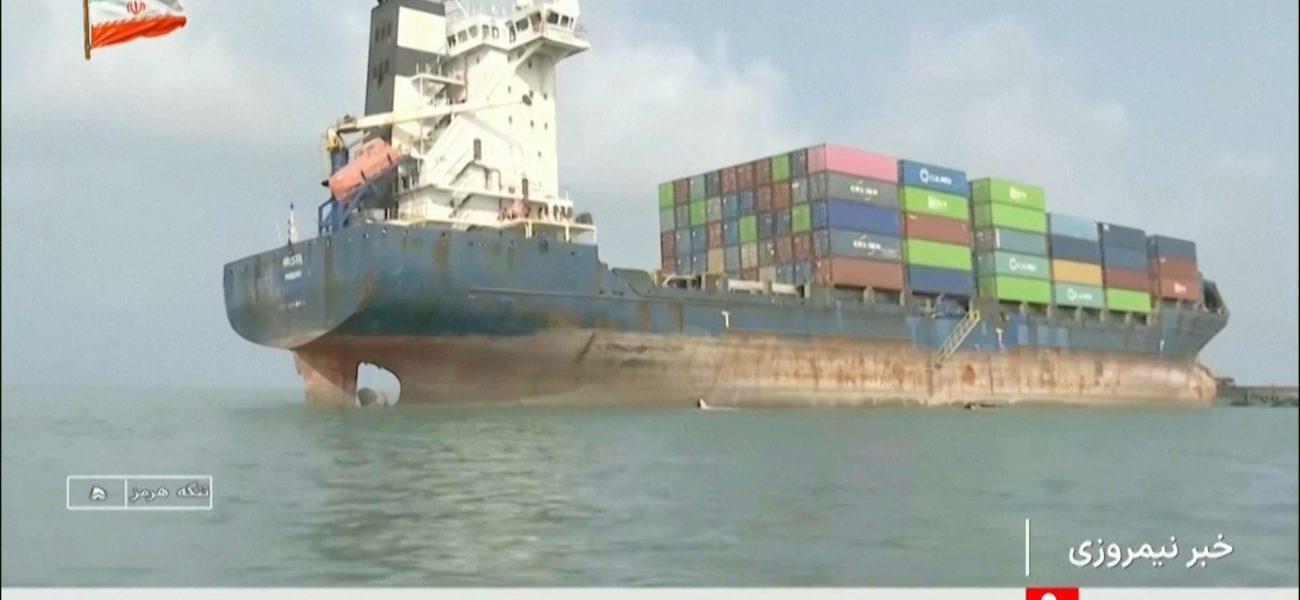
POLICY WIRE — Dubai, UAE — Sometimes, the most significant policy statements aren’t issued in grand chambers or through diplomatic communiqués, but whispered — or in this case, loudly proclaimed — from the deck of a supposedly distressed vessel. The recent hullabaloo emanating from Tehran over a ‘foreign’ ship reportedly ensnared in the notoriously tricky waters of the Strait of Hormuz, well, it’s not just a navigation hiccup. Not by a long shot. It’s a prime slice of strategic theatrics, served hot, directly from Iran’s playbook, and it tastes distinctly of, shall we say, a narrative designed for external consumption, but internally sourced.
It began as a ripple: reports of a non-Iranian ship, adrift, needing assistance within the Persian Gulf’s choke point. International shipping monitors pricked up their ears. Regional naval commanders, already perpetually on high alert in a neighborhood that practically defines ‘flashpoint,’ tensed. Everyone understands what a blocked Strait of Hormuz means. It’s not just an inconvenience. It’s an economic earthquake. About one-fifth of the world’s total petroleum liquids consumption, for instance, traverses these very waters annually, according to the U.S. Energy Information Administration. You mess with that, you mess with the global economy. Period.
But then the details, as they often do in this part of the world, started to get murky, then hilariously clear. That ‘foreign’ ship? Turns out it wasn’t so foreign after all. It belongs to — you guessed it — Iran. Operated by entities linked, sometimes subtly, sometimes overtly, to the Islamic Republic’s maritime apparatus. An Iranian ship, operated by Iranians, ostensibly getting stuck, and then being presented to the world as an ‘international incident’ involving an unspecified ‘foreign’ party. Oh, the audacity. But it’s their style, isn’t it? A bit like a magician proudly sawing his assistant in half, then acting surprised when she doesn’t re-emerge whole.
The implied message was anything but subtle: the Strait is dangerous. Navigation is fraught. And ‘others’ are responsible. ‘Such incidents, regrettably frequent, demonstrate the chaotic conditions imposed by reckless foreign elements operating in our legitimate maritime zone,’ an unnamed Iranian foreign ministry official (if he exists, which, you know) reportedly told a state-aligned news outlet, not entirely convincing anyone who bothers to cross-check. ‘We extend humanitarian assistance, of course, but the larger implications are for the global community to ponder.’ What implications, you ask? Perhaps that Iran has a particular set of skills when it comes to — let’s just say — manipulating maritime narratives.
And because the international community isn’t exactly naive, the reaction has been measured, bordering on exasperated. ‘We monitor all maritime activity in the Strait of Hormuz with extreme diligence,’ Rear Admiral Alistair Cavendish of the Royal Navy (a staunch observer of Gulf shipping, naturally) shared with Policy Wire, his tone decidedly flat. ‘Claims regarding the nationality or operational status of vessels are routinely verified. Mischaracterizations, frankly, serve only to compound regional tensions, not alleviate them. Transparency is always the best course of action.’ Which, for diplomatic speak, is practically calling them out directly.
📄 POLICY WIRE WHITEPAPER PUBLISHED: PAKISTAN'S NATIONAL SECURITY POLICY PRIORITIES
👉 READ BY CLICKING HEREThis whole episode — a staged crisis involving their own ship — plays right into Tehran’s long-standing game of brinkmanship. They’re probing. They’re reminding the world that they can, quite literally, stir the waters whenever they choose. It’s a low-cost, high-impact demonstration of perceived power, aimed squarely at countries with a vested interest in the free flow of oil. Nations like Pakistan, heavily dependent on these shipping lanes for its energy needs, watch these machinations with understandable apprehension. A whisper of disruption in Hormuz sends shivers through Islamabad, Karachi, and other major ports across South Asia and the broader Muslim world. They don’t need Iran reminding them just how fragile global trade routes are. They live that reality daily. The constant saber-rattling makes a delicate economic tightrope walk even more precarious. And it certainly doesn’t help stabilize an already twitchy region.
What This Means
This latest maritime charade isn’t just about a stranded ship; it’s a masterclass in controlled ambiguity and geopolitical posturing. Politically, Tehran’s actions here—creating a drama around its own vessel—reinforce its reputation as an unpredictable actor, particularly as efforts to salvage the 2015 nuclear deal (JCPOA) remain on Tehran’s Tightrope. It tells potential negotiating partners, especially the EU and the US, that Iran isn’t shy about exercising leverage, even if it involves fabricating circumstances. Economically, even fleeting concerns over Hormuz create jitters in energy markets. Crude oil futures don’t need an actual blockage to spike; the *threat* of one often does the trick. That benefits nobody in the long run, except perhaps those who thrive on instability — and price volatility. It forces major powers to maintain a significant naval presence, costing millions — and diverting resources. Ultimately, it’s a self-serving declaration: ‘We’re here. We matter. And we can mess things up.’ It doesn’t build trust, not even a little bit. It just reminds everyone who’s dealing with whom, and what games are being played on the world’s maritime stage. One has to wonder, though, if this continuous high-wire act doesn’t eventually make the audience apathetic, or worse, annoyed enough to simply walk away.