

Rainbow’s End: Malawians Choose Dire Straits Over South Africa’s Volatile Welcome
POLICY WIRE — Lilongwe, Malawi — They called it the Rainbow Nation. For decades, it pulsed with the magnetic pull of opportunity, a place where folks like Chimwemwe Banda — a fictional composite of...

POLICY WIRE — Lilongwe, Malawi — They called it the Rainbow Nation. For decades, it pulsed with the magnetic pull of opportunity, a place where folks like Chimwemwe Banda — a fictional composite of many—chased dreams a meager harvest couldn’t provide. Now, that same nation feels less like a vibrant spectrum — and more like a gathering storm cloud. Thousands of Malawians aren’t just thinking of leaving; they’re already gone. They’ve traded the perilous prospects of South Africa for the familiar, if abject, certainty of home. Even if home means hunger.
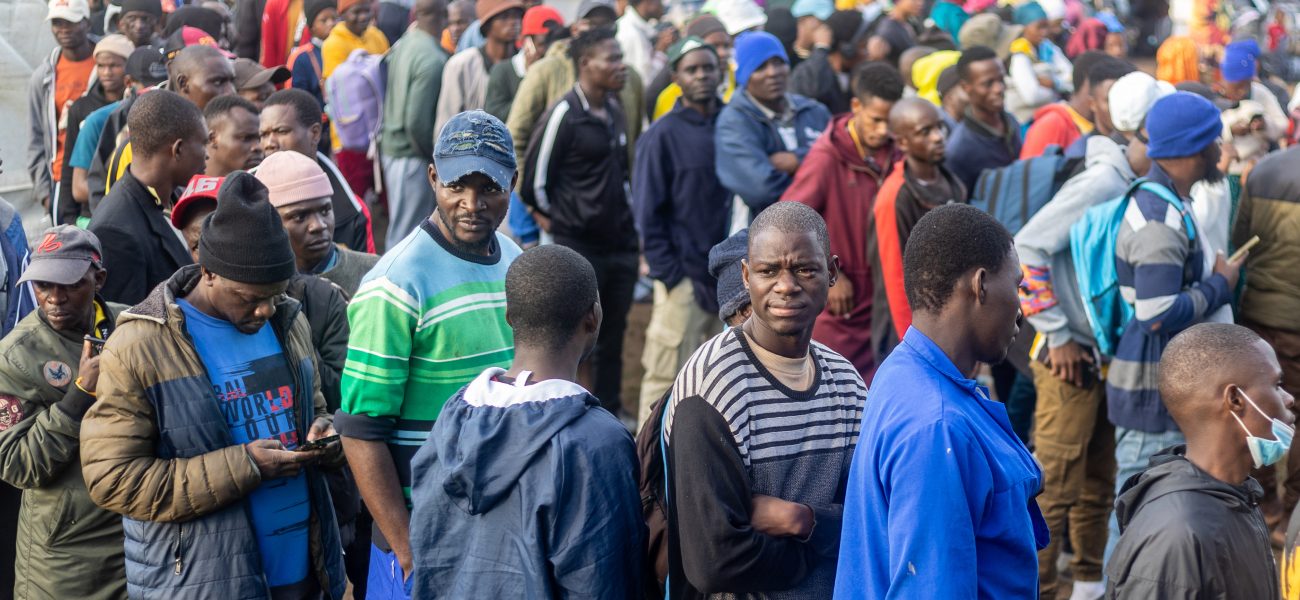
It’s not just a trickle. It’s a steady stream, an exodus driven not by official repatriation programs but by sheer, bone-deep fear. Malawians, alongside Zimbabweans — and Mozambicans, are self-deporting. They’re giving up the unsteady gains made in South African towns and cities, pulling their kids from schools, selling off what little they own—or abandoning it—just to get out. The unofficial figure is staggering: Malawi’s government recently repatriated nearly 400 individuals in one single week. And that’s only those who sought assistance.
Because, for many, the ‘South African dream’ has morphed into a nightmare. Incidents of xenophobic violence—looting, assault, intimidation—aren’t just isolated events anymore. They’re a feature of daily life, particularly for undocumented migrants who lack any real recourse. The social contract, frayed at the best of times, has snapped. They can’t walk freely in many communities, can’t seek medical help without fear of exposure, can’t report crimes. It’s an open secret. Everybody knows what’s going on, yet official responses often dance around the root cause, or simply don’t have the teeth to solve it.
“We aren’t insensitive to the plight of our neighbours,” asserted Dr. Aaron Motsoaledi, South Africa’s Minister of Home Affairs, in a recent press conference, his voice carrying the weight of bureaucracy. “But our social services are incredibly strained. It’s a national security matter when large undocumented populations place this kind of pressure on the system. Our primary duty, let’s be clear, is always to our own citizens.” It’s a sentiment you hear quite a bit there, often punctuated by a kind of exasperated fatalism. Blaming the symptoms, not the malady itself, feels like the order of the day.
The harsh reality is that South Africa’s unemployment rate hovers persistently near 32% (Statistics South Africa, Q4 2023), one of the highest globally. That’s an impossible statistic to ignore. So when jobs are scarce — and poverty bites hard, fingers point easily at outsiders. This isn’t just about economic competition; it’s about a deeply entrenched resentment simmering just beneath the surface, occasionally boiling over into brutal, terrifying outbursts. You’d think the shared history of anti-colonial struggle would breed solidarity. You’d be wrong.
Malawi, one of the world’s poorest nations, isn’t exactly a soft landing. But it’s home. It’s safer. For countless migrants, the calculation has shifted. Living on the margins in your own country, even with crushing poverty, somehow feels preferable to living in constant dread elsewhere. As one returnee, Mariam Khwepe, grimly told local journalists, “If I am to die, let it be here, amongst my own, not at the hands of strangers who think I steal their bread.” And that, right there, sums it all up. The raw, gut-wrenching choice. No good options, just the least terrible one.
📄 POLICY WIRE WHITEPAPER PUBLISHED: PAKISTAN'S NATIONAL SECURITY POLICY PRIORITIES
👉 READ BY CLICKING HEREBecause these are often families. Folks with children they want to raise without the constant fear of violence or detention. Imagine pulling a child from a precarious life just to bring them back to an even more precarious one—but one where at least they speak your language and share your kin. It’s not just the money; it’s the sense of belonging, however tattered.
“Our people face impossible choices,” lamented Eisenhower Mkaka, Malawi’s former Foreign Minister, reflecting on the escalating situation. “To leave a place they thought was home, simply to survive—it’s heartbreaking. We can’t solve this alone; the regional instability, fueled by economic woes and often misguided nationalism, isn’t just about us.” His frustration was palpable, a thinly veiled exasperation with a larger continent’s inability to reconcile its aspirations with its daily reality. This particular migration story—the ‘pull back’ effect of fear over opportunity—has analogs across the globe, from the refugee crisis in Europe to the complex repatriations and deportations facing Afghan communities in Pakistan. The themes are depressingly universal.
What This Means
The reverse migration of Malawians from South Africa represents more than just a localized crisis; it’s a stark indicator of South Africa’s faltering promise as the continent’s economic engine. For years, its prosperity—real or perceived—drew millions. Now, its deep-seated socio-economic fissures are not only pushing migrants out but also signaling a wider regional instability. Economically, Malawi will struggle to absorb these returnees, many arriving with nothing, placing immense pressure on already overstretched social services and a weak job market. We’re talking increased strain on aid organizations, a potential spike in urban poverty, and possibly rising social tensions domestically as resources become even thinner.
Politically, the situation complicates South Africa’s regional standing. Its neighbours, once reliant on it as a source of remittances and opportunity, now view it with growing trepidation and concern. The rhetoric around ‘illegal immigrants’ and ‘national security threats’ often overshadows discussions on shared economic development or regional integration, which are precisely the long-term solutions required. This incident highlights a failure of governance to manage both internal anxieties and regional migration patterns sustainably. It’s a lose-lose proposition, hollowing out dreams on both ends of the journey, and making an already delicate regional balance that much shakier.