

Jerusalem: Old City Clash Exposes Deep Divisions
Jerusalem's Old City remains on a perpetual brink. A recent stabbing attempt exposes deep rifts, security challenges, and complex human rights issues.

POLICY WIRE — Jerusalem — In the hallowed, often volatile lanes of Jerusalem’s Old City, tranquility feels like a fleeting rumor. Daily life—a messy ballet of faith, commerce, and profound ideological divides—regularly shatters, often violently. And when it does, the predictable, gut-wrenching choreography of action and reaction plays out, a brutal tableau observed by billions.
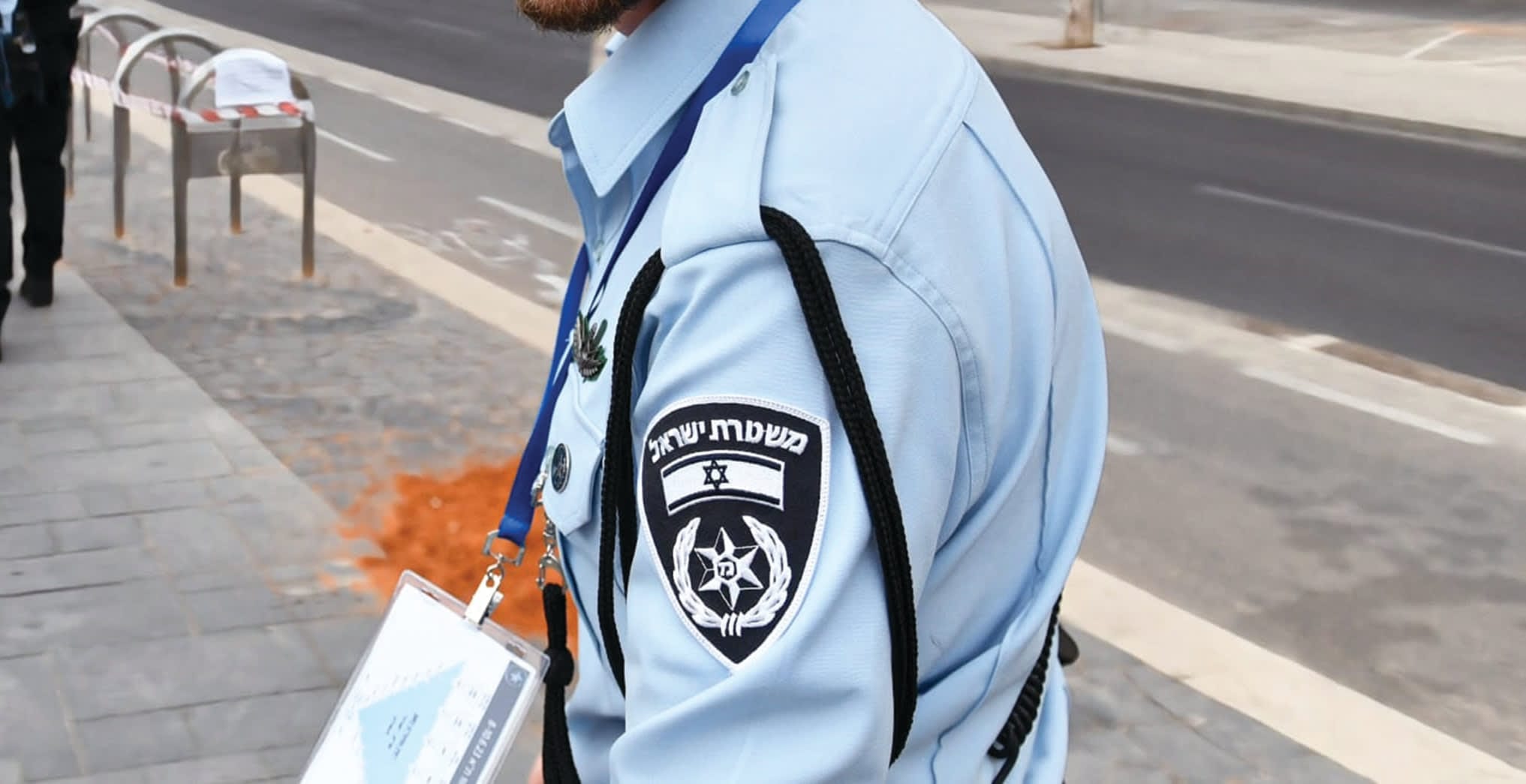
Such was the case late Wednesday when—as if on cue for the nightly news cycle—an Israeli Police officer narrowly evaded what authorities described as a stabbing attempt near the Chain Gate. The alleged assailant, an unnamed individual (presumably Palestinian, pending official confirmation), was shot by security forces, bringing a swift and brutal end to another potentially tragic episode.
The officer involved? Unharmed, according to official reports, which, in the region’s cynical lexicon, almost counts as a victory. It’s a moment of relief for one family, a footnote in a larger, unending saga for countless others. This sort of thing isn’t new, not here. It’s a well-worn narrative, one etched into the very stones of the city, year after year, generation after generation.
Because every such incident isn’t just a discrete event; it’s a tremor along a fault line that runs deep, sending ripples far beyond the ancient walls. Security remains paramount for Israeli officials, but critics see a systemic failure to address the root causes of desperation and resistance. The situation, plainly, remains untenable.
Police Commissioner Kobi Shabtai, whose office confirmed the details, stressed the immediate priority. “Our forces maintain a robust presence to protect citizens from those intent on violence,” Shabtai stated. “We won’t hesitate to neutralize threats, full stop. Public safety is non-negotiable.” But safety, for many here, has become a relative term, an elusive comfort.
On the flip side, Hanan Ashrawi, a former Palestinian Authority minister known for her incisive commentary, offered a starkly different interpretation, even from afar. “Another life taken, another casualty of an unbearable occupation,” Ashrawi retorted in a released statement, her exasperation almost palpable. “How many times must this happen before the world truly sees the despair? It’s a vicious cycle born of disenfranchisement.” Her words resonate with a wide swath of international observers.
News of such clashes travels fast, especially across the Muslim world, where solidarity with the Palestinian cause is a foundational tenet. From Jakarta to Karachi, via Cairo and Islamabad, these events aren’t just local headlines; they’re emotional charges, igniting debate and deepening resentment against perceived Israeli policies. Pakistan, a staunch advocate for Palestinian rights, often sees these skirmishes as emblematic of a broader human rights struggle, amplifying calls for international intervention or renewed peace efforts.
A United Nations Human Rights Office report from May indicated that civilian casualties in the West Bank and East Jerusalem have reached their highest levels in nearly two decades, with an alarming number of fatalities resulting from Israeli security forces operations. That’s a stark figure, folks—and it paints a picture far grimmer than any single incident might suggest.
The attempted stabbing — and subsequent shooting? It’s just another brushstroke in a master painting nobody wants—a recurring motif of a populace struggling under military occupation and a security apparatus on constant high alert. You see the frustration build. You see the fear harden. You see the occasional spark catch, often with tragic results.
What This Means
This latest flashpoint in the Old City, while quickly contained, speaks volumes about the region’s deep-seated instability. Politically, it complicates any whispers of de-escalation, empowering hardliners on both sides who claim only their methods can secure peace. For Israeli Prime Minister Benjamin Netanyahu, facing domestic pressures and an ongoing conflict in Gaza, these events reinforce his government’s hawkish stance on security, often at the expense of diplomatic engagement. It forces his hand, one might say.
Economically, the constant threat of violence, however localized, chills investment and stunts growth, particularly in Palestinian communities. The pervasive sense of insecurity—what kind of stable future can you build when any street corner can erupt into confrontation? That’s the heavy question hanging over everyone. The Old City’s famed markets and holy sites rely heavily on tourism; recurring security incidents invariably deter visitors, bleeding local economies that already struggle with high unemployment.
And for the wider geopolitical landscape, this enduring friction fuels regional tensions, maintaining the Israel-Palestine issue as a persistent irritant in international relations. Countries like Iran and various non-state actors regularly cite these incidents as justification for their own actions, complicating efforts towards regional stability. It’s a loop. An awful, persistent loop. You want to see how complex this all gets? Just look at Gaza’s relentless cycle, or how international disputes often echo in places like South Africa’s local divisions. It’s all connected, isn’t it?