


Stadiums Aren’t Just for Goals Anymore: A Mexican Star’s Cultural Gambit in Miami
POLICY WIRE — Miami, United States — For ages, it was simple: grand stadiums were for roaring crowds, for the agony of defeat and the ecstasy of victory, for the 90 minutes that defined nations and...

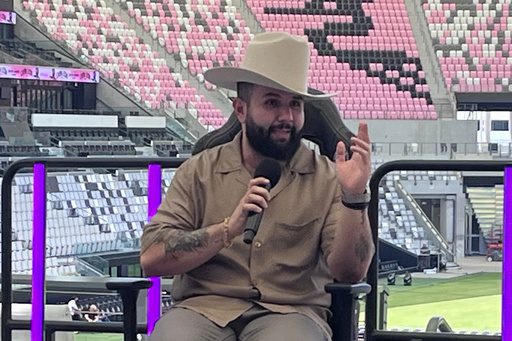
POLICY WIRE — Miami, United States — For ages, it was simple: grand stadiums were for roaring crowds, for the agony of defeat and the ecstasy of victory, for the 90 minutes that defined nations and neighborhood pride. But times, they’re changing. This weekend, the sprawling pitch at Inter Miami, consecrated by the footsteps of Lionel Messi himself, wasn’t merely bracing for another corner kick. It was set to pulsate with the very distinct, genre-defying sound of Carín León, a Mexican singer-songwriter whose upcoming performance marked more than just a concert; it heralded a quiet, yet profound, cultural reshuffling. And it’s not just a stateside ripple, it’s a tremor that speaks to global shifts in cultural consumption and economic integration, affecting even markets as seemingly distant as Karachi or Cairo.
It’s no small feat. Think about it: a country music-inflected troubadour — from Mexico, no less — headlining the home turf of arguably the greatest footballer to ever lace up cleats. This isn’t just about an artist hitting the big time. This is about boundaries dissolving, about the sheer market force of hybrid culture, much like the FIFA World Cup, which León views as [QUOTE_PLACEHOLDER] something that pulls different cultures together. He isn’t just looking to fill seats; he wants his music to be viewed the same way. It’s a pragmatic ambition, frankly, — and a smart one for any artist wanting to endure past transient TikTok fame.
León, by any measure, has become a formidable figure on the global music scene. He’s snagged Grammy awards, accumulated Latin Grammys — four of them, a solid run — and played venues from the raucous energy of Coachella to the hallowed country music temple, the Grand Ole Opry. People call him a regional Mexican artist, but that’s short-sighted, a narrow lens. You can hear the country twang, the rock ‘n’ roll grit, sometimes a reggaeton beat. It’s a mishmash that somehow makes sense. He’s even lined up to become the first Latino artist with a residency at Las Vegas’s Sphere, with shows penned for September. That’s an entertainment enterprise usually reserved for the likes of U2 or Phish.
And so, on Sunday, the musician was slated to become the first performer to headline Inter Miami’s still-fresh stadium. The irony, or perhaps the calculated marketing genius, is not lost on him. It’s like a big soccer match, he told the Associated Press, saying, I see this with much responsibility. For him, the concert is more than just a gig; it’s a chance to tell other musicians — from any [QUOTE_PLACEHOLDER] root genres — that [QUOTE_PLACEHOLDER] nothing is impossible. They’re coming to a big stage, he notes, making history with the music they grew up with.
This path wasn’t always clear for León. He faced a period when he was trying to create music just because [QUOTE_PLACEHOLDER] it was trending right then, and then [QUOTE_PLACEER] nothing was happening for me. That kind of pressure, the commercial pull to conform, it nearly broke him. There was a time, he recounted, when I was going to quit music. But the musician’s drive is powerful; within a couple weeks, he was back at it. He decided to just do what he loves, what he feels. It wasn’t about money or fame, he asserts.
📄 POLICY WIRE WHITEPAPER PUBLISHED: PAKISTAN'S NATIONAL SECURITY POLICY PRIORITIES
👉 READ BY CLICKING HEREBut that’s where the magic, — and the market disruption, happens. When he pivoted, releasing music that nobody expected to be a hit, it blew up. Fans ate it up. That’s when I knew to just be honest with the music, he said, and now he prefers to be a trendsetter than looking for the trend. It’s a philosophy that’s propelled him right into the hallowed halls of American major league soccer, placing his name alongside powerhouses like David Beckham and Lionel Messi, a connection he describes as [QUOTE_PLACEHOLDER] something incredible for me, something that I still cannot believe.
But this isn’t just about the personal triumph of one artist. It’s about a cultural product crossing geographic and linguistic borders, illustrating how global entertainment industries are reshaping themselves. The dawn of such cross-pollination means that what sells in Miami has a ripple effect. Globally, recorded music revenues rose for the ninth consecutive year, hitting US$28.6 billion in 2023, according to the IFPI Global Music Report, signaling the continued robust expansion of the sector worldwide. Pakistan, for instance, a nation often grappling with its own internal cultural struggles, has seen its youth increasingly engaged with global cultural phenomena, from Western pop charts to major sporting leagues, thanks to digital platforms. The market isn’t just listening to regional bhangra; it’s tuning into everything. What León represents is this fluid new frontier — an artist comfortable borrowing and blending, and audiences eager to lap it up, blurring lines that policymakers, and even sociologists, are only just starting to grasp. These cultural muscle plays often echo deeper policy shifts, after all.
What This Means
León’s stadium takeover isn’t just a marketing ploy; it’s a tangible demonstration of North America’s evolving cultural and economic landscape. It’s a bold bet on the increasing buying power and cultural influence of the Hispanic community within the U.S., leveraging the crossover appeal of sport and music. For Policy Wire, this speaks to broader trends: the dismantling of traditional silos in entertainment, making way for hyper-localized yet globally aspirational content. We’re witnessing the monetarization of cultural convergence. Stadiums, once just sport venues, become multi-purpose economic hubs, drawing diverse revenue streams and reflecting new demographics. This particular gig shows how Latin American cultural exports aren’t just dominating Spanish-speaking markets; they’re becoming mainstream economic forces everywhere. For governments, it means new challenges in managing intellectual property, protecting local arts industries, and harnessing cultural capital for soft power, especially as more artists from places like Pakistan or India eye similar cross-cultural stratospheric jumps.