


Germany’s NATO Test: Ankara Summit Looms
Germany's cabinet meets NATO chief Rutte to prepare for a contentious Ankara summit. Discover Berlin's high-stakes diplomacy as the alliance faces critical challenges.

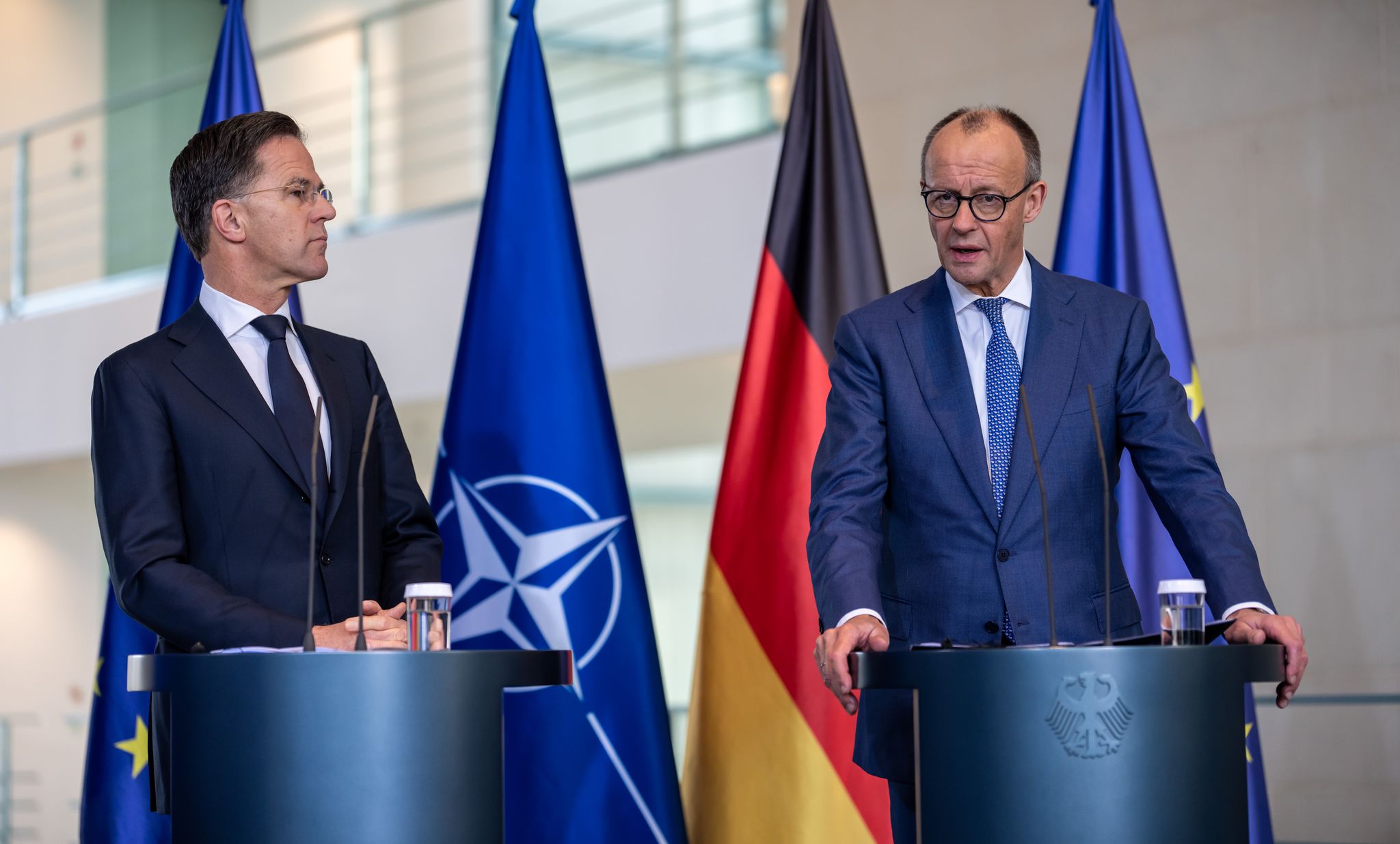
POLICY WIRE — Berlin, Germany — The polite smiles and handshakes from behind closed doors tell only half the story, always. Germany’s cabinet, it seems, isn’t just gearing up for some run-of-the-mill strategy session; they’re deep in the weeds, getting the lay of the land with NATO chief Mark Rutte—a meeting of minds that’s a pre-emptive chess move before the much-anticipated Ankara summit. You don’t bring the alliance boss in for tea — and biscuits when everything’s hunky-dory. There’s a quiet urgency here, a grinding tension, beneath the usual diplomatic veneer.
This isn’t about mere protocols. Oh no, not by a long shot. It’s about setting the stage for what’s likely to be a contentious gathering in Turkey—a nation with its own distinct agenda and, let’s be blunt, an increasingly assertive foreign policy that often dances on the edges of traditional allied unity. The German government, especially Chancellor Olaf Scholz’s often-fragile coalition, is doing its homework. They’re trying to figure out where the cracks might appear, who’s going to stand firm, and who’s liable to waffle when the tough talk begins. [QUOTE_PLACEHOLDER]
Because let’s face it: NATO is at a crossroads, navigating a treacherous global landscape. The specter of renewed aggression in Europe casts a long shadow, forcing reluctant nations (like, arguably, Germany) to confront uncomfortable truths about their defense capabilities and commitments. And it’s not just about spending—it’s about coherence. It’s about convincing disparate members, many with their own domestic headaches, that the collective is still worth fighting for. That takes serious diplomatic muscle, the kind you cultivate long before you arrive at the main event.
And Rutte, a man potentially eyeing the alliance’s top job, knows this drill better than most. His discussions with the German leadership? They’re as much an audition as they’re a coordination effort. He needs Berlin’s backing, its heavyweight political clout, to shepherd NATO through its next messy phase. Germany, after all, isn’t just an economic powerhouse; it’s a lynchpin. Without its full, unwavering commitment, the whole enterprise begins to feel a bit wobbly, like a three-legged stool with one short limb. You can see the quiet bargaining, the strategic nudges, happening right now.
But the alliance’s challenges don’t just stay neatly confined to Europe. Never do, really. Decisions made in Ankara, in Brussels, or in Berlin have ripples that reach far beyond. Think about the economic impact of intensified defense spending—an obligation that many NATO members struggle to meet, often at the expense of other national priorities. The oft-cited target, for example, for NATO member states to allocate 2% of their GDP to defense, still sees only a fraction truly meeting it consistently, according to figures released by NATO’s own press office last year. This re-prioritization, this redirection of resources towards armaments and away from development, indirectly affects nations on the fringes, too.
And consider the Muslim world. Turkey’s unique position within NATO—straddling East and West, with significant leverage and its own sometimes-confrontational policies in the Middle East—means the Ankara summit isn’t just a European affair. The discourse there, particularly on issues of regional security, terrorism, and even energy supply lines, resonates deeply across South Asia and the broader Muslim sphere. Any sign of division or uncertainty within the alliance might be interpreted by regional actors, both friendly and hostile, as an opportunity or a warning. It’s not just a European problem, it’s a global calculus.
In nations like Pakistan, for instance, a strong, unified NATO represents one aspect of the global power balance, impacting everything from military aid trajectories to broader trade agreements. A disunited, internally squabbling alliance doesn’t inspire confidence. Because Ankara’s gambit on the global stage, or indeed the contingency conundrum faced by any major power bloc, isn’t played in a vacuum. Every move, every pronouncement, has an echo.
What This Means
This pre-summit confab between Germany’s cabinet and the presumptive NATO leader signals a few rather obvious, yet deeply unsettling, truths. First, the alliance isn’t operating on auto-pilot. It requires constant, often painstaking, diplomacy to hold its disparate parts together. Germany’s role here is absolutely central; its economic might provides the necessary muscle, but its often-tentative foreign policy has historically been a point of friction. Now, it appears they’re trying to project a unified front, to project strength.
Second, Rutte’s visit suggests an acknowledgment that the transition of NATO leadership, should it happen, won’t be seamless. He’s building consensus, feeling out the major players before the formal changing of the guard. It’s about establishing his credibility, his mandate, from day one. And frankly, this preparatory work also implies that significant sticking points remain—things they couldn’t sort out through emails or video calls alone. The direct, face-to-face engagement is telling.
Lastly, and perhaps most importantly, the context of an Ankara summit—with Turkey’s unique geopolitical position and its often-independent foreign policy, particularly concerning the Middle East—elevates the stakes considerably. The meeting isn’t just about Europe’s eastern flank; it’s about NATO’s entire southern periphery, its relations with North Africa, the Levant, and its ability to project stability, or instability, far into the Persian Gulf and beyond. The Germans know this, — and they’re preparing for a delicate, perhaps even bruising, negotiation process. It won’t be pretty, but it might just be effective.