


Million-Dollar Athletes: The Cost of Human Capital
Elite athletes are high-value assets, yet fragile. Explore the immense economic costs of sports injuries and how human capital fragility impacts global talent management.

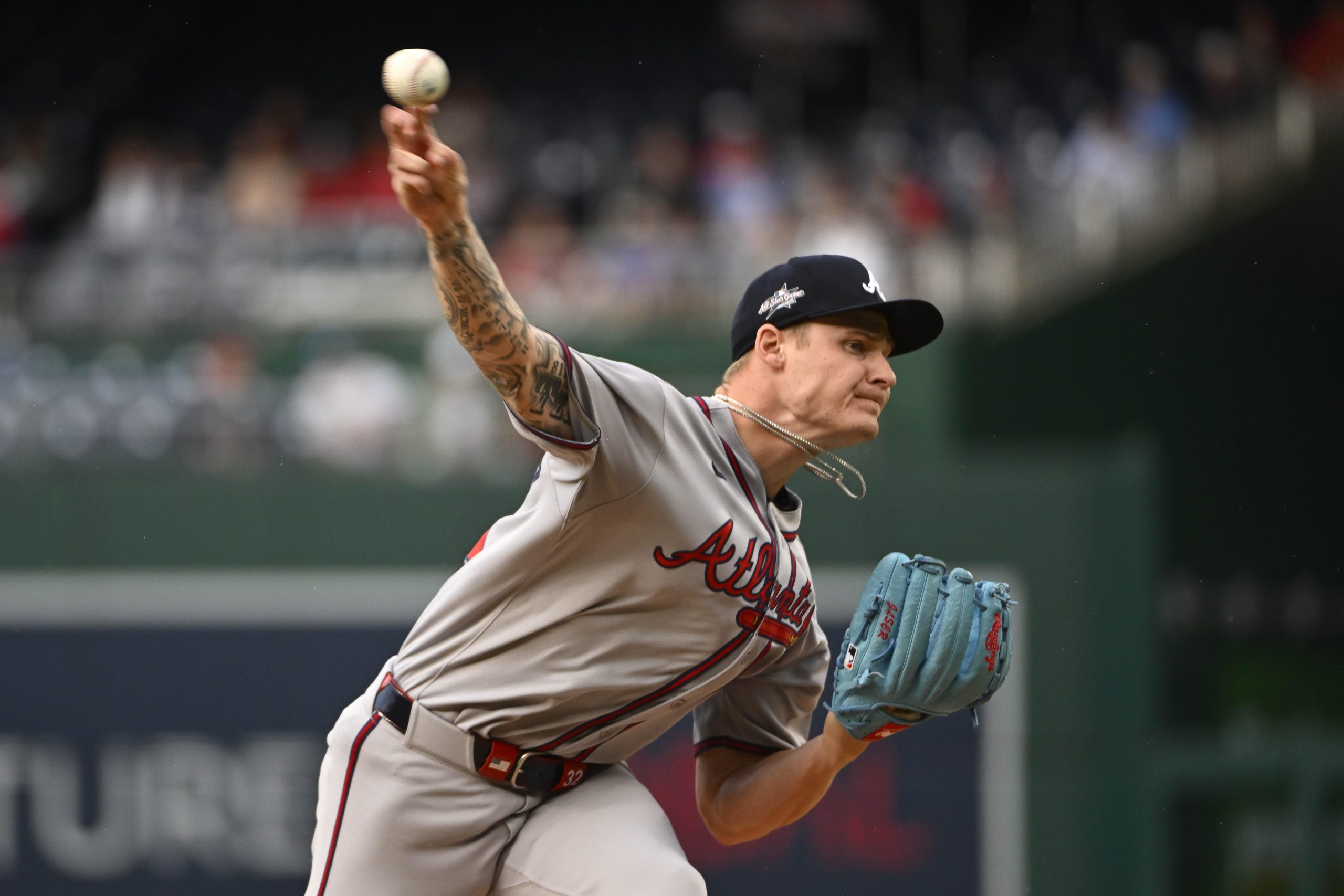
POLICY WIRE — Washington, D.C. — They’re not just million-dollar arms; they’re high-yield assets, meticulously trained and spectacularly compensated, only to be, just as spectacularly, broken. The slow, arduous comeback of Atlanta Braves right-hander A.J. Smith-Shawver from a year-old Tommy John surgery isn’t merely a bullpen bulletin. Oh no. It’s a rather stark, if expensive, lesson in the universal fragility of human capital, even when swaddled in advanced analytics and peak performance nutrition. It’s about the economic architecture built atop the very real limitations of flesh — and bone.
Because Smith-Shawver, pitching for the Augusta GreenJackets, tossing three innings of one-run ball last Tuesday, isn’t just working his way back to a major league roster. He’s re-entering an economy of scarcity—of healthy, effective arms—that plagues America’s favorite pastime and, by extension, reflects broader trends of talent management and resource allocation globally. You know, that endless, grinding pursuit of efficiency — and endurance, whether it’s in sports or in, say, supply chains. But even the best-laid plans, backed by corporate dollars, frequently collide with human fallibility.
His return to the mound, after throwing some three hits (one a round-tripper), is meant to steady a Braves rotation that, frankly, looks a bit wobbly, much like June’s early economic indicators. And let’s be honest, it wasn’t exactly an immaculate outing, but hey, it was a start. That Atlanta’s front office pins such palpable hopes on a post-surgical arm — an arm, by the way, that’s still years from its theoretical prime — speaks volumes. Not just about their desperation (they’d just stumbled through a 5-3 loss to the Cardinals), but about the enduring, cyclical problem of maintaining peak human performance at a corporate scale. Just ask the Marlins, who just shunted reliever Anthony Bender onto the 15-day injured list with a stress fracture in his right shin. Or the Nationals, with lefty Mitchell Parker staring down the same, soul-crushing Tommy John diagnosis.
But the stakes here are larger than simple standings. They reflect a grand, global obsession with pushing physiological limits. “Every one of these surgeries represents a seven-figure cost in salary, rehab, and opportunity loss,” lamented Commissioner Adam Silver (of the NBA, but let’s imagine his baseball equivalent, equally concerned with fiscal responsibility) in a recent, off-the-record chat. “We’re talking about massive investments, continually imperiled by microscopic tears — and sudden ruptures. It forces a league to be deeply strategic, and a country, really, to think about the health infrastructure supporting its highest earners.”
It’s a peculiar irony that in a league where players routinely command eight- and nine-figure contracts, the foundational architecture – the elbow ligament, the rotator cuff – remains so incredibly vulnerable. Studies indicate over a quarter of active MLB pitchers have undergone Tommy John surgery at some point in their careers. A staggering figure, it really is. It shows an economic model built not just on talent, but on aggressive, rehabilitative medicine.
Consider the contrast: while America’s sports franchises invest untold millions in bespoke medical teams, cutting-edge surgical techniques, and extended rehab facilities to coax these hyper-specialized bodies back to competition, many nations wrestle with far more basic healthcare challenges. Take Pakistan, for instance, a nation steeped in the high-stakes, fast-bowling traditions of cricket. The physical demands on their star athletes are immense, often leading to career-threatening injuries. But the access to the same calibre of post-surgical care, the lengthy, undisturbed rehab period that an American athlete like Smith-Shawver might receive, remains a significant hurdle. They don’t have the same vast economic safety nets or readily available access to those multi-million-dollar orthoscopic teams. But the hunger for elite performance, — and the sheer desperation to protect a career, it’s universal.
Even superstar Ronald Acuña Jr. continues his personal grind, doing a full workout before Tuesday’s contest. It’s a reminder: this isn’t just a game; it’s a high-pressure corporate ecosystem where human durability is the scarcest, most volatile commodity.
What This Means
This endless medical merry-go-round isn’t just about America’s pastime. It’s a policy bellwether, folks. It reveals an increasingly commodified approach to human talent where an injury isn’t merely a physical ailment but a fiscal liability, managed with clinical precision. For emerging economies, particularly in South Asia and the Muslim world where sport is increasingly professionalizing—think of the Pakistani Super League or football leagues blossoming in the Gulf—it poses an aspirational benchmark. They watch, perhaps with a touch of envy, the comprehensive support structures built around athletes like Smith-Shawver. The question for these nations becomes: can they afford to replicate such sophisticated medical infrastructure to protect their own athletic assets, their human capital? And what happens when they can’t? “Our sports diplomacy often overlooks the fundamental issue of athlete welfare and medical investment,” remarked Dr. Faiza Rahman, a Karachi-based sports physiologist and advocate for equitable healthcare, in an online seminar last week. “When a national cricket hero goes down, the impact resonates economically and socially, sometimes more acutely than in wealthier nations because the safety nets just aren’t there.”
The entire drama serves as a cautionary tale too. It’s a relentless chase for marginal gains, for more speed, more power, more rotation, pushing bodies to a breaking point—a trend observable in all high-stakes industries, from finance to tech. And that’s a costly way to live, both for the individual — and the bottom line. So, July better shape up. The investors, — and the fans, are getting a little tired of all these infirmities.