


Agile Defense: Why Speed Trumps Robotics in Modern War
Modern war demands agile defense manufacturing. Learn why Ukraine's experience shows speed and adaptability, not rigid automation, are key to national security.

POLICY WIRE — Kyiv, Ukraine — The sleek, unblinking efficiency of robotic assembly lines? It’s often heralded as the future of manufacturing, a silver bullet for production nightmares. But on the brutal, ever-shifting landscape of modern conflict, that same rigid optimization can become a concrete anchor around the neck of innovation. You wouldn’t expect industrial giants to suddenly become liabilities, would you?
It turns out, the lightning pace of hostilities in Eastern Europe isn’t just chewing through matériel—it’s gobbling up assumptions about industrial design, too. Think of it: war doesn’t wait for your supply chain management software to calculate optimal retooling. It just… happens. And that’s forcing a sobering re-evaluation within defense circles, particularly among those who’ve seen the frontlines up close.
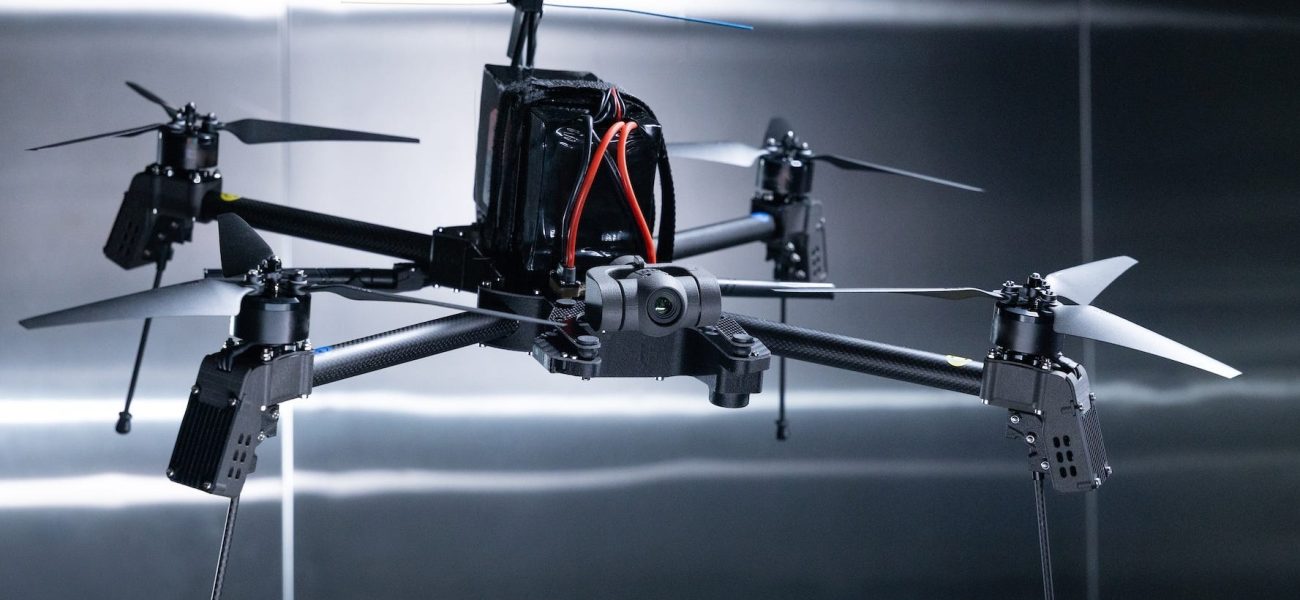
One notable voice from a Ukrainian drone manufacturing firm has openly stated that [QUOTE_PLACEHOLDER] and that over-reliance on fixed, automated processes can seriously impede a company’s ability to pivot when war changes its mind. That’s a sentiment that flies right in the face of decades of corporate gospel preaching about automation as the be-all and end-all of competitive advantage. You build a factory designed for mass production of one specific item, and suddenly, yesterday’s cutting-edge drone is today’s slow, easily jammed target. Now what? You can’t just flip a switch — and convert those million-dollar robots to make something else.
They’ve learned the hard way. It’s not about how fast you can make one thing, it’s about how fast you can make a new thing. This manufacturer’s team, steeped in this adaptive paradigm, prioritizes modular designs and a workforce that can literally reconfigure production on the fly. It’s almost artisanal warfare manufacturing, but at speed.
The emphasis shifts to human ingenuity—rapid design changes, improvisation, and smaller, decentralized production cells that can adapt to enemy countermeasures in a week, not a year. They’ve found that having less invested in monolithic, unchangeable machinery makes them infinitely more flexible. Imagine a heavily automated automotive plant trying to switch from sedans to tanks in a fortnight; it’s absurd. This drone maker is operating with that same urgency.
And it’s a model that’s proving its worth. The drone maker articulated that [QUOTE_PLACEHOLDER]. They’re talking about designs that are essentially software-defined, enabling quick updates and hardware modifications, not just iterative improvements but outright strategic shifts. But that also means your factories can’t be rigidly locked into a single process. That’s a huge shift from the kind of industrial might countries traditionally project.
But the stakes are high, — and the lessons learned are brutal. For instance, reports from Ukraine suggest that Russian electronic warfare capabilities, while often primitive, can render entire batches of previously effective drones useless in a matter of days. A static production line just can’t keep up. The alternative—lean, agile production—allows them to push new iterations to the field before countermeasures are fully effective.
📄 POLICY WIRE WHITEPAPER PUBLISHED: PAKISTAN'S NATIONAL SECURITY POLICY PRIORITIES
👉 READ BY CLICKING HEREThis dynamic adaptability isn’t just theory, it’s making a tangible difference. A recent report by the Royal United Services Institute (RUSI) noted that the average lifespan of an off-the-shelf commercial drone on the Ukrainian front lines is as low as three flights, forcing producers to innovate constantly. That’s a staggering churn rate, forcing manufacturers to design for disposability and rapid redesign—not long-term, high-volume consistency.
What This Means
This Ukrainian experience holds profound implications well beyond the immediate theater of conflict. For nations like Pakistan, navigating complex geopolitical fault lines and regional power dynamics, these lessons aren’t academic; they’re an urgent operational imperative. Many countries, including Pakistan, India, and Saudi Arabia, are racing to modernize their defense capabilities, often eyeing the kind of hyper-automated, high-volume production models perfected in the West or China. They’ve poured billions into conventional procurement cycles, thinking ‘more is better.’
But what if ‘more’ becomes ‘more rigid’? This shift towards adaptable, less automated manufacturing capacity could redefine strategic autonomy for nations that can’t afford the luxury of decades-long procurement cycles or those needing to respond to rapidly evolving threats. It’s about being able to modify existing platforms—or even design entirely new ones—within months, not years. Imagine, for example, Pakistan’s indigenous defense sector trying to maintain an edge in drone technology against an adversary rapidly deploying sophisticated jamming systems. An inflexible manufacturing base would find itself producing obsolescence at scale. This kind of gritty geopolitics is no joke; it means sovereignty in action, not just theory. And don’t forget the economic burden of having warehouses full of yesteryear’s technology. It’s a costly, embarrassing dead end.
it’s not just about drones. It’s a paradigm shift for all defense manufacturing, highlighting that national security might increasingly depend on an economy’s agility, its engineers’ creativity, and its industry’s capacity for quick-turn innovation rather than sheer manufacturing output. It’s less about building perfect widgets by the million, more about building hundreds of iterations that learn, adapt, and prevail in a game of digital cat and mouse. In this new world, those who can’t iterate at speed, they’ll be left with very expensive, very vulnerable toys.