


England’s Shifting Sands: The Geopolitics of a World Cup Knockout Draw
POLICY WIRE — London, UK — So, England secured top billing in their World Cup group. Yawn. But peel back the veneer of that predictable victory, and what you see is a far more intriguing landscape: a...

POLICY WIRE — London, UK — So, England secured top billing in their World Cup group. Yawn. But peel back the veneer of that predictable victory, and what you see is a far more intriguing landscape: a global football tournament, always an uncomfortable mirror reflecting global power dynamics, is throwing up matchups pregnant with geopolitical nuance, particularly for nations in the Global South. It’s not just about goals; it’s about shifting influences, national aspirations, and sometimes—just sometimes—old colonial scars.
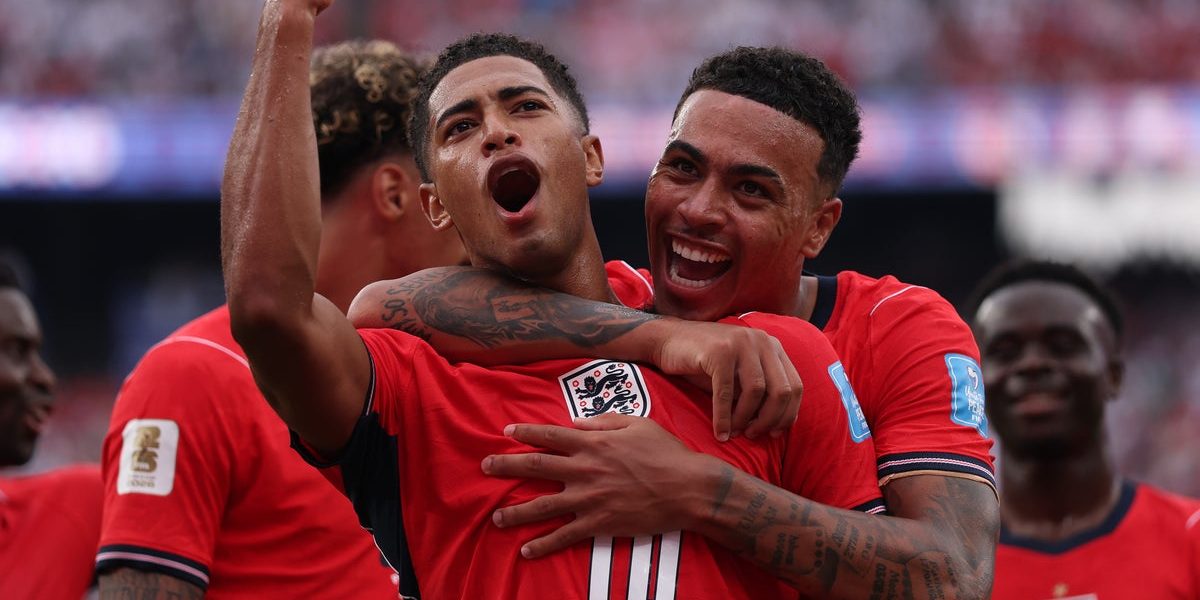
Thomas Tuchel’s side—oh, right, the manager. Easy to forget sometimes in the grand scheme of things—will move on to Atlanta for their next match. After a first half of frustration against Panama in New Jersey, we’re told, second-half goals from Jude Bellingham and Harry Kane secured England’s second win of the tournament with a 2-0 victory. This confirmed their supremacy in Group L, and for a team often accused of lacking true grit, one could almost mistake their methodical advance for an inevitable, sovereign march. Their route to the final became clear on Saturday night, apparently. [QUOTE_PLACEHOLDER]
But the real drama isn’t their passage; it’s the gatekeepers. After topping Group L, England will face a best-ranked third-place team on Wednesday, 1 July at 5pm (BST) in Atlanta. Who’s in the queue? The narrative states, They will face the third-place team from one of Group I/J/K in the round of 32. And here’s where the plot thickens ever so subtly. As things stand, these are the teams that could be in the mix to face the Three Lions: Group I: Senegal; Group K: DR Congo. Not exactly the familiar European giants, are they? These aren’t just football teams; they’re nations navigating complex post-colonial identities, vying for recognition on a stage that often seems oblivious to their everyday struggles.
It’s currently Senegal, a majority-Muslim nation with deep historical — and economic ties to Europe, particularly France. Imagine the optics, the symbolic weight, of such a fixture—a team from the heart of Anglophone football facing off against one of West Africa’s most potent sporting forces. Senegal’s population is approximately 95% Muslim, making it a powerful voice within the Organization of Islamic Cooperation (OIC), and its football success has long been a source of national pride and regional influence. That’s more than just a game. Or it could be DR Congo, a nation still grappling with the brutal legacy of Belgian exploitation and ongoing conflict, yet still managing to produce an incredibly talented footballing contingent.
And because these things are rarely straightforward, a win for DR Congo against Uzbekistan on Saturday night would see them play the Group L winners. Such fine margins, such dramatic shifts—a testament, perhaps, to the sheer randomness and brute democratic power of tournament football. For now, it’s Senegal in the spotlight. Beyond this, the road isn’t paved with easy street either. In the last-16, England could face Group A winners Mexico (or Ecuador) in the high-altitude cauldron of the Estadio Azteca on the evening of Sunday 5 July at 1am (BST). Altitude sickness is a great leveler, wouldn’t you say? If they overcame that serious test of resolve, Group C winners Brazil could be their quarter-final opponent on Saturday, 11 July.
Then it’s Argentina, following a fine start with Lionel Messi’s five goals, who may then be their potential semi-final opposition on Wednesday, 15 July. And then, finally, France would be the likely opponents in the final in New Jersey on Sunday, 19 July. A grand tour of football’s titans. Yet, it all starts with Senegal or DR Congo, reminding us that global tournaments are a microcosm of the world, full of surprising contenders and uncomfortable histories. The UK’s engagement with these global spectacles goes beyond mere viewership; it’s interwoven with economics, soft power, and immigration. You’d think people would notice.
📄 POLICY WIRE WHITEPAPER PUBLISHED: PAKISTAN'S NATIONAL SECURITY POLICY PRIORITIES
👉 READ BY CLICKING HEREWhat This Means
This particular path to the final isn’t just a sports fixture list; it’s a geopolitical roadmap. England facing a team like Senegal isn’t just about football prowess; it’s about the Global South asserting its growing influence on international platforms. Economically, strong performances by African nations in high-profile tournaments can elevate their profiles, attracting investment and tourism, even if incrementally. The symbolic victory for a country like Senegal—a vibrant Muslim-majority democracy—would resonate across not just West Africa but throughout the Muslim world and broader Global South, presenting a powerful counter-narrative to often-Eurocentric portrayals of global success.
But the stakes extend beyond soft power. These fixtures often highlight stark disparities in footballing infrastructure and national development, spurring dialogues—or at least questions—about equitable resource distribution in global sports bodies. For Pakistan and other South Asian nations, observing the successes of fellow developing countries, particularly those with significant Muslim populations like Senegal, offers both inspiration and a template for what consistent investment in sports development can yield. It isn’t just England’s tournament; it’s a world event, where every unexpected victory, every new contender, shifts the scales a little. And that’s what makes it worth watching.
The possibility of a final against France—echoing historical colonial rivalries, softened now by sporting fraternity—only adds another layer of intriguing tension to what could otherwise be just another predictable progression of giants. Ultimately, for Policy Wire readers, these aren’t just games; they’re often highly public, passionately consumed moments in international relations, playing out with boots and a ball.