


William & Homelessness: Beyond Royal Palliative
Prince William's charity visits offer aid, but do royal endorsements solve homelessness or merely provide a palliative? POLICY WIRE critically examines the systemic impact.

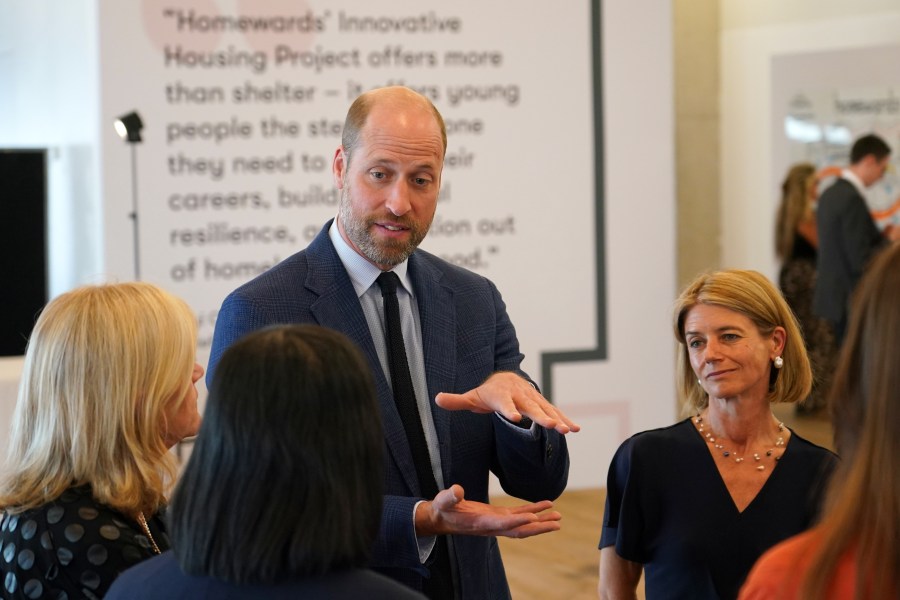
POLICY WIRE — London, United Kingdom — The heir to the throne, Prince William, recently extended his considerable public influence toward a homelessness charity, lauding its efforts that, by his own account, have made a material difference for thousands. But beneath the polished veneer of royal endorsement lies a gnawing question: how much does such a gesture truly reshape the landscape of deep-seated societal issues, or merely offer a temporary palliative?
It’s an old dance, this performance of royal concern. One part sincere, one part strategic, entirely predictable. Prince William, second in line to the British Crown, chose this occasion to remind a largely affluent nation of those on its margins. He arrived, observed, — and delivered his pronouncements. The charity in question, a venerable institution no doubt, was reportedly commended for its outreach— for keeping heads above water in a tide of despair, not for stemming the tide itself. The specific tally of those aided? [QUOTE_PLACEHOLDER], according to the Prince’s office.
The numbers themselves tell a grim story, despite any positive anecdotes. Recent figures from the UK government’s Ministry of Housing, Communities & Local Government reveal that the number of households owed a homelessness prevention or relief duty was 73,140 in England alone during the first quarter of 2023. And that’s just a snapshot, missing many of the truly invisible. Charities like the one Prince William visited perform admirable work, no question, filling gaps where the state falters or fails to reach.
This engagement isn’t just about the immediate beneficiaries; it’s a carefully calibrated nod to public expectation. Monarchy, after all, thrives on visibility — and a semblance of purpose beyond gilded cages. The British royal family has long mastered the art of association with causes both grand — and granular. Here, the narrative pivots to compassion, to addressing tangible suffering – a performance as old as kings, tailored for modern consumption. You see the concern in his gaze, read the prepared statements, and for a fleeting moment, perhaps, believe the system is addressing its flaws.
Contrast this with, say, Pakistan, where an equally intricate dance between inherited influence, philanthropy, and widespread social need unfolds daily. Dynastic political families, often with landholdings stretching generations, routinely establish their own charitable trusts or champion community projects. But while the *modus operandi* of aid distribution might differ—less formalized charity shops, more direct village-level assistance, often intertwined with religious giving or political patronage—the underlying disparity between immense wealth and grinding poverty remains a stark constant. The symbolism of the powerful addressing the powerless holds sway in Lahore and London alike, albeit through vastly different cultural lenses.
And let’s not forget the subtle economic currents at play here. When a senior royal elevates a charity, it’s not just a feel-good story; it’s a direct injection of prestige, a tacit endorsement that can translate into donations, volunteers, and media attention. For a sector constantly battling for visibility — and funding, a royal visit is like hitting the jackpot. It provides, quite frankly, a much-needed spotlight. But, does this attention translate into systemic policy shifts, or merely shore up existing, often overwhelmed, coping mechanisms?
His Royal Highness stated [QUOTE_PLACEHOLDER] regarding the broader societal implications, yet the solutions often presented are individual successes, not structural overhauls. We’re reminded that thousands were helped—a good thing, undoubtedly. But we’re also reminded that thousands more remain untouched, or cycle back through the system. It’s a continuous churn, an endless procession requiring perpetual charitable intervention.
Because ultimately, these engagements, while noble in intent, operate within a system that often perpetuates the very conditions they seek to alleviate. They’re a visible arm of societal conscience, a vital safety net, yes, but rarely a wrecking ball to the foundations of inequality. They serve to highlight a problem, to celebrate stop-gap measures, but typically leave the grander, more uncomfortable questions of wealth distribution and social justice untouched. That, my friends, isn’t usually the monarchy’s remit.
What This Means
Prince William’s engagement is less about policy — and more about positioning. Politically, it shores up the monarchy’s relevancy in an era where its utility is constantly debated. Economically, it provides a powerful, if indirect, boost to the charity sector, leveraging inherited status to drive much-needed resources to social issues. But it’s a conservative solution—treating symptoms rather than attacking root causes like housing shortages, inadequate social benefits, or wage stagnation. It allows the government to claim public issues are being addressed, without necessarily undertaking comprehensive, expensive, or politically risky structural reforms. For those truly facing homelessness, it offers immediate relief, yes. For society as a whole, it means maintaining a costly parallel system of charity to paper over what are, fundamentally, systemic cracks. We see similar patterns in nations like Pakistan, where public figures—be they politicians or philanthropists—engage in visible charity, simultaneously fulfilling a perceived duty and cultivating public approval, all while broader systemic inequalities often go unchallenged. It’s a performative loop, effective in its own way, but one that rarely leads to truly transformative change, as outlined in analysis of the performative aspects of public persona.