


AI’s Hidden War: The Geopolitics of Silicon Power
AI's future hinges on hardware, not just software. Uncover the geopolitical battle for silicon, supply chains, and industrial control shaping global power dynamics.

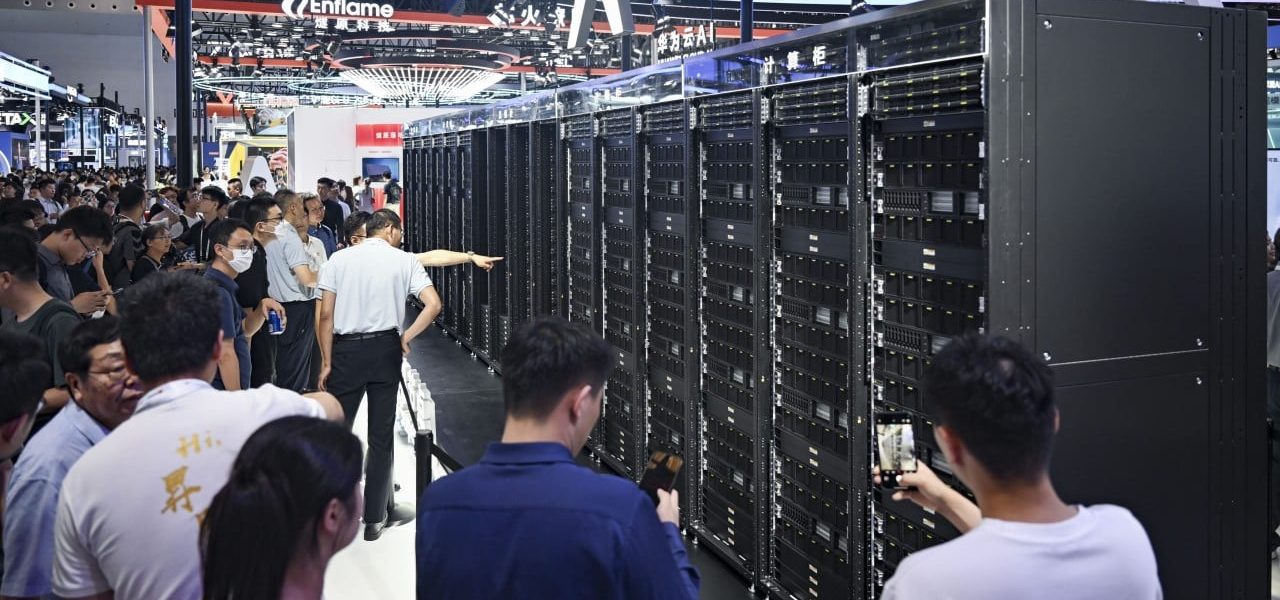
POLICY WIRE — Washington, D.C. — Forget the sleek interfaces, the generative artistry, or the chirpy responses from the latest digital savant. While headlines revolve around ChatGPT, Gemini, DeepSeek or the latest breakthrough model, a far grittier, more fundamental battle rages. It isn’t happening in the digital ether. It’s happening on factory floors, in rare earth mines, and in the opaque corridors where global supply chains intersect with national ambition. We’re talking about the dirt, the wires, the actual, tangible stuff that makes artificial intelligence even possible—the hardware, the chips, the energy grids.
It’s easy to get lost in the hype. We’re constantly fed stories about algorithms—the brains of AI. But what about its body? What about its bones and its muscle? It’s often overlooked, but the physical underpinnings of this digital revolution are staggering in their complexity and geopolitical heft. When people talk about the race for artificial intelligence, they usually focus on software. It’s a convenient narrative, I suppose, less complicated than explaining the microscopic precision required to etch a trillion transistors onto a fingernail-sized piece of silicon. But the digital realm doesn’t exist in a vacuum, does it? Behind every chatbot response and AI-generated image lies a veritable mountain of physical infrastructure, consuming resources, labor, and a significant chunk of global geopolitical maneuvering. [QUOTE_PLACEHOLDER]
Governments announce AI strategies and investors pour billions into start-ups promising to transform everything from medicine to education. That’s a given, it’s capitalism doing what it does. But take a beat. Nonetheless, the most consequential battle in the AI age may not be over algorithms at all. It may be over the machines. That’s a point few are brave enough to trumpet, certainly not the venture capitalists keen on pitching the next big software idea. You see, an algorithm, no matter how brilliant, is just a thought, a theory, until it gets etched into silicon and powered by colossal energy demands. We’re talking about graphic processing units, or GPUs, — and the foundries capable of producing them at the cutting edge. Think Taiwan Semiconductor Manufacturing Company (TSMC), Samsung, Intel—the real muscle behind the magic.
Consider the stark reality: a single company, TSMC, controlled over 90% of the advanced semiconductor manufacturing market share for logic chips in 2023, according to Counterpoint Research. That’s not just a commercial dominance; it’s a geostrategic bottleneck. An economic weapon. If you don’t control the means of production, or at least secure your access, you’re not really in the game, are you? Pakistan, for instance, despite its ambitions in digital transformation and its burgeoning tech sector, remains fundamentally dependent on external sources for these foundational components. You can talk about software engineers and startups in Lahore until you’re blue in the face, but if you can’t get your hands on the next-gen chips, or if a global power decides to throttle supply, those ambitions—even regional initiatives like developing localized AI solutions for agriculture or disaster management—they just stall out. They really do. This isn’t just about economic policy; it’s about national sovereignty, in a new, silicon-age context.
And it’s not just the chips themselves. It’s the rare earth minerals required for their manufacture. It’s the sophisticated lithography machines—ASML from the Netherlands holding a virtual monopoly—needed to make those chips. It’s the staggering amounts of water and energy consumed by foundries and data centers, posing an escalating environmental challenge, particularly in water-stressed regions of the Muslim world. It’s an almost perfect storm of dependencies and choke points, scattered across the globe but ultimately converging on a handful of suppliers and, often, a couple of contested straits.
📄 POLICY WIRE WHITEPAPER PUBLISHED: PAKISTAN'S NATIONAL SECURITY POLICY PRIORITIES
👉 READ BY CLICKING HEREBut how much of this truly registers with the average person, or even with many policymakers caught up in the allure of AI’s perceived intelligence? They’re often more concerned with the flashy applications—the latest iteration of AI voice assistants, or sophisticated surveillance tools (which, by the way, also rely on these same underlying chips). It’s not just about what the AI does, it’s about who controls the factory floor that lets it do anything at all.
This silent contest for hardware mastery—the physical guts of artificial intelligence—is defining tomorrow’s global pecking order far more than any new algorithm will. And for nations, particularly in the developing world or those outside major tech alliances, the lesson is becoming stark. Building a digital economy means building, or at least securing, access to a robust industrial base. Or you’re just renting the future. That’s just how it’s. Because in the end, silicon still beats software when it comes to raw, unadulterated power politics. And we haven’t even really started to unpack the ethical ramifications of such concentrated industrial might. It’s a heavy thought. A really heavy thought.
What This Means
The fixation on software breakthroughs distracts from the tangible, messy reality of AI’s industrial foundation. This isn’t simply a technological race; it’s a profound geopolitical chess match over manufacturing capacity, supply chain resilience, and resource allocation. Nations that don’t control key components—from raw materials to advanced lithography equipment—are inherently vulnerable, their AI ambitions tethered to the whims and stability of a select few global players. For South Asian economies, this means that even with significant investment in AI talent and startups, true digital sovereignty will remain elusive without direct, or at least guaranteed, access to the most advanced semiconductors. Their policy focus needs to shift from purely encouraging software development to strategically negotiating semiconductor supply agreements, exploring joint manufacturing ventures, or investing heavily in fundamental materials science. It implies that a nation’s digital future, ironically, depends on its ability to play industrial hardball, to understand that even virtual innovation is built on very real, often politically charged, atoms. Failing to grasp this distinction relegates nations to the role of technology consumers rather than true innovators, a dependency that can have severe economic and security ramifications, impacting everything from national defense to medical innovation.