

India’s Defense Ascent: Courting Gulf Billions
India's defense industry is making a bold move into the global arms market, targeting Gulf nations. This shift redefines India's role, impacts regional dynamics, and challenges established powers.

POLICY WIRE — Dubai, UAE — The global arms market, a brutally competitive arena of hardened steel and cold cash, hasn’t always viewed New Delhi as a serious player. That’s changing, fast. What might appear as a simple transaction on paper—missiles for money—is, in fact, a calculated geopolitical maneuver, a quiet yet potent reordering of influence, and frankly, a jab at the traditional Western and Russian giants who once carved up this lucrative pie.
It’s not about just one deal; it’s about a declaration. India, for decades an arms importer, now craves a seat at the seller’s table. And the United Arab Emirates, that shimmering beacon of modernity and military ambition in the Gulf, looks like New Delhi’s chosen proving ground. But what does this really mean for the region, for Pakistan, for the big-time arms dealers in Washington, Paris, and Moscow? [QUOTE_PLACEHOLDER]
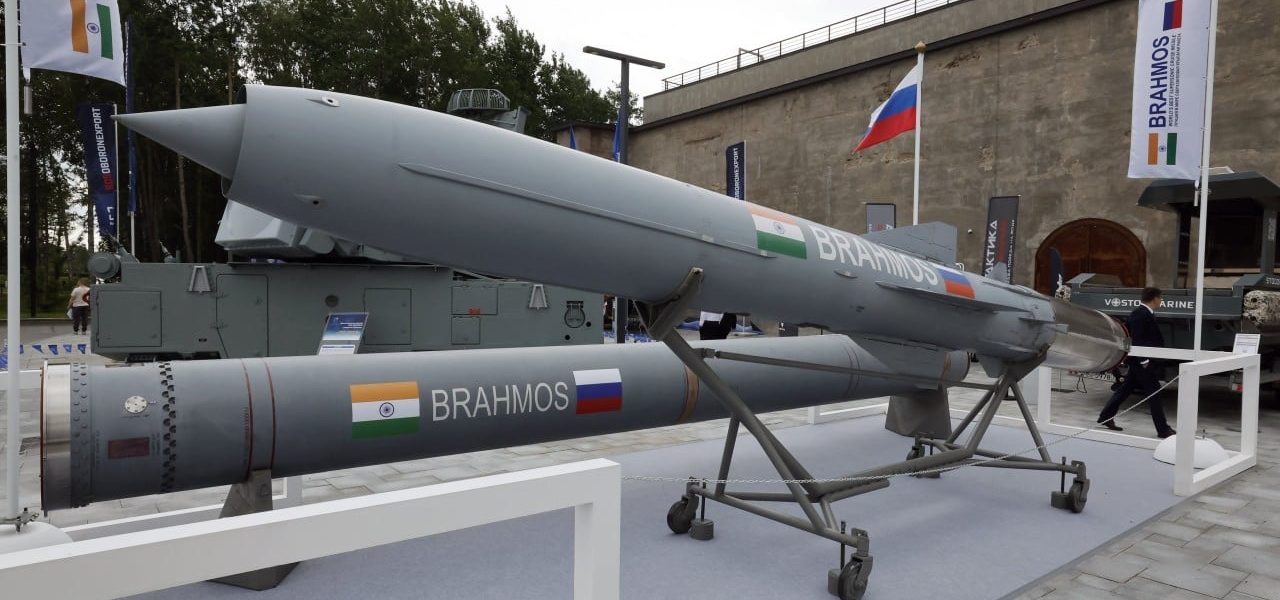
The chatter suggests a potential sale of BrahMos missiles to the United Arab Emirates, a piece of kit developed jointly with Russia, packing serious punch. Imagine that. An Indian-exported weapon system in a theater usually dominated by F-35s — and Patriot batteries. It’s a significant step in India’s push to become a serious arms exporter, analysts have said. But it doesn’t stop there. The conversations reportedly also include the potential sale of Akashteer, India’s automated air-defence command-and-control system, according to a Reuters report from June 22. It’s a suite, not just a standalone purchase, making the bid even more ambitious.
No deal has been signed — and discussions remain in the early stages, we’re told. But this isn’t just about selling hardware; it’s about India laying claim to some technological street cred, proving it can deliver high-tech defense solutions beyond its borders. It’s about more than just profit; it’s about prestige, about asserting a newfound technical competence on a world stage accustomed to India primarily as a consumer of defense products.
But this isn’t simply some abstract game of chess; it affects actual people. Consider the neighborhood. This move inevitably shifts the dynamic in South Asia — and the broader Muslim world. The UAE, like many Gulf states, has historically leaned on a variety of military partners—from Pakistan’s training expertise in decades past to substantial reliance on Western suppliers. Bringing India into this fold diversifies their supply chain, sure, but it also ties them more closely to India’s geopolitical orbit.
And let’s be frank: such military linkages don’t go unnoticed in Islamabad. The evolving relationship between Delhi and Abu Dhabi, now potentially encompassing advanced weaponry, surely sends shivers down certain spines across the Arabian Sea. It’s a quiet but palpable expansion of Indian influence into a region traditionally viewed as a strategic depth by Pakistan—or at least a place for robust diplomatic engagement. This isn’t a mere commercial transaction; it’s a redefinition of regional security architectures.
📄 POLICY WIRE WHITEPAPER PUBLISHED: PAKISTAN'S NATIONAL SECURITY POLICY PRIORITIES
👉 READ BY CLICKING HEREGlobally, the major players aren’t exactly cowering. The Stockholm International Peace Research Institute (SIPRI) reported that the United States alone accounted for 40% of global arms exports between 2018 and 2022, far eclipsing any new contender. Russia stood at 16%, and France at 11%. India, for all its ambition, currently only makes up a fraction of a percent of that pie. Yet, even a small shift here, especially with nations that typically buy Western, signals a growing discomfort for the incumbents. This isn’t some small regional upstart, but an economy of nearly 1.4 billion people—a giant stirring. They’ve got the political capital and industrial muscle to actually do some damage in the market, if they play their cards right.
Because while the market is competitive, nations want options, — and they don’t want to be beholden to one supplier. India’s pitch is clear: another capable provider, maybe less politically stringent than some Western partners, and potentially offering a better bang for the buck. For the UAE, it’s about strategic autonomy. For India, it’s giving New Delhi a foothold in one of the world’s most competitive security markets.
What This Means
This isn’t just about the cash changing hands, folks; it’s a deeply consequential geopolitical play. If India cracks the UAE market, even for specific systems like the BrahMos or Akashteer, it doesn’t just mean a few billion dollars—it legitimizes India’s defense industry on a global scale. This deal, if it goes through, signals that India is no longer content to be merely a consumer in the defense ecosystem; it wants to be a significant producer and exporter. It sets a precedent, one that could see other developing nations, especially those looking to diversify away from Western or Russian dominance, turn to New Delhi. This alters power balances, plain — and simple.
Economically, it’s a huge shot in the arm for India’s domestic defense manufacturing. It incentivizes further investment in research and development, potentially creating thousands of high-tech jobs and boosting their industrial base. But for other arms manufacturers, it spells trouble—more competition means downward pressure on prices, more intense lobbying efforts, and a potential erosion of their long-held market shares. And let’s not forget the strategic implications: as India establishes these military-technical relationships, particularly within the Middle East, its diplomatic influence naturally expands. It’s not just a defense deal; it’s an economic, technological, and diplomatic power play that shifts the existing paradigms, forcing everyone—from Islamabad to Washington—to recalibrate their understanding of India’s capabilities and intentions.