


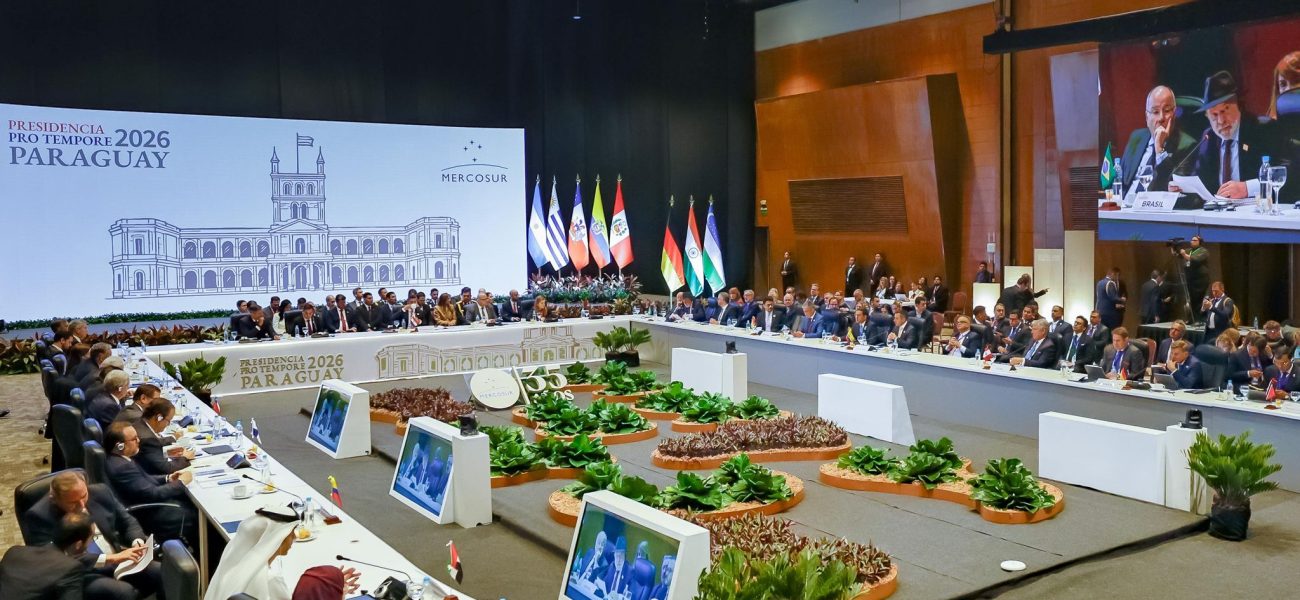
Mercosur Looks East: Tokyo Beckons After Brussels Breakthrough
POLICY WIRE — Buenos Aires, Argentina — The ink’s barely dry on that labyrinthine trade pact with the European Union, yet Mercosur—South America’s somewhat sprawling, often fractious, but undeniably...

POLICY WIRE — Buenos Aires, Argentina — The ink’s barely dry on that labyrinthine trade pact with the European Union, yet Mercosur—South America’s somewhat sprawling, often fractious, but undeniably significant trading bloc—isn’t resting on its laurels. Quite the opposite. They’re already eyeing the sunrise, embarking on preliminary trade discussions with Japan, a move that signals a substantial geopolitical and economic pivot. It’s less a quiet engagement, more a strategic leap across continents, illustrating a bloc increasingly confident in its global leverage.
For years, Mercosur has been typecast: an agricultural powerhouse with an industrial arm that tends toward protectionism. The EU deal, finally struck after two long decades of diplomatic tug-of-war, shifted that narrative. It wasn’t just a win for beef — and soybeans; it was a psychological victory. A proof of concept that Mercosur could, in fact, navigate the thorny thickets of international negotiation and land a prize.
And now, Tokyo. The speed with which Mercosur has turned its gaze east suggests a well-orchestrated follow-up. This isn’t just about market access; it’s about diversified risk, balancing dependencies, and perhaps, signaling to a world often preoccupied with North American or European markets that there’s serious business happening elsewhere. It’s a game of chess, not checkers. One where Japan, ever seeking stable supply chains and new consumption hubs, finds a compelling dance partner in the Southern Cone nations.
“We’ve shown that cooperation and mutual benefit can triumph over insularity,” remarked Roberto Funes, Argentina’s Undersecretary for International Economic Negotiations, in a recent address. His tone was measured, but his underlying message was clear: Mercosur isn’t waiting for an invitation anymore. “Japan represents a market hungry for high-quality produce and a partner capable of significant investment in infrastructure and technology. We intend to meet them halfway—and then some.”
This pursuit of Japanese markets by Mercosur, whose collective GDP in 2023 was estimated to be north of $4 trillion according to the World Bank, isn’t just an economic maneuver. It’s a strategic hedging against a fluctuating global economy, particularly one prone to the protectionist impulses sometimes seen in other major powers. But it’s also a chance to attract sophisticated foreign direct investment beyond traditional Western sources.
Across the Pacific, officials are equally enthusiastic, though perhaps with a touch more cautious diplomacy. “The opportunities for synergy are extensive,” stated Japan’s Foreign Minister Yoko Kamikawa through an interpreter at a press briefing last month. “We see Mercosur not merely as a source of commodities, but as a dynamic region of innovation — and emerging consumers. Our aim is to foster a trade framework that bolsters economic resilience and shared prosperity.” Her comments underline Japan’s broader foreign policy objectives: securing resources and forging partnerships with like-minded economies that uphold a rules-based trading order.
📄 POLICY WIRE WHITEPAPER PUBLISHED: PAKISTAN'S NATIONAL SECURITY POLICY PRIORITIES
👉 READ BY CLICKING HEREBut let’s be real, these things don’t just happen because everyone’s feeling chummy. Japan’s manufacturing giants need stable inputs, — and its consumers want a broader selection. Mercosur’s producers need outlets that don’t fluctuate wildly with European subsidies or North American politics. It’s a pragmatic courtship. And it’s one that could set an example for other regional blocs grappling with internal disunity and external competition. Think of how difficult it’s been for, say, South Asian regional bodies to forge similar integrated economic fronts, often caught in longstanding geopolitical crosscurrents. The recent tension between Pakistan and Afghanistan, for instance, often underscores how political strife can strangle even the most basic cross-border economic initiatives.
What This Means
This Mercosur-Japan rapprochement, though still in its nascent stages, marks a tangible shift in global trade dynamics. For years, analysts speculated about the ‘Asian Century,’ often focusing on China’s gravitational pull. But this move highlights Japan’s continued, perhaps rekindled, appetite for multilateral engagement beyond its immediate neighborhood. It represents a significant opportunity for both sides: Mercosur gains access to a technologically advanced, high-value market, while Japan diversifies its resource procurement and builds influence in a burgeoning, commodity-rich region. It’s a win-win, provided the talks don’t get bogged down in the minutiae that plagued the EU deal for so long. for developing economies in other parts of the world, particularly those grappling with finding dependable export markets and investment partners—like nations across South Asia or the broader Muslim world—Mercosur’s strategy here offers a blueprint. It’s about proactive engagement, strategic patience, and leveraging unique regional strengths rather than waiting for established economic powers to come calling. The global economic chessboard is getting larger, and the pieces, it seems, are starting to move in fascinating, unexpected directions.