


400,000-Year Society: New Find Challenges Human History
A French cave reveals 400,000-year-old complex societies, shattering our timeline of human intelligence. Discover how this find redefines early civilization.

POLICY WIRE — Paris, France — We’re awfully fond of patting ourselves on the back, aren’t we? So quick to label eras, to compartmentalize progress, and especially, to draw neat little lines around when humanity supposedly got ‘clever.’ But now, with a new archaeological bombshell that’s surfaced, those lines look about as sturdy as a politician’s promise before an election—which is to say, not at all.
Down deep in the silent embrace of a cavern in France, a trove of prehistoric leftovers, long untouched by the sun, has just detonated our tidy timeline. We’re talking artifacts, clear — and purposeful, that scientists peg at a staggering 400,000 years old. Four hundred thousand. That’s not just a long time; that’s an eternity, an expanse so vast it makes the pyramids feel like yesterday’s lunch. [QUOTE_PLACEHOLDER]
It’s a brutal reminder that the so-called ‘primitive’ past wasn’t quite so simple as many history books—and indeed, modern hubris—would have us believe. Forget rudimentary grunts — and purely survivalist instincts. What emerged from this subterranean time capsule suggests something far more elaborate, a kind of pre-human precursor society described by the archaeological team as ‘complex and rich’. This wasn’t just tool-making for immediate needs; it was a societal fabric, woven by hands long turned to dust, but leaving undeniable patterns.
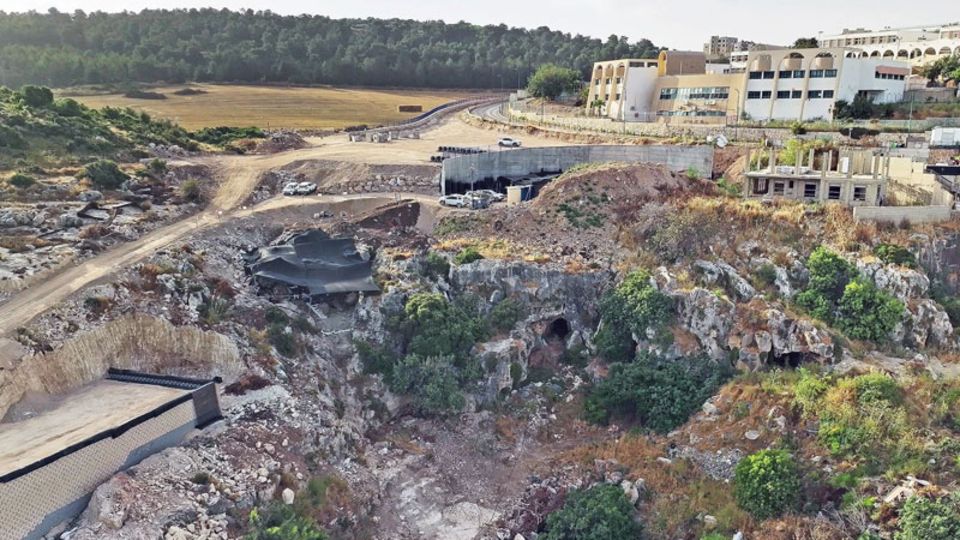
The site, specifically in Vallonnet Cave near Roquebrune-Cap-Martin, isn’t just about old rocks. These aren’t accidental splinters of stone. No, these are sophisticated implements, crafted with an understanding of material properties, designed for specific tasks. They speak to planning, to communication, to shared knowledge—the very building blocks of what we often consider ‘civilization.’ And yes, you might think a mere half-million years or so separates these folks from us, but consider the journey. The subtle innovations. The societal leaps required to achieve such a benchmark so far back in the murky annals of time.
It makes you wonder, doesn’t it, about the endless march of human intellect. Long before the grand urban centers of the Indus Valley or the philosophical discourse that would shape much of the Muslim world, even before what we’ve previously accepted as the true dawn of modern Homo Sapiens in Africa, something substantial was brewing. These findings don’t just add a few pages to our history; they rewrite the prologue entirely, suggesting that the foundational scaffolding for intelligence and community was laid down far earlier than anyone’s generally acknowledged.
Because, really, we’re talking about Homo heidelbergensis or early Neanderthals here. Not us, exactly. Yet, their handiwork offers a striking testament to cognitive capacities that shatter many existing academic frameworks. And, let’s be frank, it ought to chip away at our modern smugness, too. What did these communities look like? How did they organize? What complex rules guided their ‘rich’ existence?
This finding is also a sobering counterpoint to our frequently shallow modern-day discussions on cultural development. We often see the rise of cities like Mohenjo-Daro or the intellectual ferment of Baghdad during its Golden Age as discrete, miraculous breakthroughs. But what if these were just later, albeit magnificent, expressions of an inherent human capacity for complexity that was flexing its muscles 400 millennia prior? In places like the Sahel, for example, archaeologists are unearthing ancient settlements dating back 10,000 years, pushing back timelines for urban development across Africa, hinting at the deeply rooted nature of human ingenuity. This isn’t just a Western European story; it’s a global story of humanity’s long, winding path to what we’re now.
But the data itself is indisputable: according to a report published by Science Daily in 2024, sophisticated tools from this period, particularly those demonstrating symmetrical flaking techniques and deliberate fire management, challenge previous assumptions about early hominin capabilities. And you don’t achieve that with simple brute force; you need abstract thought, teaching, — and shared cultural practices. They weren’t just surviving; they were building. They’ve changed the narrative.
And it doesn’t just reframe our origins. It forces us to reconsider the very nature of progress itself.
What This Means
For policymakers, these ancient revelations, while seemingly academic, carry some stark implications. Firstly, it dismantles the comforting myth of humanity’s linear, ever-upward march from unthinking savagery to enlightened civilization. It suggests complexity is an intrinsic, deep-seated human trait, not a recent invention. This should provoke a more nuanced understanding of indigenous societies — and historical precedents. It’s a reminder that advanced social structures aren’t exclusive to modern epochs; they’re echoes of a capability woven into our genetic and intellectual fabric for eons.
Economically, if society can be this ‘complex and rich’ without widespread trade networks or advanced agricultural systems—things we often deem prerequisites for such development—it forces a reassessment of what genuine ‘progress’ looks like. It might encourage a focus on resilient, locally-attuned societal structures rather than an uncritical adoption of industrial-age definitions of wealth and development. From a political perspective, this incredible longevity of ‘complex’ social groupings should make anyone wary of quick fixes or declarations of immutable societal laws. If our species has cycled through varying states of organized ‘richness’ for 400,000 years, then today’s political fads and economic theories are just transient ripples in an unimaginably vast ocean. It’s not about being clever; it’s about being fundamentally human, even when the humans in question didn’t look quite like us. It truly does humble you, if you let it.