


McCauley Springs: New Mexico Towns Breathe Uneasy Sigh as Wildfire Evacuees Return, Long Fight Ahead
POLICY WIRE — Jemez Springs, N.M. — It wasn’t a triumphant return, not exactly. More like a collective, hesitant exhale as some residents trickled back into the smoke-tinged perimeter of the McCauley...

POLICY WIRE — Jemez Springs, N.M. — It wasn’t a triumphant return, not exactly. More like a collective, hesitant exhale as some residents trickled back into the smoke-tinged perimeter of the McCauley Springs Fire this week. While fire managers talk about containment creeping upward, and acres miraculously—or through sheer sweat—not ballooning further, the underlying truth is far grittier: this slice of New Mexico, and indeed much of the American West, is caught in a long, exhausting dance with a planet that’s had enough. And the local folks, they’re paying the piper.
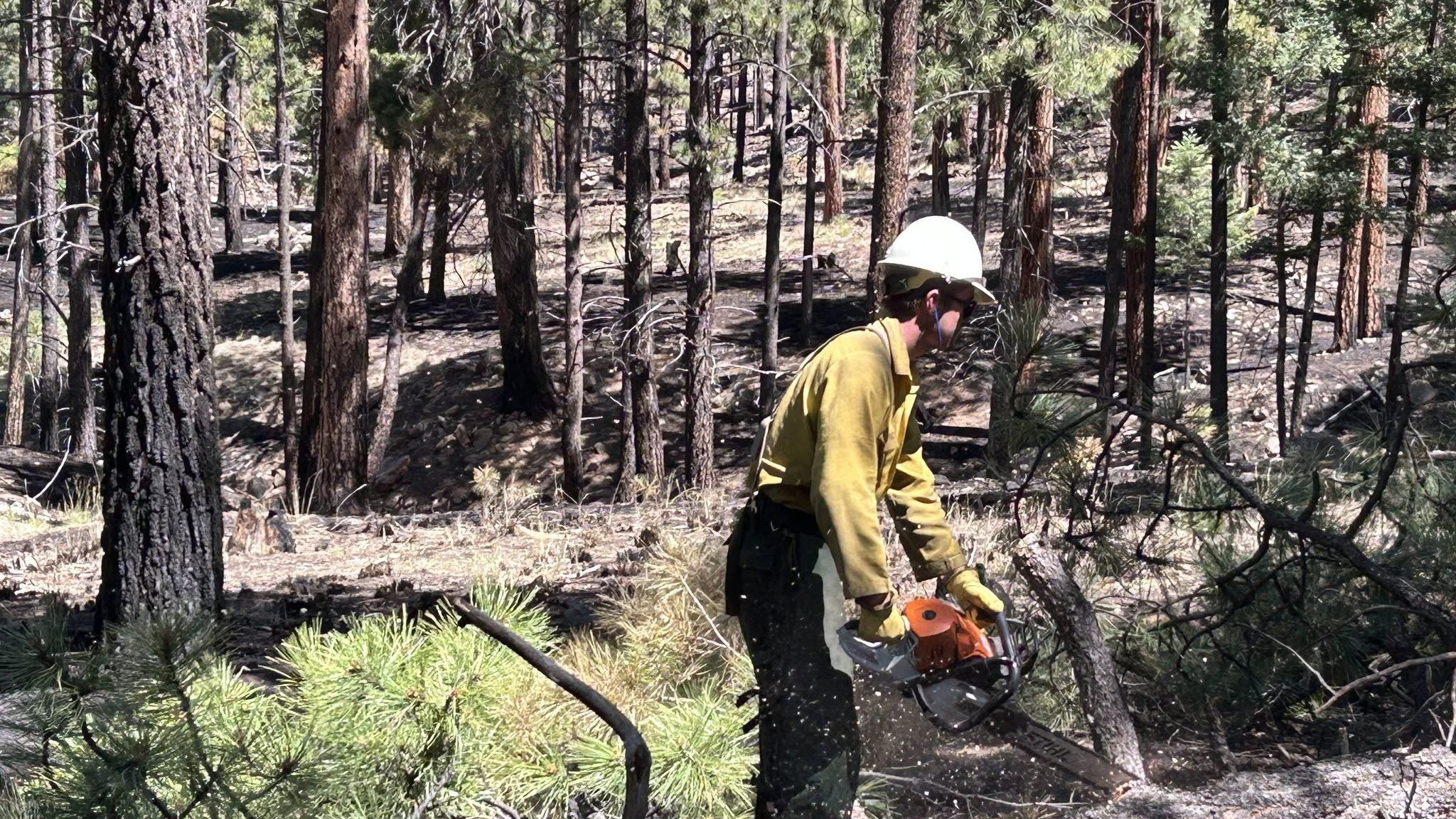
Families from Sierra de los Pinos started navigating Highway 4 again, heading back to properties they’d fled just days prior. Their relief, palpable. But underneath, a weary resignation, because New Mexico—a state often lauded for its ‘enchantment’—has spent an increasing number of recent summers smelling of ash. This time, it was a 712-acre scar carved just east of Battleship Rock, a stark reminder of the dry tinderbox much of the landscape has become. It’s a scene replayed too often, where the heroic efforts of 384 dedicated personnel keep disaster from swallowing entire communities, but can’t quite extinguish the gnawing anxiety.
Sandoval County Commissioner Patricia Chavez didn’t mince words as she greeted returning residents, a faint wisp of smoke still catching in the morning air. “You see the data, the acres contained, — and that’s good, right? It means homes are standing. But for these families, it’s not just a statistic,” she stated, her voice hoarse. “It’s the terror of packing bags, the financial strain, the nagging worry about what next summer brings. We’re patching up physical damage, but the psychological cost, that hangs heavy over us like the haze. It doesn’t dissipate so easily.” She isn’t wrong. They’ve faced this before.
The McCauley Springs incident saw its estimated acreage shrink from an initial 716 acres to the current figure, and containment pushed from 33% to a healthier 43%. This isn’t trivial. It’s the difference between homes saved — and homes lost, futures rebuilt and futures incinerated. But it also represents the incredible, round-the-clock grind of firefighters, battling blazes that seem increasingly recalcitrant. As Southwest Area Incident Management Team 3’s Operations Chief, Mark Rollins, noted from the command post, his face etched with fatigue, “We pushed it. We fought every foot, kept it inside its original footprint, despite the dry fuels just begging to ignite. But you gotta remember, a 43% contained fire is still 57% *uncontained*. We don’t sleep easy until every hot spot is cold, every smoldering root extinguished.” He leaned against a tactical map, a finger tracing fire lines. Because, honestly, one good wind gust—that’s all it takes.
Now, the talk turns to “suppression repair plans” — and restoring the fire area. But restoration is a long, expensive road. Statewide fire restrictions remain in effect, as does a Stage II clampdown on the entirety of the Santa Fe National Forest. The land is parched. The threat lingers. A visible pall from Albuquerque to Jemez Springs confirms it: the smoke maps are a daily morbid curiosity, showing how widely New Mexico’s environmental problems can literally spread across its stunning landscape.
What This Means
The McCauley Springs fire—its rise, the frantic suppression, and now the tentative return—offers a microcosm of a larger, systemic challenge. Politically, every fire season now triggers contentious debates over resource allocation. States like New Mexico, already battling limited budgets for public services and economic development, are forced to divert increasing sums to disaster response and prevention. It’s a fiscal drain that stunts other forms of progress. Economically, repeated fires devastate tourism, agriculture, — and small businesses reliant on accessible wildlands. But perhaps most significantly, it throws into sharp relief the intensifying effects of climate change. According to the USDA Forest Service, the average number of annual wildfires in the US Southwest has increased by 150% in the past three decades, a statistic that hardly needs embellishment for those living here. This isn’t just about localized weather patterns; it’s a global phenomenon. Look to Pakistan, for example, where monsoon flooding—another symptom of extreme weather volatility—regularly displaces millions and cripples an already fragile economy, forcing similar resource trade-offs. The local fight against the inferno here in New Mexico echoes the broader struggles of vulnerable populations across the Muslim world and beyond, where development gains are constantly undermined by environmental catastrophe. There’s an uncanny similarity in the urgent reordering of priorities, diverting scarce funds from education or healthcare to simply keeping communities alive, safe from elements spun out of control.
For policymakers in Santa Fe and Washington, these escalating crises demand more than just reactive firefighting budgets. They demand proactive infrastructure investment, community preparedness strategies, and, frankly, a robust climate resilience policy. But the political will, often caught in ideological stalemates, often struggles to match the urgency unfolding on the ground. Because, for now, people are back home. Their belongings aren’t ash. That’s a victory, sure. A fleeting one, perhaps, but a victory nonetheless. What will happen next time, though, is the terrifying unknown. This dance with disaster, it’s not ending any time soon. New Mexico, it seems, remains firmly on the front lines.