
New Mexico: Land of Enchantment Navigates Climate Chaos, Facing Fire and Flood in a Single Day
POLICY WIRE — Albuquerque, N.M. — A whisper of rain in one valley, the crackle of fire in another. That’s New Mexico on any given summer day, really, but June 30, 2026, felt like the state’s...

POLICY WIRE — Albuquerque, N.M. — A whisper of rain in one valley, the crackle of fire in another. That’s New Mexico on any given summer day, really, but June 30, 2026, felt like the state’s annual climate psychodrama dialed up to eleven. One day, a sprawling state that’s home to more natural beauty than any brochure can capture, is being told to prepare for what amounts to a simultaneous deluge and inferno. It’s a meteorological split personality — fire warnings across parched lands to the west and north, while the eastern plains braced for the raw power of thunderstorms and flash floods. Nobody said living on the edge was easy, did they?
Down in Albuquerque, they’re just wishing for a good, old-fashioned soak. You know, the kind that actually wets the earth, not just teases it. Meteorologists at KOB.com/Weather had pegged the city’s chance of meaningful precipitation at a paltry 10 percent for the day. That’s hardly enough to settle the dust, much less douse the burgeoning fire season. Because this isn’t just a quirky forecast for a Tuesday; it’s another act in the prolonged, dry agony gripping the American West. The parched earth sucks up moisture, then spits it back out as heat, — and round we go.
But head east, and the script flips. The Storm Prediction Center had highlighted a decent chunk of eastern New Mexico for a low-end risk of severe storms from noon to 9 p.m. Strong wind gusts. Hail the size of golf balls, maybe larger. Lots of lightning. And the potential for some truly soaking rain, leading to that always-nerving risk of flash floods. It’s like a vengeful flip-flop: areas begging for moisture might get too much, too fast, eroding landscapes already weakened by drought.
“We’re looking at a state grappling with too much and not enough all at once,” Governor Michelle Lujan Grisham told Policy Wire, her voice a mix of pragmatism and fatigue. “This isn’t just about tomorrow’s forecast; it’s the climate reality knocking louder each year. Our people know resilience, but we’re constantly pushing resources to keep pace.” She’s not wrong. It’s a never-ending chess match between policy, budget, — and Mother Nature’s increasingly unpredictable temper.
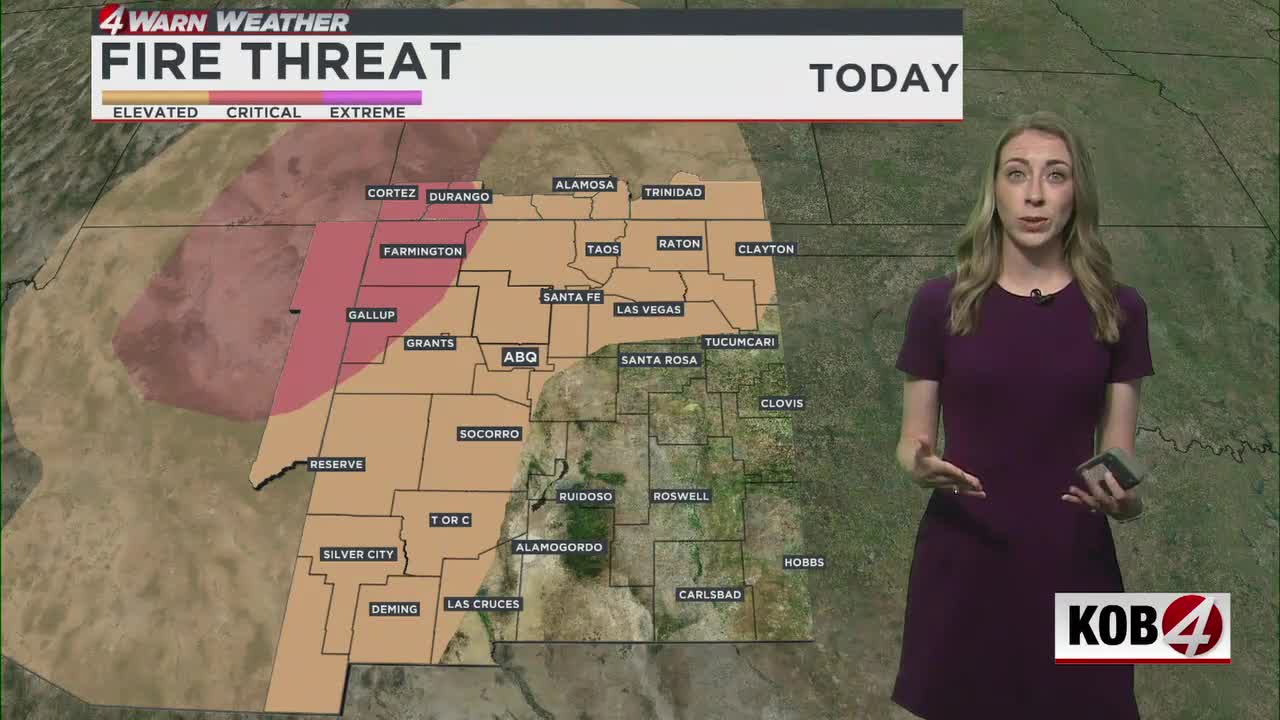
And those western lands? They weren’t spared the drama either, just a different kind. For folks out in northern and western New Mexico, especially across the famed Four Corners region, the phrase “elevated to critical fire weather” was on repeat. A Red Flag Warning blanketed parts of San Juan, McKinley, — and Cibola Counties for most of the afternoon. Apache County, just over the border, — and even some southern Colorado locales, were under similar threats. Dry lightning — nature’s cruellest irony — was a real concern there, a quick spark transforming parched brush into a raging inferno, all while elsewhere, rain gutters overflowed. The contrast couldn’t be starker.
David Rodriguez, who oversees operations for the Southwest Coordination Center (a vital cog in the U.S. Forest Service’s fire-fighting machine), summed up the ongoing battle. “The irony isn’t lost on us: dry lightning strikes sparking fires while monsoons might be hitting elsewhere. This cycle, frankly, it’s brutal on landscapes already parched from an extended drought. Public vigilance remains our first line of defense,” he explained. And honestly, it feels like that defense gets tested harder each year. Just look at the numbers: The National Interagency Fire Center reported nearly 3.5 million acres burned across the U.S. in the first half of 2026, far exceeding the 10-year average for the same period. It’s an unwelcome statistic, but it paints a grim picture.
This duality in New Mexico isn’t some isolated anomaly; it’s a stark microcosm of what’s playing out globally. Think Pakistan, for instance, where devastating monsoons trigger floods displacing millions, only for other regions to grapple with crushing drought and dwindling agricultural yields. Or consider the broader Muslim world, with its often arid or semi-arid regions feeling the brunt of changing rainfall patterns and escalating temperatures, threatening food security and water access for vast populations. The struggles are local, but the implications? They’re utterly universal, demanding global solutions that—let’s be honest—feel perpetually out of reach.
The state’s high UV levels were also expected to remain fierce. Because what’s a weather mix without a bit of skin-searing sunshine thrown in? All in all, Tuesday was shaping up to be less a day and more an exasperated sigh, another stark reminder of the wild card that’s climate change in America’s own complex economic forecast and ecological struggle.
What This Means
This dual weather threat isn’t just about umbrellas and evacuation orders; it’s a potent indicator of escalating governmental strain and economic fragility. State resources, already stretched thin battling persistent drought and an unrelenting wildfire season, must now divert focus and funding to potential flood relief and rapid response efforts. This means less capacity for long-term infrastructure projects, educational initiatives, or economic development, as reactive crisis management becomes the default. The psychological toll on residents, especially those in rural communities reliant on agriculture or tourism, can’t be understated; the constant uncertainty gnaws at economic stability and quality of life. For businesses, crop failures due to drought, or property damage from floods and fires, translate directly into rising insurance costs and potentially bankruptcies. This isn’t just weather anymore; it’s an annual fiscal — and social pressure cooker.