

World Cup’s Colossal Burden: USMNT Grapples with Home Field Hype
POLICY WIRE — Washington D.C., USA — It’s been nearly a generation and a half since the FIFA World Cup last touched American soil in any significant hosting capacity. This time, however, the...

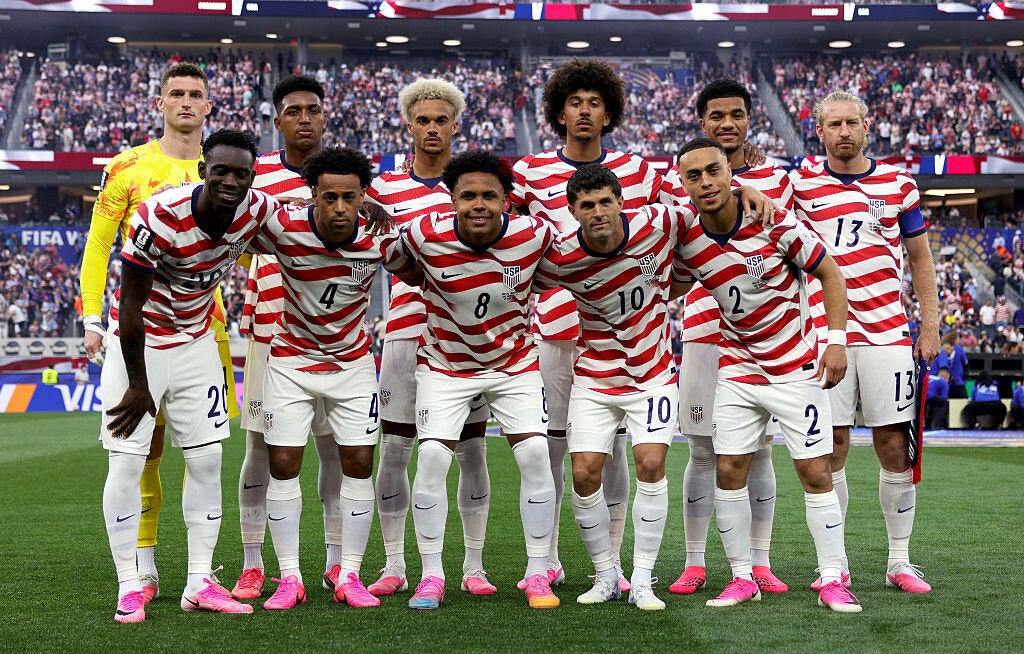
POLICY WIRE — Washington D.C., USA — It’s been nearly a generation and a half since the FIFA World Cup last touched American soil in any significant hosting capacity. This time, however, the U.S. doesn’t just have a seat at the table; it’s practically serving the whole banquet, sharing hosting duties with Canada and Mexico. The sheer scale is staggering, a colossal logistical — and emotional undertaking that casts a long shadow over the U.S. Men’s National Team’s (USMNT) campaign. You’d think the roar of the home crowd at SoFi Stadium—a dominant 4-1 initial victory against Paraguay—would be pure elixir, a joyous reintroduction.
But that initial triumph, coupled with a subsequent 2-0 win over Australia at Seattle’s Lumen Field, has only amplified the underlying tension. It isn’t just about goals; it’s about expectation, legacy, and perhaps, a subtle, almost imperceptible tremor of self-doubt that can afflict even the most polished teams. Because, after an electrifying start, reality struck a discordant note: a 3-2 defeat to Turkey right back at SoFi. That loss—a minor setback in the grand scheme of a very long tournament (which runs for 39 days, encompassing an unprecedented 104 matches according to CBS News)—still reverberates.
This team isn’t just a collection of athletic young men. No, it’s a carefully constructed blend of World Cup veterans and energetic newcomers, many honed in Europe’s most competitive leagues. They’ve been handed the ultimate gift: a home field advantage few national teams ever truly get to experience. And their rapidly expanding fan base across the country? It’s passionate, it’s vocal, — and it’s absolutely demanding. US team captain Tim Ream didn’t mince words, observing, [QUOTE_PLACEHOLDER]. He understands the weight, doesn’t he? It’s not just a game; it’s a referendum. Still, his optimism wasn’t entirely dimmed by the pressure cooker atmosphere, stating simply, [QUOTE_PLACEHOLDER].
The journey isn’t a stroll through the park. Group D proved to be a challenging preamble, culminating in those early results. Now, with the group stage behind them, the real pressure cooker ignites. The knockout stage, commencing on June 28, is a different beast altogether. Only the top two teams from each group, plus eight third-place finishers, progress to the round of 32. And guess what? The U.S., by clawing its way to the top of Group D, gets to play on July 1 at 8 p.m. ET in Levi’s Stadium in Santa Clara, California. That’s a good slot, gives ’em a bit more breathing room.
And that’s the path. Round of 16 runs from July 4 to July 7. Quarterfinals on July 9 and 10. The semifinals — intense stuff — are set for July 14. And the grand finale, the whole kit — and caboodle, plays out on July 19 at MetLife Stadium in New Jersey. Imagine the throngs. The whole nation will be watching, absolutely riveted.
But let’s be real: for much of the Muslim world, and particularly South Asia, the roar of the World Cup isn’t quite the novel spectacle it might be in North America. These regions, where football has passionate followings despite cricket’s traditional dominance in many places, keenly watched the expansion to 48 teams. This structural change offers more slots for Asian and African nations, providing more pathways for countries like Pakistan, Bangladesh, or others in the Middle East and North Africa—where football enthusiasm verges on religious fervor—to potentially qualify for future tournaments. Qatar 2022, after all, offered a direct touchstone to Islamic cultures, a significant symbolic moment that broadened the game’s embrace in unprecedented ways. This North American iteration, while culturally distinct, still rides that wave of global inclusion and enhanced viewership. They’re not just spectators anymore; they’re potential contenders, however distant the horizon might be right now.
What This Means
This World Cup, jointly hosted by three North American nations, isn’t just a sporting event; it’s an economic boon and a masterclass in soft diplomacy. For the host cities, including the ones mentioned in California and Seattle, it means an injection of tourist dollars, local job creation, and a spike in global visibility. We’re talking hundreds of millions, possibly billions, in local revenue. Beyond the financials, this tournament acts as a cultural bridge, especially for the U.S., which has historically lagged behind other nations in its footballing obsession. A strong showing from the USMNT—perhaps even a run deep into the knockout stages—could permanently solidify soccer’s place in the American sporting landscape, changing perceptions and nurturing a new generation of players and fans. The geopolitical implications, while subtle, are also there: it showcases international cooperation on a massive scale between neighboring countries, fostering goodwill and shared purpose. That’s no small thing in an often fractious world. However, if the home team falters spectacularly early on, a sense of opportunity squandered could settle over the national mood, proving that for all the spectacle, the sporting outcome still holds immense emotional sway. It’s not just a game; it’s a barometer of national pride — and unity, and occasionally, its discontents.